
The Inheritance of Hurt
How Trauma Travels
Trauma does not vanish when the event that caused it is over. It reverberates. It settles into families, into patterns of behavior and silence, into bodies that carry stress before they have words for it. Long after Bill Allman’s death, the shock of that moment continued to move forward in time, outward through relationships, and inward, into the nervous systems of people who were not even alive yet.
In recent decades, pediatrician and public health leader Dr. Nadine Burke Harris has given language and scientific grounding to this idea through her work on Adverse Childhood Experiences, known as ACEs. Her research helped establish what many families had long intuited: that early loss, violence, neglect, and instability can alter the body’s stress response, shaping physical and mental health across a lifetime.
When overwhelming stress occurs without adequate buffering, without consistent safety, reassurance, and protection, the body’s stress hormones remain elevated. Over time, this “toxic stress” can disrupt developing systems, increasing the risk of depression, addiction, heart disease, and other chronic conditions.
Burke Harris explores this research in depth in her book The Deepest Well and in a widely viewed TED Talk that brought the science of childhood trauma into the public conversation. One of her most quietly disruptive findings is this that children do not need to consciously remember trauma for it to shape them. The body remembers on its own.
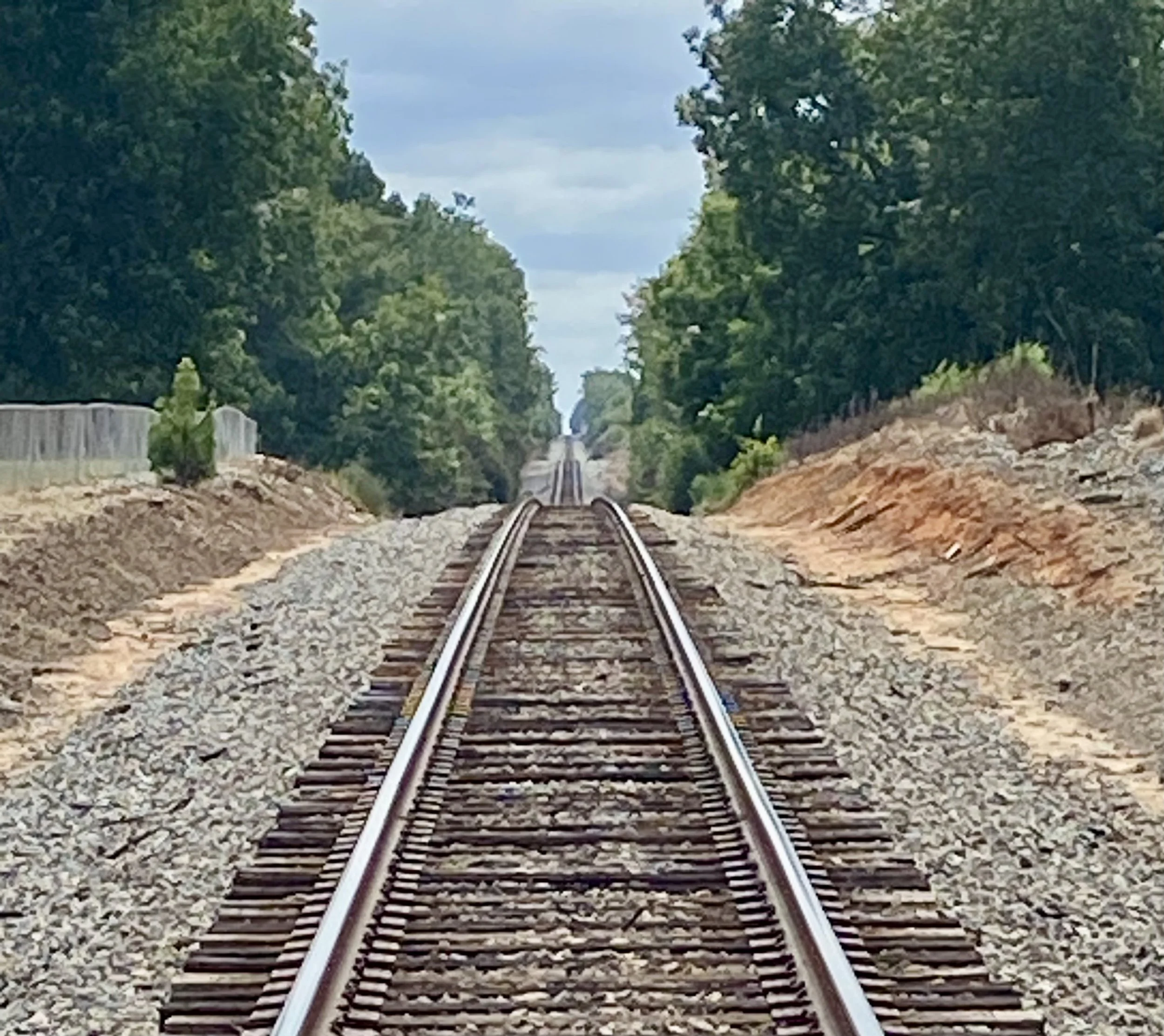
Trauma doesn’t end where it begins. Like a track laid early, it carries the body forward, often before the mind understands why.
Loss Without Language
Duane Allman was three years old when his father Bill was murdered. Gregg was two. For decades, the prevailing narrative held that they were “too young to know,” too small to register the loss in any lasting way. Even Gregg wrote that he had no memories of his father, as though that meant he remained unscathed by the loss. Believing children are too young to be traumaized is a comforting belief, one that allows adults to imagine that time alone can insulate children from catastrophe.
But Burke Harris’s work suggests otherwise. The sudden disappearance of a parent, the rupture of safety, the destabilization of daily life, the grief carried by the surviving caregiver, registers as a profound biological shock, even when a child lacks the language to describe it. The world, once predictable, becomes uncertain. Trust is interrupted. The nervous system adapts.
Galadrielle Allman later uncovered a small but telling detail from the day of Bill Allman’s funeral. Duane and Gregg were not taken to the funeral, a decision made in the name of protection. Duane was three. Too young to understand death, but old enough to register disruption and fear, he reacted not with quiet grief but with resistance. In her book, Galadrielle shares a story from Duane’s cousin Jo Jane who described him as inconsolable and defiant, pushing back against a moment he could not make sense of and had no words to name.
The absence of ritual, of not going to the funeral, did not spare the boys from loss. It simply meant that grief entered their lives without any explanation beyond their father going to heaven, leaving the body to carry what language could not.
The Allman brothers grew up in a household shaped by their father’s absence. Their mother, grieving and determined, did what she could to keep moving forward. She sent her sons to military school so she could earn a degree and secure their future. Maybe she thought stability would be restored through discipline and structure, but Duane and Gregg hated being separated from her, and they hated military school even more. Gregg has said being left at the school and watching his mother drive away was like being orphaned all over again.
These attempts at moving on by rebuilding their lives meant the original loss remained largely unspoken. The boys, left to be raised by a military institution, learned early what many children of trauma learn. Life can change without warning, and endurance often means carrying on without explanation.
Music as Regulation
Music entered the Allman brothers’ lives first as artistry and soon after as relief.
Before it was a calling, music must have functioned as something closer to regulation, a way to settle the body, to focus restless energy, to give shape to feelings that had no clear source or name. Rhythm offered predictability. Sound offered containment. A guitar or a piano provided something solid to touch when the emotional ground felt less secure. The brothers may not have been able to articulate grief, but they could feel how music steadied them.
This is a less romantic but deeply human truth about creativity. For some artists, creation begins not in inspiration, but in survival. Music becomes a place where intensity can be expressed safely, where emotion can move without explanation, where the nervous system can exhale.
In this sense, Southern Rock did not emerge fully formed from geography or industry alone. It grew from those elements in combination with the need to externalize feeling, to let ache, longing, and unrest move through sound rather than remain trapped inside the body.
Music and Healing
Neither Duane nor Gregg Allman spoke often about healing in the modern sense of the word. What they described instead were ways of getting through.
Duane lived with a guitar in his hands, reading books with it strapped across his body like a seatbelt. Or an anchor. The instrument was not an accessory, it was a constant. He poured his attention into it, practicing relentlessly, losing himself in tone and texture. He rarely spoke directly about grief, but he spoke fluently through sound.
Those close to Duane later recalled his quiet conviction that he would not live long, a belief less mystical than symptomatic, echoing what trauma researchers now recognize as a shortened sense of future common among children shaped by early loss.
Gregg, expressive through lyrics but more guarded, later acknowledged that music gave him something nothing else did. In a Sunday Morning interview, he said simply, “It’s better than a therapist. You can just dump everything into it.” The phrasing is telling. Music was not described as insight or resolution, but as release, a place to put what could not easily be examined.
For the brothers, music seemed to offer expression without confrontation. It allowed pain to move without requiring it to be named.
The Cost of Untreated Pain
This way of coping carried both gifts and limits.
Music offered refuge, identity, and connection. It also provided a place to hide.
Stillness, where unresolved pain often surfaces, was rarely where either brother lingered. From their teen years, life stayed loud, fast, and crowded. The road offered motion and distraction. Substances offered temporary relief. Early loss stacked upon early loss: a father, then a brother, then a bandmate, then relationships strained by absence, intensity, and instability.
None of this requires moral judgment to observe. It reflects a pattern common among men of their generation, particularly those shaped by early trauma and raised in cultures that prized stoicism over vulnerability. Pain was endured or buried, not examined. Survival mattered more than repair. Over time, those unexamined wounds hardened into patterns that could be repeated, often unconsciously, in the next generation.
As Dr. Nadine Burke Harris reminds us, adversity is not destiny. Supportive relationships, purpose, and meaningful work can buffer even significant trauma and open paths toward healing. Individuals within families can interrupt cycles of inherited pain when they recognize what they’re carrying and choose to face it.
But pain left untreated does not disappear. It finds expression, sometimes through brilliance, sometimes through self-destruction, often through both. And all the while, children and protégés are watching, learning what endurance looks like, and deciding what they will carry forward, and what they will try to leave behind.
How the Inheritance Moved Outward
The inheritance of hurt did not stop with Duane and Gregg.
Galadrielle Allman grew up with a father she never knew, assembling her understanding of him from stories, photographs, and music. Like her father and uncle, she inherited absence as a defining presence. In her writing, Galadrielle has acknowledged the complicated truth of inherited absence, that longing for a father can coexist with the knowledge that his presence might not have brought safety or ease. Even that recognition, however, does not erase the ache; it only clarifies its shape.
When she wrote Please Be With Me, it was not simply an act of homage, but inquiry, a reaching backward through sound to understand who her father was as a person, and how grief had shaped the family she inherited.
This is one of the quieter truths beneath Southern Rock’s mythology. The genre was not built from talent alone. It was also shaped by loss, fatherlessness, hunger, and the need to transform pain into something survivable. The music erupted from the musicians as much as it was crafted, carrying forward what could not otherwise be held.
From the trauma of Bill Allman’s death, an enduring story took hold, one repeated for decades, not out of deceit, but out of necessity. It offered coherence where there had been chaos, distance where the truth cut too close.
About the Author
Cindi Brown is a Georgia-born writer, porch-sitter, and teller of truths, even the ones her mama once pinched her for saying out loud. She runs Porchlight Press from her 1895 house with creaking floorboards and an open door for stories with soul. When she’s not scribbling about Southern music, small towns, stray cats, places she loves, and the wild gospel that hums in red clay soil, you’ll find her out listening for the next thing worth saying.
