
Paul Hornsby: A Life in the Cracks
Held Here: Presence in Profile is a long-form portrait series devoted to the people who stayed in Macon. Those artists, archivists, producers, entrepreneurs, and visionaries whose lives and labor have shaped Macon's cultural identity. Each subject is someone who planted roots here and, through their work and PRESENCE, helped preserve the city's creative spirit for the generations that followed.
This profile features Paul Hornsby, keyboardist, engineer, producer, and the quiet load-bearing wall of Southern rock, who arrived in Macon in 1969, watched an era rise and collapse around him, and then did something almost no one else did. He stayed.
Over the decades, he became a steady hand behind the scenes, producing, mentoring, performing, and, in 1982, opening Muscadine Studios, a sanctuary on Vineville Avenue where the next generation is welcomed in without fanfare, where time slows down and tone still matters. A farm boy from Elba, Alabama, became one of the quiet architects of Southern Rock and Macon has held him and been held by him ever since.
"I only tried to fill in the 'cracks.'"
— Paul Hornsby
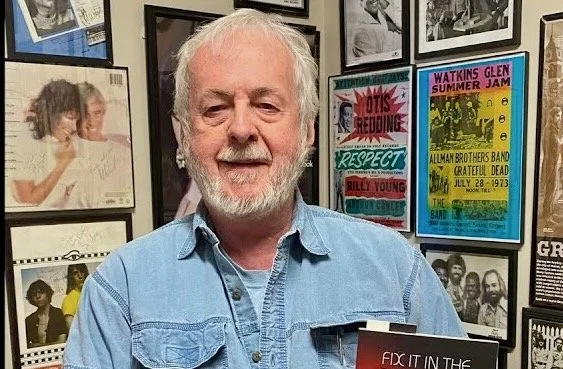
Studio Central
A guitar rings out in the control room at Muscadine Studios, the note hanging long enough for Paul Hornsby to tilt his head and listen a little harder.
He has spent most of his life doing exactly that. Listening past the obvious sound to the one trying to emerge. Sometimes it’s a guitar player leaning into the right bend. Sometimes it’s the moment when a singer finally stops pushing and lets the song exhale. Sometimes it’s silence, which Paul will tell you is just as important as anything played.
Inside the studio, the lights are low and the equipment glows with the familiar calm of a working room. Paul sits near the console, relaxed but attentive, watching the musicians with the confidence of decades of experience.
Outside, Vineville Avenue carries on with its ordinary Macon traffic. Just a quarter-mile up the road is the Big House Museum where the Allman Brothers once lived six to a house. Drivers pass Paul’s modest stucco building and probably notice Muscadine Recording Studios painted across the front, framed by a small vine of purple grapes.
The muscadine is a native Southern grape, thick-skinned, stubborn, and perfectly suited to the Georgia heat. It grows wild along fence lines and woodland edges, not in tidy European rows. For generations people have picked those grapes by the bucket, crushing them down into a dark, sweet wine that tastes unmistakably like the place it came from.
The symbol of Muscadine grapes suits the studio, and Paul.
For more than forty years, he’s worked the way Muscadines grow, which is stubbornly local, rooted in its soil, turning raw Southern sound into something rich enough to last, and potent enough to make you high.
Nothing about the exterior announces that this is the room where Southern music was shaped. Unless you get close enough to read the Historic Macon Music Registry marker placed on the building by the fan organization Georgia Allman Brothers Band Association (GABBA).
In Paul’s hands, a studio is a commons where musicians came to hear who they were becoming.
He’s in his eighties now, still down-to-earth, still funny, still likely to say something self-deprecating and then wave it off. In a city where musical identity can feel weighted with legends, like Little Richard's face on a mural, Otis Redding's statue facing the river, Dickey Betts’ name on a bridge, Paul Hornsby is still the guy-next-door, answering his own phone and treating everyone like a friend, never a stranger.
He was here when Capricorn Records was the center of the Southern rock universe, and then when it went bankrupt. He is here now, and Macon is the better for it.
The Farm Boy Who Hated the Fields
Paul Hornsby was born in 1944 in Elba, Alabama, in the same house his mother had been born in, to a family of farmers, welders, and old‑time fiddlers whose dance tunes stretched back to Ireland and England. He hated the hot cotton rows and loved the cool linoleum by the radio, where he could lie on his stomach and let the outside world come to him.
Saturday nights meant square dances and cakewalks where his father Ed played for hats full of nickels. If the musicians made enough for gas home, it was a good gig. Ed never quite believed his son could make a living playing music. "And truthfully," Paul says, in his humorous way, "I've wondered about that myself."
Piano came first, briefly. His mother scraped together enough for an upright, and he presented himself as a student, but the teacher’s ruler landed on his fingers every time he played by ear instead of reading the notes. He endured it until he was big enough to quit and walked away from the keyboard for years. What brought him back was a guitar his father carried home, an old Banner‑era Gibson that smelled like dust and decades. It turned out to be a rare "Kalamazoo Gals" instrument built by women during World War II when the men who usually made the guitars were otherwise engaged. Paul held the Banner Gibson and thought it was what music smelled like.
Ed taught him two chords, and one afternoon a girl crossed the room to talk to the shy boy holding that guitar. Paul registered the equation immediately. guitar = girl.
He claimed music as his future in that moment.
From there the path bent toward bands. He played guitar around south Alabama and, when the British Invasion hit, fixated on Alan Price’s little red Vox Continental in the Animals. His band was already doing “House of the Rising Sun,” and Paul decided they needed that sound, so he bought a Vox, figured out the part in four days, and opened the next gig with it. That was, he says, probably the first thing he ever actually learned on a keyboard, not from the ruler-wielding piano teacher, not from any instruction at all, but from wanting one specific sound badly enough to figure it out in four days.
He mastered the Vox in six months and was then redirected toward the Hammond organ by a Jimmy Smith LP. Paul eventually cut down a B‑3 to fit in the trunk of his car, solving a logistics problem but creating, what he cheerfully notes, back problems that come standard with a career in heavy keyboards. Somewhere in there, at sixteen in Dothan, he watched Roy Orbison sing and felt the decision in his bones; whatever this was, he had to do it.
He had taught himself to read music in three days and was playing guitar, organ, and anything else he could wire together. He was finding his sound and himself through sheer stubbornness, curiosity, and, like most folks, mostly luck.
And then, at the University of Alabama in 1962, Paul was, by his own account, "greener than green,” a farm kid who didn't know what a fraternity was, didn't know you had to audition for gigs. He did know blues greats like Slim Harpo and Johnny Jenkins shook him as they were passing through those very frat houses on their way to shake up American music.
He sure didn’t know he would one day change music, too, by eventually joining forces with a group of hippies.
Paul was learning by proximity, though, absorbing everything he could from places and people that held more than he could fully understand, which is how the best musical educations usually work.
He formed a band called The Barons, then The Five Minutes, whose setlist ironically included future Allman Brothers staples like “Stormy Monday” and “Turn On Your Love Light.” They experimented with dual guitars, foreshadowing the very thing Duane Allman and Dickey Betts would later take “to the moon,” as he likes to say.
By the early 1960s, he was a working band guy in the Southeast, toggling between guitar and organ in barrooms and college towns, learning songs by ear, and piecing together a life in music that would later be called “Southern rock.”
That’s where he was, on the circuit, half on guitar, half behind a keyboard, when Duane Allman picked up the phone and called.
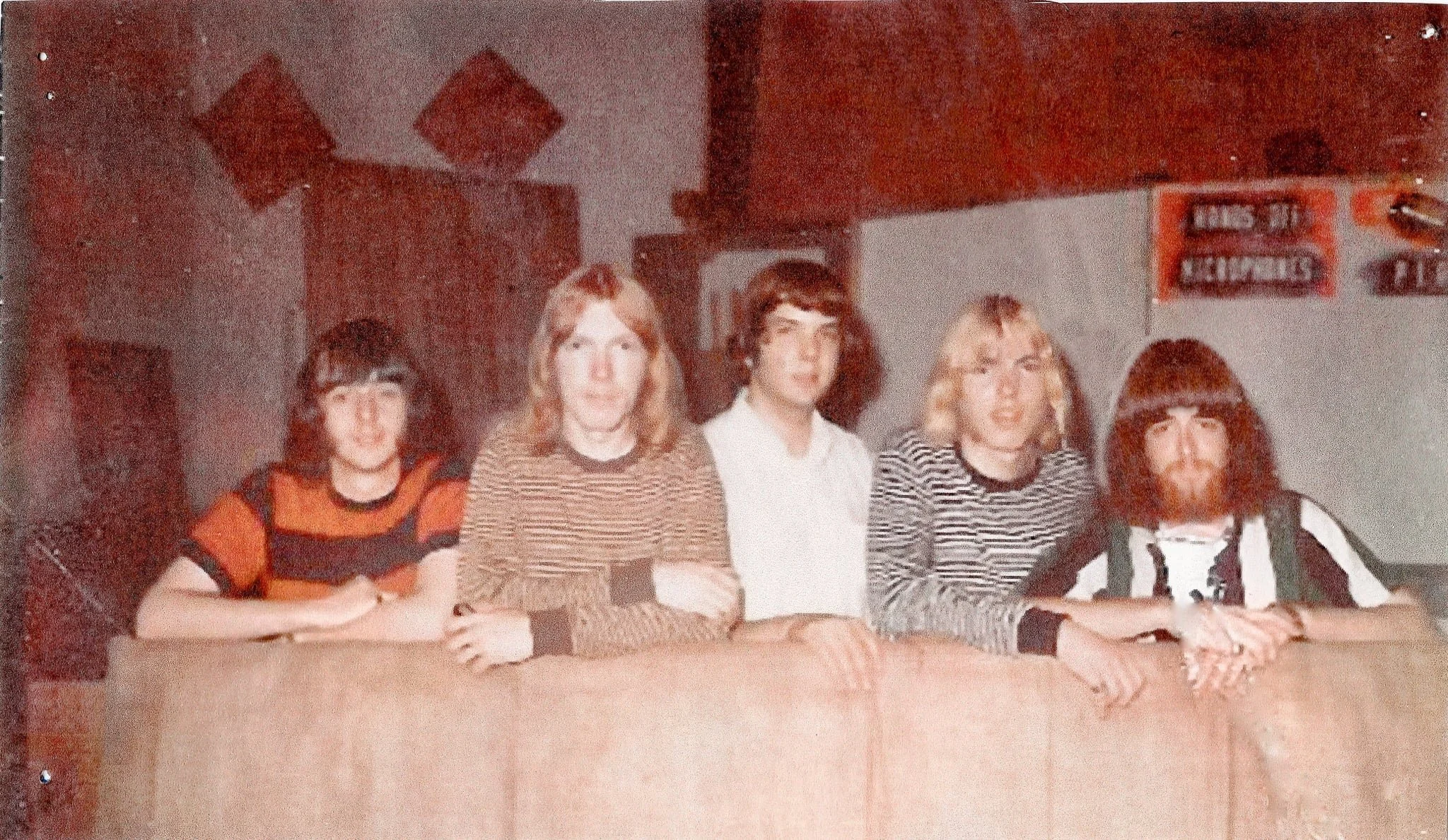
Hour Glass
Duane Called
Paul was out on the circuit with a band called the Men‑Its. Because they were managed by the same outfit, the Men-Its were chasing the Allman Joys from one club to the next across the Southeast and Midwest. When their front man left for Muscle Shoals, the band ended up broke and stalled in Johnny Sandlin’s parents’ garage in Decatur, Alabama.
That’s when the phone rang.
“How would you like to have me and Gregg in your band?” Duane Allman asked.
It wasn’t a hard decision. Within a day or two, Duane and Gregg drove down from St. Louis and showed up at Johnny Sandlin's house. They rehearsed for a week or two, pooling their material and then they struck out for their first gig at Effie's A Go-Go in St. Louis.
The Nitty Gritty Dirt Band was passing through St. Louis on their first tour. Their manager Bill McKuen came into the club, heard the band, and went next door to find a payphone. As Paul tells it, Bill called Liberty Records and said he'd just found the next Rolling Stones. What he'd actually found was closer to the future Allman Brothers Band. Within months, Paul, the Allmans, Mabron McKinney, Pete Carr, Johnny Sandlin, and the rest were in Los Angeles with a record deal, playing as the band Hour Glass.
Hour Glass was trying to find its footing in late-60s Los Angeles. They wore Sgt. Pepper suits. They played psychedelic clubs. They lived and rehearsed in the Nitty Gritty Dirt Band’s attic at The Dirt House. The group met actress June Lockhart through actress Nancy Cartwright and were invited to watch the final episode of Lost in Space being filmed without realizing it was the last episode, and then they played for a party at June’s house.
Los Angeles didn’t quite know what to do with them, and the feeling was mutual. The surf music era was still cresting on the West Coast with the Beach Boys and Jan and Dean, and Hour Glass arrived playing Southern blues-rooted music that had no West Coast equivalent. Not even an obvious category.
Plenty of other Southern musicians were in the canyons at that time forming bands and gathering fans, like Stephens Stills and J.D. Souther from Texas; Jim Morrison and Graham Nash from Florida; Graham Parsons from Georgia; John Phillips from South Carolina; Leon Russell from Oklahoma; and Delaney Bramlett from Mississippi.
The producer heard the soul in Gregg’s voice but had no feel for Southern R&B. Paul recalls, "To him it was a foreign language." The producer kept trying to steer them toward Motown and slick pop. Paul still laughs about the producer pushing Gregg out front “Tom Jones style” on a runway one night, mic in hand singing “A Change is Gonna come.”
Gregg Allman could sing that song, Paul says, "into the dirt." But out there on the runway, holding his mic, he looked back at the band standing far behind him and his knees started shaking. He went down on one knee, some kind of improvised showmanship, and then couldn't get back up. His legs were gone. The experience terrified Gregg and missed the point of the band entirely.
Backstage, Gregg made his position clear. Never again. He swore to do his singing behind the organ.
Duane’s guitar, the thing that would later redefine electric blues, barely registered in the label’s plans. The records they cut sounded like a compromise between what Liberty wanted and what Hour Glass was, which meant nobody was satisfied.
On the road, the band simply ignored the albums and played the music they believed in.
"We'd do our stuff," Paul recalls, "things we had turned around and did our own arrangement with." The crowds responded. The label didn't.
"We were practically stars in California," he said. "Starving stars. We'd play all these big shows and go over great and kick everybody's ass, but we couldn't get out of town."
In quiet rebellion, while touring the east, they took their own money to Muscle Shoals, cut a handful of tracks the way they actually sounded, and carried the tape back to Liberty, proud.
The label hated it.
But apparently they were stars in Jacksonville, Florida, too. On that same promotional tour back East, when Hour Glass played a small club in Jacksonville, Paul was in the dressing room, heard the opening band, and thought something sounded familiar. He stuck his head out the door. They were playing nearly every song off the Hour Glass album, and playing them about as well as Hour Glass did.
The opening band was Lynyrd Skynyrd and Ronnie Van Zant admitted to Paul that they loved Hour Glass.
For Paul and Johnny Sandlin, the label hating their demoes was the answer to a question they hadn’t quite wanted to ask. If the only recordings that felt like them were the ones the record company despised, Hour Glass didn’t have much of a future there. They unraveled soon after.
Adding insult to injury, those tracks cut in Muscle Shoals wouldn’t be heard until decades later.
What Paul carried out of Los Angeles, beyond the road weariness and the legitimate grievance, was the two years he had spent watching Duane Allman work. Duane read books with a guitar in his lap, moved through rooms with a kind of focused restlessness, and approached music with a seriousness that Paul recognized as the real thing. Paul had been there for all of it, including the early obsessive phase when Duane spent hours trying to learn Jesse Ed Davis's bottleneck technique, which Paul recalls drove the rest of Hour Glass crazy, until Duane made it his own and it stopped being entirely imitation.
“Genius,” Paul realized, didn’t need showbiz polish so much as room and the right kind of studio.
That lesson would matter later, in a town he still hadn’t heard of, with the phone about to ring again.
Macon? Where's That?
When Hour Glass finally came apart in 1968, Gregg stayed in L.A., Duane went to F.A.M.E. Studios in Muscle Shoals, and Paul drifted back to Alabama. There wasn't a lot going on in New Brockton under the traffic light that sometimes didn't work, but Tuscaloosa had a club called the Shelf Lounge and a loosely held-together band with no fixed name that varied its membership every weekend. Paul tried to organize them into something more cohesive, something they could rehearse, something with a shot at modest commercial success. He loved the Hour Glass format of two keyboards side by side, guitar, bass, drums. He used it as a template and started looking for players.
There was a teenager in town that summer, eight years younger than Paul and between school semesters, with a Wurlitzer electric piano and more ideas than experience. His name was Chuck Leavell. Paul heard him, clocked the touch and the feel right away, and thought, this kid’s going somewhere.
The two-keyboard band they built together, eventually called South Camp, held one of the bass chairs with a player named Charlie Hayward (who would go on to hold the bass chair for the Charlie Daniels Band for forty-six years), and a drummer named Bill Stewart (who would later play with Gregg Allman and across half the Capricorn catalog). For eight months South Camp was probably the best band in Tuscaloosa, playing fraternity parties and building momentum that felt like everything was about to happen.
More importantly, it taught Paul that he was good at putting the right players together and hearing what they could be.
Then Duane called again.
Duane was in Muscle Shoals cutting demos for Atlantic, which had fallen hard for his guitar work. Duane invited Paul up to play piano on the demoes. After two days in the studio, Paul had three serious offers on the table. Rick Hall wanted him as the session piano player at FAME Studio. Phil Walden, who was assembling the architecture of what would become Capricorn Records, wanted Paul and Johnny Sandlin to join Duane's new band, essentially to put Hour Glass back together on different terms.
Paul said no to both. He had South Camp. He had Chuck Leavell and Charlie Hayward and something that was working, and after what Hour Glass had been through on the road, he wanted studio work, not another van.
The F.A.M.E. job was prestigious, Duane’s band was tempting, but neither offered what he really wanted, which was a stable room and some say in how the music was captured.
Phil, practical and persistent, made a third offer, stating to the effect, “If you won't play in Duane's band, I'm building a studio in Macon and putting together a rhythm section. Would you consider coming as the piano player?”
"Macon?" Paul said. "Where's that?"
"Otis Redding's from here," Phil said. "Little Richard's from here. I'm building a studio."
Phil kept calling, day after day, sweetening the deal. He was building a house rhythm section on the model of the great Southern studios. "He said, 'I'll pay you guys a regular salary and then give you a percentage of the stuff you play on,'" Paul recalls. "At that time the Muscle Shoals sound was big. You had the Stax thing in Memphis, where Booker T. and the MGs were the house band. He wanted to pattern his studio after that."
Three months after that first Muscle Shoals trip, Paul found himself living in Macon. He had turned down Rick Hall's offer. He had turned down Duane's band. But he had not been able to turn down Phil Walden's quiet daily persistence and a city he'd never heard of.
Once he settled in, he picked up the phone.
There was still a high‑school senior back in Tuscaloosa with a Wurlitzer and a future. “Hey, I don’t know what you’re up to,” Paul told Chuck Leavell, “but if you’re interested, there’s a band looking for a keyboard player over here. Something’s about to bust wide open. Might be a good time to get in on the ground floor.”
According to Scott Freeman in Midnight Riders, Chuck couldn't afford to miss any more classes and was in trouble at school. "The call from Paul Hornsby felt like fate knocking," Freeman writes.
Chuck told Freeman, “There was no doubt in my mind. I was going to be on that stage, and I decided that was what I wanted to do."
Chuck quit school in the twelfth grade and moved to Macon.
The line from that quiet phone call runs straight through the heart of American rock and roll. Paul brings Chuck to Macon; Chuck finds his way into the Allman Brothers Band; years later, he’s at the grand piano for the Rolling Stones. The reason Chuck Leavell ended up anchoring two of the most storied bands in rock history starts, quite literally, with Paul Hornsby dialing from a little Southern town he had never heard of and had only just chosen for himself.
Capricorn in a Macon Room
Macon in 1969 was a city in transition, carrying its history of cotton, brick, and iron into a new chapter. The old industrial economy had softened. The civil rights movement had reshaped the South's social architecture, however incompletely. And the music that had always lived in the city's working-class neighborhoods, its churches, clubs and front porches, was still looking for someone with the infrastructure and the conviction to carry it further than it had gone.
Phil Walden had been that person once before, and the loss of it had nearly undone him. He had started not with Southern rock but with soul, managing a young Otis Redding out of Macon in the early 1960s, building Redwal Music with Otis, watching him grow from a local talent-show winner at the Douglass Theatre into one of the most commanding voices in American popular music.
When Otis Redding's plane went down into a Wisconsin lake in December 1967, Phil lost not just a client but the center of his professional world and one of the people he loved most.
What brought Phil back from grief’s edge was a guitar, specifically Duane Allman's guitar.
When Paul finally drove into Macon, Capricorn wasn’t a legend yet. It was a half‑finished idea taking shape in a city already filled with ghosts. Otis Redding’s spirit still stood on the Douglass Theater stage, Little Richard’s wail still echoed from the Tic Toc Club, and a new wave of long‑haired bands was starting to orbit Poplar and MLK.
With Frank Fenter, Phil opened the Capricorn Records office on College Street and began assembling a house band built on the Muscle Shoals and Stax model. Paul, Johnny Sandlin, Pete Carr, and Robert Popwell were the musical engine in that room. It was the dawn of something. Something Big, as Paul had told Chuck.
Paul walked into this as a house keyboard player, one more working musician on a salary, and found himself at the center of what Macon was about to sound like.
In the early years he did what house players do. He slid onto the bench when somebody needed piano or B-3, filled the cracks, kept the sessions moving. But as the studio settled in, he began to spend more time on the other side of the glass. His name shows up on records that defined Capricorn’s Macon era.
He produced or played on The Marshall Tucker Band’s first six LPs with songs like “Can’t You See,” “Heard It in a Love Song,” “This Ol’ Cowboy,” tracks that spun the South’s dusty heartbreak into gold records. He played keys on Gregg Allman’s Laid Back, connected Charlie Hayward to the Charlie Daniels Band (a point of pride for Paul), and helped birth the fiddle anthems “The Devil Went Down to Georgia,” and “The South’s Gonna Do It Again.”
Paul insisted they lean into the fiddle nobody else in rock was touching.
These projects carried Macon’s mix of country, blues, and sanctified swing beyond Georgia’s borders without ever sanding off the accent.
Bit by bit, he shifted from being one more set of hands on the track to being the ear people trusted when it was time to decide what stayed on the tape.
He was engineering, producing, managing sessions, moving through jobs the way he’d always moved through instruments, by listening harder than everybody else. He was trying to emulate his personal heroes, Booker T. and the MGs.
The records that came out carried that DNA, including Wet Willie, Elvin Bishop, Cowboy and more. All stamped with Paul’s touch and a Macon feel that was equal parts barroom, church, and dance hall.
The Marshall Tucker Band sessions came to Paul in a roundabout way. Wet Willie had been playing South Carolina and came back raving about a band they'd seen. Phil arranged a showcase at Grant's Lounge. Paul was there the night Marshall Tucker came in and played live for Phil and Frank Fenter and the rest of the Capricorn crew.
Paul remembers Grant's Lounge in those days as "a little funky hole in the wall, but you could walk in there in the '70s and see about anybody in the world playing there."
Paul described Marshall Tucker’s stage arrival simply: "When they came out there it was just like, 'Hey man, we're here to play some damn music, so hold on to your seat.’” The crowds who packed into Grant's Lounge to hear the Marshall Tucker play before the first record came out didn't need any further convincing.
Capricorn signed the Marshall Tucker Band and Phil gave the project to Johnny Sandlin instead of Paul. After Johnny cut demos that Phil didn't like, he handed the project to Paul.
"I spent so much time on it I didn't know if it was any good or not," Paul says. "Too close to it. For better or worse, here it is."
Phil flipped over it. Capricorn immediately put Marshall Tucker on the road opening for the Allman Brothers, the perfect audience for them, giving Marshall Tucker a fan base before their first record came out.
Paul noticed something during those Marshall Tucker sessions. The band was electrifying both visually and enthusiastically when live, with something crackling between them on stage, but when they got into the studio, something went missing. Whatever sizzle the band had live wasn’t fully making it to tape. His solution was a keyboard. He tucked organ and piano into the gaps on “Can’t You See” and, later, “Heard It in a Love Song,” parts that now feel inevitable enough to be invisible, exactly the kind of furniture‑level hook a producer like Paul lives for.
When “Can’t You See” exploded, he decided the experiment had worked and simply kept playing on every Tucker record he produced. Why mess with that formula? Those piano riffs became part of the furniture of American music, which is to say they have become invisible in exactly the way Paul is comfortable with.
He played keys on every Marshall Tucker record he produced, all the way through Carolina Dreams and "Heard It in a Love Song.” Paul had heard Troy Caldwell play the song in a rehearsal room before a show and knew instantly it was going to be the Marshall Tucker’s first single hit.
Phil Walden gave Capricorn folks the freedom to take their time in the studio. Nobody counted hours. Nobody held back. The studio was a little bit workplace but mostly where songs wandered in unfinished and left changed. And band members showed up to record with other bands.
It was the golden age, even if they didn’t know it back then. What mattered most to Paul in those years wasn’t the gold records, though there were plenty, but the people. Paul lived in that constant, beautiful swirl of a “family reunion” era when everyone played on everyone’s record (and many still do!). Prim little Macon acted tolerant of that swirl but underneath her proper facade she was really thriving on it.
From the outside, it looked like the rise of a label. From Paul’s control room seat, it felt like the work of connecting the right players to the right room at the right moment, which he had done with South Camp, and catching whatever happened on tape.
Capricorn’s rise made Macon the gravitational center of Southern rock, and Paul lived that moment, cutting tracks by day, walking past Grant’s Lounge by night, watching the same players move from stage to studio and back again.
When the label finally collapsed, most of the machinery that had drawn bands to town disappeared with it. Paul didn’t leave. He took what he’d learned about rooms, songs, and signal chains, and started thinking about how to keep Macon on record without a label’s logo on the door.
That thought would become Muscadine.
Connecting Dots
For someone as modest as Paul Hornsby, he’s oddly unapologetic about a few things. He’ll grin and tell you he’s the reason Chuck Leavell ever came to Macon, the reason Charlie Hayward ended up holding down the Charlie Daniels Band’s bass chair for forty‑plus years, the reason Marshall Tucker tracks suddenly had piano where there had been empty air, and the reason Charlie Daniels leaned into a fiddle when nobody else in rock was sawing one.
He’s right. Those choices bent Southern rock’s family tree in ways still visible today.
Charlie Daniels came in next, literally on Tucker’s heels.
Charlie had watched Paul work with Tucker and liked what he saw. “A laidback good ol' boy from Alabama," Charlie wrote later, "who'd done a great job with Marshall Tucker's records.” Charlie arrived at Capricorn thinking that Paul Hornsby was "just what we needed."
Paul went to see them live first, and the verdict was mixed. "Their original stuff sounded like The Allman Brothers," he said. "It was obvious who their heroes were." The crowd was polite. Then Charlie came back for the encore with a fiddle. "He went to sawing on this fiddle, and the crowd went nuts. He did two or three fiddle songs, and then they called it a night. That's the way I think of Charlie Daniels now, as holding that fiddle in his hand. That was just a novelty thing he'd pulled out at the end of the show."
It was the most important novelty Paul had ever seen.
When the Daniels band came to record, there was no fiddle song. Paul told Charlie, we need a fiddle song. There was nobody playing fiddle in rock and roll.
Charlie and the band came up with something they'd been halfway jamming on, an instrumental they were calling "Fiddle Boogie,” a cute, competent trade-off between fiddle and guitar. Paul told him, that's okay, but it's not in the same league as "Long Haired Country Boy." What about adding some lyrics?
Charlie stalled. Every day of the five-day recording session, Paul asked about the lyrics and every day Charlie said he'd been giving it some thought, he had some ideas, but nothing completed. They finished recording. They were ready to mix. They still had "Fiddle Boogie" with no words. On the last day, Charlie asked for a quiet place and a little time. He came back about an hour later with a yellow legal pad covered in scribbles and told them, alright, turn the mic on. Let me run these lyrics by you.
He started singing about Dickey Betts playing on that guitar, and old Lynyrd Skynyrd picking down in Jacksonville, and Tucker's cooking in Carolina. Paul and the engineer were going nuts in the booth. Yeah, man. That's gonna do it.
About a month after the album came out, Charlie's Nashville management called. They were ready to pull a single and Paul assumed it would be "Long Haired Country Boy,” but the manager said, You'll never believe what they're playing on WLS. WLS out of Chicago at 450,000 watts was playing a fiddle record.
"South's Gonna Do It Again" was not supposed to break in Chicago, but it did.
That's what made that album," Paul says, "Still the biggest record I've ever done, for longevity. Tucker was selling more at the time, but Charlie's kept playing all these years."
When Fire on the Mountain was released, Charlie wrote that Paul and Capricorn "had lived up to all expectations." What moved him most wasn't the record's commercial success but something more personal. For the first time, he said, he was happy with his own natural vocal sound. "No fluff. No flourish. No impersonations. Just me, organic and unadorned."
That is what Paul Hornsby does.
Charlie Daniels, by all accounts, credited Paul for “South’s Gonna Do It Again” generously and consistently until the day he died.
Their connection ran deeper than the sessions. It was Paul who recommended Charlie Hayward as the Charlie Daniels Band's bassist. A phone call to a Tuscaloosa contact that put a player in place who would stay with the CDB for more than forty years.
Thread Chuck Leavell through the same map and the pattern sharpens. Paul brings Chuck from Tuscaloosa to Macon as a teenager, later hands him his own B‑3 slot in Dr. John’s band when producing Marshall Tucker makes the road impossible, and keeps pulling him into Capricorn sessions whenever a serious pianist is needed.
By the time the Allman Brothers decide, after Duane’s death, that they want keys instead of another guitar, Chuck is already in the building, already on the tape, already proving exactly what he can do. The ABB years led to the Rolling Stones with Chuck as their keyboardist and music director to this day. Yet, when not on the road, Chuck still turns up regularly at Capricorn Studios in Macon, the same town Paul first told him to get to “real quick.”
Looking at the big picture of Paul’s introductions, the boast stops sounding like a boast. It’s 1,000% true.
The same handful of players, made up of Paul, Chuck Leavell, Charlie Hayward, Bill Stewart, Randall Bramblett, and others, cycled through session after session, turning up on Gregg Allman's solo work, on Cowboy records, on projects that didn't make national headlines but kept the community humming and the players sharp. Cowboy, a gentle, harmony-driven Macon band that never quite broke through commercially, was genuinely loved by everyone who heard them, and was exactly the kind of act Capricorn existed for.
If Southern rock is a web of bands, solos, and songs, Paul Hornsby is one of the people who tied the strands together at the center. He’s the guy in the control room who heard where a piano should be, where a fiddle could change the weather, and which kid from Alabama needed to be in Macon.
Phil Walden later said flatly that “Paul Hornsby played a major role at Capricorn…producer, studio manager, part of the infrastructure,” and Chuck put it even simpler: “I am playing piano professionally because of Paul Hornsby.”
Taken together, those moves mean Paul helped shape the sound of three different pillars of Southern rock and, through Chuck, the biggest rock band in the world.
Ray, Mac, and the Shape of the Keys
Ask Paul where his piano style comes from and he doesn’t hesitate. Ray Charles and Dr. John.
Ray was the first model, a south‑Georgia boy who proved the piano could carry church, blues, and radio pop. For a kid from Elba, that felt close enough to touch. Dr. John came later, when Paul found himself onstage playing B‑3 behind him in the early ’70s, peeking over Mac’s shoulder night after night to see how those swampy left‑hand figures and rolling triplets actually worked.
Paul would fly on weekends to meet Dr. John and crew while working studio sessions during the week. The first gig was Puerto Rico. Then Detroit. Then Virginia. The whole time, Paul was playing his parts while watching Dr. John's hands from across the stage, trying to figure out what he was doing. "I got a master's degree playing B-3 behind Dr. John," he says.
When the opportunity to produce the Marshall Tucker record came along and Paul had to choose, he handed the Dr. John gig to Chuck Leavell, the second time he had passed one of his own jobs to the younger man without hesitation, and not the last.
That gig with Dr. John felt like a paid master’s degree, and Paul will tell you that without Ray and Mac, he wouldn’t really have a piano style at all.
Chuck Leavell walked a version of the same road. He logged time with Dr. John too, soaking up that New Orleans lilt before most people knew his name. When Paul pulls Chuck into the Capricorn orbit, you’ve suddenly got two keyboard players in Macon carrying different blends of the same DNA. Ray’s sanctified Georgia stomp, Dr. John’s hoodoo funk.
What people now hear as “Capricorn keys” isn’t just a studio sound, it’s that mixture poured into the songs, a mixture of piano that can testify, organ that can snarl, church and juke joint living in the same chords. In a region where every little church once had a piano and somebody’s aunt or mother to play it, Paul and Chuck are the professional, road‑tested extension of that tradition.
They just happened to plug it into Marshall stacks and send it out into the world.
What Capricorn's Collapse Left Behind
When Capricorn Records filed for bankruptcy in 1979, the unraveling had been coming for a while. Phil had been one of the key architects of Jimmy Carter's presidential campaign, using his artists to raise money at a critical moment in Carter's run. "If it hadn't been for these bands, Carter might not have made president," Paul says.
But two years of building a president while running a record label meant that decisions stalled, problems piled up, and nobody could act without checking with Phil, who wasn't there to check with. Vans broke down and waited. Albums went unattended. Bands grew disheartened.
Then the contracts came up for renewal all at once. The ABB opted out. Marshall Tucker opted out. Wet Willie was out. They'd been waiting for attention that never came, and they signed with friends elsewhere.
What was left was debt. Phil had borrowed roughly $6 million, $4 million of it from Polydor and Polygram. It came due and there was no extension. The labels took the tapes, the masters, the ABB masters, Marshall Tucker masters, everything Capricorn had, driving them into bankruptcy.
The city that had built an identity around the label's success found itself in the strange, disorienting position of having been the center of something and then watching that center dissolve. Phil moved his focus elsewhere. The producers and musicians scattered, some to Nashville, some to Atlanta, some to Los Angeles.
When Capricorn filed for bankruptcy, Paul was among the creditors, owed $63,976 in back rent that he would not recover. He was, in the end, as exposed as anyone to the collapse he had watched coming, but couldn’t comprehend.
What was left behind was Macon itself. The neighborhoods, the clubs, the churches, the players who had been making music here long before Capricorn existed and who kept making it after the label's demise.
Grant's Lounge on Poplar Street kept its stage hot through the decade's turn. Downtown, The Rookery on Cherry Street became a room where the current kept moving, a burger-and-beer spot with a bandstand just large enough for serious musicians to do serious work in front of whoever happened to come in that night.
Robert Lee Coleman was one of those musicians, back in Macon after years on the road with Percy Sledge's soul revues and James Brown's funk band, carrying the education of two of the tightest musical operations in American popular music. He settled into a Rookery house-band residency alongside organist Bobby O'Dea, who had himself spent years traveling with jazz saxophonist Rahsaan Roland Kirk, backing Motown's biggest acts in Toronto, and playing halftime organ for a group that would become the Harlem Globetrotters, none of which the burger-eating crowd on Cherry Street was likely to know. These were men for whom The Rookery was not a consolation prize but a choice.
Kyler Moseley, who has spent years inside Macon's music history, notes that mostly R&B groups performed at The Rookery in those years, which meant that while the broader cultural conversation was pivoting toward alternative rock and college radio, Robert and Bobby were holding down the sound that had built the city's reputation, playing it for whoever showed up. They were doing exactly what Paul would do. Stay put and do the work.
Paul Hornsby watched all of it in real time. He understood, in the way people inside a music industry collapse understand, that what Capricorn's bankruptcy meant for Macon was not the end of music in the city but the end of the particular machine that had organized and amplified it.
The machine was gone but the music was still here.
And so was Paul.
The Stay
After Capricorn collapsed, Paul took three years off. He sat at home, raised his kids, and rested on his laurels, if he had any, he adds, laughing. He had a little 8-track recorder and mixer at the house, just to play with, to get ideas down. He was not, by any reasonable definition, running a studio.
Then a guy called. His name was Randy Howard, a country singer who played regularly at a big Western nightclub in Macon called Whiskey River. Could Paul record some demos out at his house? Paul looked around at his 8-track, thought about a country singer with an acoustic guitar, figured he might need two microphones, and said, sure, how about tomorrow at 1 p.m.?
At 1 p.m. the next day, he heard cars in the driveway. A van. A pickup truck. Another car. He looked out and saw musicians climbing out with drums and basses and guitars.
"What?" he said. He didn't have a studio. He had a house. They moved a bed out of the guest room and put the drummer in there. He put the guitar players in the bathroom. He ran cables across the hallway floor. They cut the demos.
At some point during those sessions, Paul recorded the crowd at Whiskey River on a separate reel, the noise of the room, the hoots and hollers, the energy of a live night. He synced the audience onto the demo tracks during mixing, filling the silence where curse words had to be blanked with the sound of the crowd surging. At the end of it, he looked at what he had.
I wonder, he thought, if we could sell this album as a live record and get away with it.
They did.
Randy Howard's "All American Redneck" charted nationally, sold to Warner Brothers as a live album, recorded in a house with a bed moved out of the guest room.
That was enough to clarify something Paul may already have known. The music didn't require the infrastructure. It just required a room.
He found a building on Vineville Avenue and opened Muscadine Recording Studios in 1982. The logo was painted on the side of the building and the work began, unhurriedly, without a press release.
Paul has not left.
The Sound After Capricorn
When Capricorn finally went under, the label offices emptied, the big national acts stopped rolling into town, and the outside world treated Macon’s Southern rock years like a closed chapter. Paul did the opposite. He went back to work at Muscadine, treating the room as Capricorn’s spiritual afterlife rather than a fresh start.
Over the decades, Muscadine has pulled in a long, very Macon list of veterans who’d cut their teeth at Capricorn, younger Georgia bands trying to find their footing, and out‑of‑towners who wanted the feel of a Southern room without the polish of Nashville.
The same ears that had helped shape records for Marshall Tucker, Charlie Daniels, Wet Willie, Bobby Whitlock, Grinderswitch, Eric Quincy Tate, and others at Capricorn now listened for what newer artists were really after, whether they were going straight country, jam‑band sprawl, or smoldering blues.
In a city where clubs came and went, Muscadine became the fixed point, the place you went when you wanted Macon to be part of the sound.
Asked years later why he stayed, Paul didn’t offer a grand speech. In one interview he said simply that the music he cared about had taken root here and he wanted to be “close to the root,” that when the business side collapsed “what was left was still worth staying for.”
Muscadine is the proof of what remains.
Long after the Capricorn logo disappeared from record labels, the red light on Vineville kept flicking on, just one more session, keeping Macon on tape.
And over the years, Paul’s real instrument has been the introductions he made.
Muscadine: A Human Room
In old Southern homes, the keeping room was where people gathered when the formal work was done. They’d sit close to the hearth, repairing things by hand, talking or not talking, in no particular hurry to be anywhere else. They wouldn’t gather in the parlor, which was kept for company and occasions. They preferred the keeping room, an ordinary room where daily life actually happened, where the fire was fed and the conversation was real and anyone who needed to sit down was welcome to.
Muscadine became that room for Macon music.
It was never trying to be Capricorn's heir, never positioning itself as the next launching pad for a gold record, never requiring a national moment to justify its existence.
Paul has always described it in the plainest possible terms as "a small, down-home place, where musicians can feel comfortable without a lot of pressure."
The comfort is real. Among the vintage gear in the room sits Gregg Allman's Wurlitzer piano, the instrument Gregg played on Fillmore East, one of the most celebrated live albums in rock history.
With the industry changing and the glamour moving elsewhere, what Macon needed in the 1980s and 90s was not another headquarters but a place where the music could keep happening, without needing anyone's permission or attention, on its own terms and its own schedule.
Paul understood this.
Artists young and old walk through Muscadine’s doors seeking authenticity. They want that warm, woody, analog-sounding truth Paul learned on his father’s reel-to-reel. He mentors players who are nearly as green as he once was. He works with country, blues, gospel, Americana, rock. Seasoned players came to remember who they were, to work in a space that took tone seriously and didn't flinch at a slow afternoon spent catching the right sound.
He calls E.G. Kight "Georgia’s Songbird" and means it as a fact.
Among Muscadine's most enduring artistic relationships is the one Paul has built with E.G. Kight, a Dublin, Georgia-born blues singer, guitarist, and songwriter whose "country flavored southern fried blues" has earned her twenty-one industry nominations over twenty-five years and a devoted international following. Paul contributed production and musical input to her 2011 comeback album Lip Service, recorded at Muscadine after E.G. survived two hospitalizations for meningitis and encephalitis, and the album's centerpiece, "Koko's Song," her tribute to her hero Koko Taylor, is one of the finest things to come out of that studio.
E.G.’s 2023 album Sticks & Strings, also recorded in Macon, debuted at number ten on the Billboard Blues Chart. E.G. performs as a trio with Gary Porter on drums, harmonica, and vocals, and Ken Wynn on guitar, dobro, and vocals, three musicians who have played together more than two decades and who bring to Muscadine exactly the kind of rooted, patient, serious musicianship Paul has always made room for. In 2002, the Redding family invited E.G. to sing at the unveiling of the Otis Redding statue in Macon, a detail that places her inside the city's deepest musical story.
Back at the studio, the work continued on Paul’s terms. He paid the bills with jingles when the sessions were thin and never made anyone feel that this was a compromise, because it wasn’t. Muscadine was a working studio doing what working studios do, which is whatever is necessary to keep the lights on and the tape rolling.
When Gregg Allman began work on his first solo album, Laid Back, he reached back deliberately to his Hour Glass days and called on Paul and Johnny Sandlin, who had been with him in Tuscaloosa and Los Angeles, and were now across town at Capricorn.
When it came time for Paul to make his own solo record, Red Hot, a jubilee of boogie-woogie piano and New Orleans feeling with more than thirty musicians on it, Paul's problem wasn't who to include. It was who he was going to have to leave out.
Chuck Leavell was on it. "He played some Hammond organ, a solo," Paul says. "But I didn't let him get near the piano." Chris Hicks is on it. Leroy Parnell. Jack Pearson. Tommy Talton. Bill Stewart. The record came together like Muscadine had come together. Paul accumulating the right people. The only question became which ones would he have to disappoint.
Chris Hicks has played alongside Paul across multiple decades and was mentored by Robert Coleman and Bobby O'Dea at The Rookery before finding his way into Marshall Tucker, where he’s been for nearly 30 years. Paul recorded Chris with the Outlaws back in the day, when their manager Alan Walden brought them to Muscadine. Chris calls Paul "a living legend, still here, still doing it for us all."
Paul has drifted into something rare. A custodian of a city’s sound.
The Banner Gibson still hangs on Muscadine’s wall.
If Macon’s music history is a grand old Southern home, Paul Hornsby and his Muscadine Studios is one of its load-bearing walls, never flashy but essential to everything that still stands. Muscadine as Macon’s keeping room is a space where musicians can sit a while, get their bearings, and make something honest.
The keeping room is still keeping.
Young Paul on the Wall
Paul had been told that Paul Hornsby Day in New Brockton, AL, would be about him.
That was the problem.
The domino effect of recognition had started with the Alabama Music Hall of Fame induction in 2010. The biggest thing Paul says he never would have dreamed of. On the heels of that came word from Dothan, AL, the mural city where they'd preserved old cotton warehouses and painted scenes across the brick. Folks can enjoy depictions of life in the wiregrass country, wagons and cotton fields, the cowboy star John Mack Brown on one building, and local musicians on others.
Dothan wanted to include Paul in a mural and asked him to send photos, which he did.
The morning of March 18, 2023, he drove the Dothan city blocks looking for himself, with time to spare before he had to be in New Brockton for the afternoon ceremony. There was Ray Charles on a wall. Hank Williams Sr. on another. He drove the blocks looking for himself and found nothing. He drove them again. And again. Ten passes before something finally stopped him.
There, on brick, was a version of him he recognized instantly, not because it looked like him now, but because it looked like the kid he used to be at twenty-two, and hungry. The young man who still thought music might be a place he could live. “Young Paul,” he called him, like they were old friends. And right there, in the open air, with traffic rolling by, he felt the strange jolt of it. This life he’d built in late nights and long takes and borrowed gear, this life that mostly happened behind other people, had become public.
He didn’t stay long enough to get used to it.
Because by noon he had to be in New Brockton, his hometown, the small dot with a traffic light that sometimes didn’t work, or that wide spot in the road. Don Helms, Hank Williams's steel guitar player, is from New Brockton. He and Paul are the only two known musicians the town has ever produced. That's what it's got going for it.
New Brockton had declared “Paul Hornsby Day,” and the schedule moved fast, with speeches, pictures, a park set, a ceremony that made the whole thing feel, his words, like one of those “This Is Your Life” moments where the curtain jerks back and your past starts walking toward you.
Chris Hicks was there, Paul's insurance policy against the spotlight. He’ll tell you straight up he’s not a front man. Not built for the spotlight. He’s the guy who makes the spotlight work. So having Chris alongside him was like having a friend stand at your shoulder when the room starts clapping.
And then he spotted his mother, Magdalene Hornsby, in the front row, proudly watching her boy who had tried to escape school by taking piano lessons, and who kept following sound the way others follow money or certainty, standing in his hometown while the town claimed him as its own.
"I'm glad she lived to make it there that day," he says.
What Paul didn't know was that the Men-Its, the band playing the park ceremony that afternoon, had already been in touch with Chris Hicks. Secretly. They'd worked up a song about Paul, rehearsed it with Chris without telling Paul, and were waiting for the ceremony to spring it.
"I know it was a surprise," Chris says, "because of his face."
Paul’s face said he’s the man who makes the front man sound right, the hand behind the console, the ear in the room, not the guy out front. Having Chris alongside him was like having a trusted friend stand at your shoulder when the applause starts and you don't quite know where to put your hands.
Alabama claims him. Georgia claims him. Macon holds him.
On paper, Paul’s might look like an ordinary working life, but in the real world it’s one of the reasons Macon still sounds like itself.
Still Here
From the Hour Glass van to Capricorn’s control room to the small stucco building on Vineville, Paul has been the one continuous line through Macon’s changing music eras.
He was inducted into the Alabama Music Hall of Fame in 2010, a rare honor for a man whose name usually lived in the fine print while the bands he recorded lived in bold. His name sits on records millions of people have played to death without ever wondering who was behind the board when the tape rolled.
He’s watched Southern rock cycle from overexposed to unfashionable to quietly revered again. He remembers when the music was radioactive. At one point, Paul has said, calling something a Southern rock project was “the kiss of death.” Club bookers and labels just rolled their eyes. Now he sees sold‑out rooms in Europe and young bands from places he’s never been pick up the sound Macon helped invent and make it their own. You get the sense he never expected any of it.
In 2021, Hornsby took stock of everything he had witnessed and built and put it down on paper. Co-written with Southern rock journalist and historian Michael Buffalo Smith, Fix It in the Mix: A Memoir was published by Mercer University Press as part of their Music and the American South series, a fitting home for a book that traces Hornsby's journey from small-town Alabama through Hour Glass, Capricorn Studios, the making of Southern rock's most enduring records, and into the decades of quiet, steady work at Muscadine that followed.
Illustrated with photographs from his private collection that most of the world had never seen, the book is both a personal accounting and an act of preservation, one more way Paul Hornsby made sure the story of what happened in Macon didn't disappear when the last people who lived it were gone.
These days, he cheers for acts like Blackberry Smoke and The Marcus King Band. He still believes in the sound that raised him, the blend of blues and fiddle tunes, of church and sweat, of cotton fields and cosmic cowboys.
He still believes in Macon.
And Macon believes in him. In 2021, GABBA, an all-volunteer fan organization, sponsored the installation of a Historic Macon Music Registry marker on the building, honoring Muscadine as a significant site in the story of Southern rock and Middle Georgia music. It wasn’t a city commission or a label or a foundation with an endowment. It was fans who understood what has happened inside Paul’s modest stucco building and decided it deserved to say so out loud.
Official recognition has followed. Visit Macon lists Muscadine as one of forty-three stops on its self-guided music history tour, placing Paul's working studio on the same itinerary as the Big House, the Douglass Theatre, Grant's Lounge, and Rose Hill Cemetery, the full constellation of Macon's musical identity. The distinction worth noting is that every other landmark on that list is a museum, a preserved venue, or a monument to something that ended. Muscadine is still open. The light is still on. Paul is still in there listening.
Outside of the studio, for kicks, he collects old movies on reels and practices primitive skills and Native American crafts, gravitating toward things made carefully by hand, with patience for material and process, objects built to last beyond the moment of their making.
The hobby that most surprises people who know him only from the control room is archaeology, specifically, the primitive skills of the people who lived in Middle Georgia long before the music did. Paul has shown up at Fort Hawkins Archaeological Day not as a musician but as a demonstrator, drawing crowds of children and adults by showing them how to make hand-crafted arrows, spears, atlatls, and stone-string-and-branch bird traps with his own hands.
It is, in its way, the same impulse that built Muscadine, showing his deep respect for the people who worked this land before us and left something in it worth paying attention to. The Ocmulgee River, running just east of Macon, has been yielding up the artifacts of Georgia's first people for thousands of years. Paul knows that. He is, in a city that tends to measure its history in record releases and concert dates, one of the few people who thinks regularly about all the music that’s been made here that was never recorded.
Inside the studio, the Banner Gibson still hangs on the wall like a family relic, a reminder of the farm boy who once decided guitar and girls might add up to a life. Somewhere in Dothan, his younger self looks out from a mural; somewhere downtown in Macon, Bobby O’Dea’s ghost still leans over a Cherry Street bandstand from the decade when Paul was first building Muscadine, all of them contributing to a sound most outsiders had already stopped listening for.
He stayed because the work was here. Because the music that mattered to him had taken root in this specific soil and he wanted to be close to the root. Because when Capricorn collapsed and took the industry apparatus with it, what was left was still worth staying for. The players, the rooms, the sound of a city that’s always made music as a matter of survival, not just commerce.
And Paul Hornsby is still at the board at Muscadine, making new music in the city that made him.
The red light is on.
There's a session this afternoon.
Why Held Here
Paul Hornsby, the kid who bought a Vox organ on Monday and played it Friday, with the modified B-3 in his trunk, watched Duane Allman set fire to the world in Los Angeles and then came to Macon and spent fifty years keeping a different fire going.
He’s still on Vineville Avenue, holding it open for artists, and fixing it in the mix.
This profile is drawn from public record and published sources. A fuller portrait, informed by conversation with Paul Hornsby directly, is forthcoming.
Sources
Portions of this profile draw on Paul Hornsby's interviews with Chris Hicks for the Southern Rock Insider podcast… on Paul Hornsby's book Fix It in the Mix: A Memoir (Mercer University Press), co-written with Michael Buffalo Smith… and on Candice Dyer's chapter "The Future of Southern Rock" in Music from Macon: Street Singers, Soul Shakers, and Rebels with a Cause (Indigo Custom Publishing, 2008)… and on Michael Ray Fitzgerald's Jacksonville and the Roots of Southern Rock (University Press of Florida)... and on Charlie Daniels's memoir Never Look at the Empty Seats (Thomas Nelson, 2017)... and on Randy Poe's Skydog: The Duane Allman Story (Backbeat Books).... and on Scott Freeman's Midnight Riders: The Story of the Allman Brothers Band (Little, Brown and Company, 1995).... and on Marley Brant's Southern Rockers: The Roots and Legacy of Southern Rock (Billboard Books, 1999). The author gratefully acknowledges all sources.
About the Author
Cindi Brown is a Georgia-born writer, porch-sitter, and teller of truths — even the ones her mama once pinched her for saying out loud. She runs Porchlight Press from her 1895 house with creaking floorboards and an open door for stories with soul. When she’s not scribbling about Southern music, small towns, stray cats, places she loves, and the wild gospel that hums in red clay soil, you’ll find her out listening for the next thing worth saying.
