
Stillwater: Hittin’ Like a B-52
Held Here: Presence in Profile is a long-form portrait series devoted to the people who stayed in Middle Georgia. Those artists, archivists, producers, entrepreneurs, and visionaries whose lives and labor have quietly shaped the region's cultural identity. Each subject is someone who planted roots here and, through their work and PRESENCE, helped preserve the city's creative spirit for the generations that followed.
This profile features Stillwater, the Warner Robins-born Southern rock band whose records landed on national charts, whose name appeared in Cameron Crowe's Almost Famous, and whose music hits like a B-52; low, loud, and unmistakably from here. The band members had every reason to leave yet all but one stayed.
Over the decades, Stillwater became something rarer than famous. They became foundational. Rooted in the stretch of Middle Georgia between Warner Robins and Macon, shaped by Robins Air Force Base and church halls and jukeboxes that played Little Richard and Otis Redding. Middle Georgia made Stillwater, and Stillwater made sure Middle Georgia knew it had something worth keeping.
The Overview
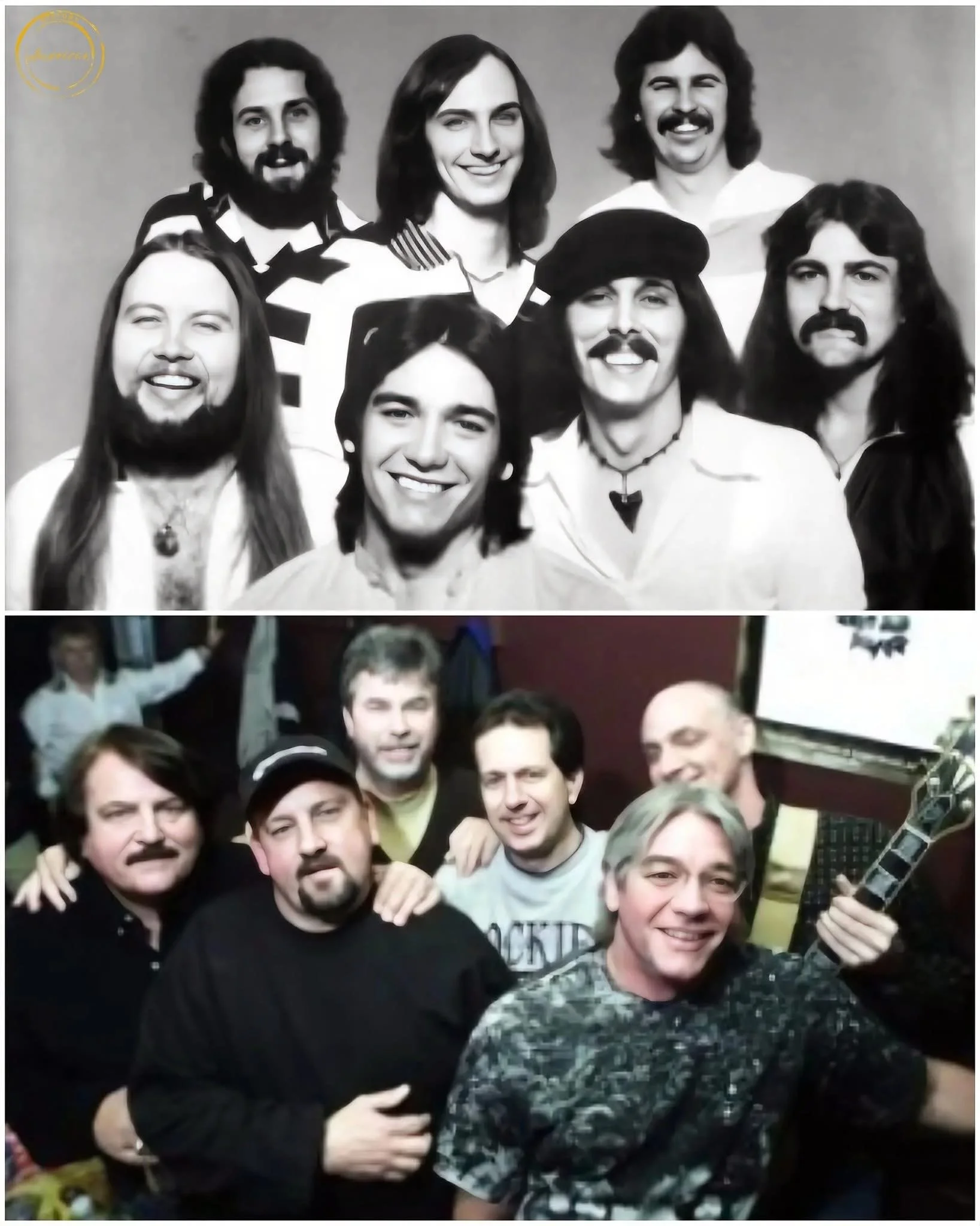
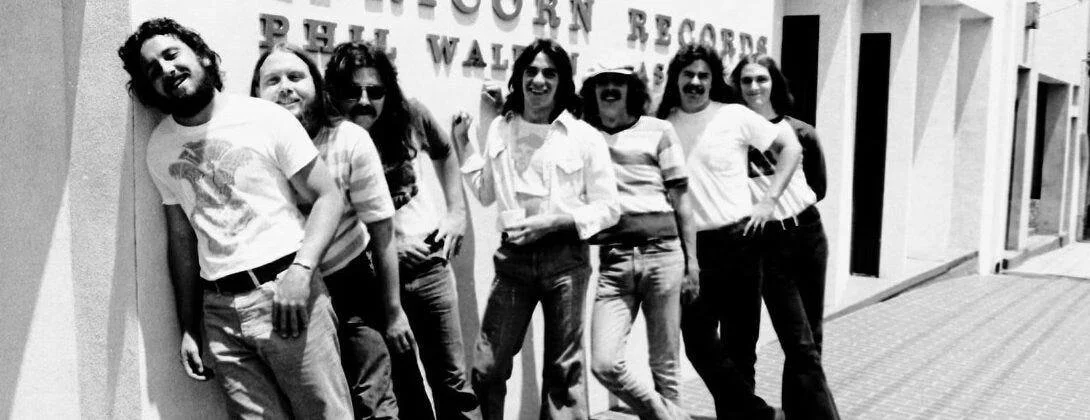
In the mid-1970s, a group of young men from Warner Robins signed with Capricorn Records just up the road in Macon and made two albums that earned them a place in the story of American Southern rock.
They were Mike Causey, Rob Walker, Bobby Golden, Sebie Lacey, Jimmy Hall, Al Scarborough, and Bob Spearman. Drummer David Heck joined in 1981.
Their debut single "Mind Bender," co-written in an afternoon session and recorded with legendary producer Buddy Buie at Studio One in Doraville, climbed to number 46 on the Billboard Hot 100 chart, number 38 on Cash Box Top 100 chart, and number one in some markets, pulling airplay from Seattle to the Northeast, markets where Southern bands rarely got a hearing.
They performed at Jimmy Carter's inauguration ball alongside the full Capricorn roster. They played the Winterland Ballroom in San Francisco, Bill Graham's room, the most hallowed stage in American rock, as an opening act, and the crowd called them back for an encore, which almost never happened to an opener at Winterland.
The BBC broadcast Stillwater’s performance from a Macon showcase on The Old Grey Whistle Test, reaching British rock audiences before half of America had caught up.
Steve Morse of the Dixie Dregs, who sat in with them more than once, called them the best three-guitar band he'd ever heard. A Capricorn executive, watching Mike Causey work a fretboard, said Mike could play almost as great as Duane Allman. These were not small things to say, and the people saying them were not small people.
What happened to Stillwater after that, including the label collapse, their scattered careers, and those quiet decades nobody filmed, helped shape these men into something the early records couldn't have predicted. The evidence arrived in the spring of 2026, with an announcement of a reunion concertƒ in Warner Robins, tickets priced at a modest $35 to $45, the kind of price a hometown band sets when it wants its people in the room.
And then, with little publicity, every seat was gone in less than two hours.
Fifty years after Mike Causey pulled a band name out of the air in Duke Golden's kitchen, the town that raised Stillwater's members answered back by buying every ticket and calling for more.
The guys were stunned by how fast the tickets sold out, and what it said about their hold on this place and its people.
Their people.
That loyalty was built over decades by music that was real when it was made and has stayed real ever since.
Still Rockin’
On a weeknight at La Cabaña Mexican restaurant in Warner Robins, the past and present of Southern rock share a small corner of a shopping center. Tres Hombres has the room humming, singer Tony Elmore, longtime partner Ronald Johnson, and a rotating list of other musicians are working through a set list that goes back decades.
The crowd leans gray at the temples, people in their sixties, seventies, and eighties who have been showing up for live music in this town back when "classic rock" was contemporary rock. And some of them show up well before the 5:30pm performance starts, so they can get a table close to the band.
Then three familiar figures walk in. Mike Causey, Rob Walker, and Sebie Lacey from Stillwater. Heads turn. Hands go up in greeting. Within minutes, Mike and Rob are trading riffs, Sebie is stepping to the mic, and the room brightens.
During “A Whiter Shade of Pale,” Sebie calls attention to the musicians around him. As the song winds down, he turns to the crowd. “You know what I just noticed? It's like being up here with Lawrence Welk. We miss the bubbles but Mike is leading this thing.”
As the audience applauds, Tony jumps in. “We can start calling him Larry.”
“That's right. Larry,” Sebie agrees, before thanking the room.
Here are three members of a band that once carried this town’s hopes walking back onto a stage they never really left. For Mike, the moment is layered. As a teenager, he looked up to Tony Elmore and Ronald Johnson, both slightly older musicians whose playing he admired. Now they're sharing a stage as peers. That compression of time, with decades folded into a single weeknight, is exactly what Warner Robins does.
The city keeps its musicians close.
The Old Commercial Circle
Commercial Circle functioned as the city’s original downtown district, wrapping around the intersection of Watson Boulevard and Davis Drive near Robins Air Force Base. For decades, this was where daily life happened. Clothing stores, barber shops, pharmacies, diners, service stations, music stores. Teenagers wandered the sidewalks. Families shopped. Musicians found one another.
And just two blocks from the Circle, just past the looming water tower, sat the Warner Robins Recreation Department, where local kids gathered for sports, dances, talent shows, and community events. Future Stillwater members who played in bands would perform there.
Back on the Circle, Sebie’s dad, Lonnie Lacey, opened Blind Lemon, a club where young musicians could perform and hear other bands, like the Bushmen from south Georgia, with a member named Rodney Mills who would later found Studio One in Atlanta. The kids would buy coke colas, spend time with friends, and imagine larger possibilities waiting somewhere beyond Houston County.
The area pulsed with activity in the 1960s and 70s, becoming an informal pipeline for young players coming of age in the rapidly growing military town.
Sebie remembers spending time around Commercial Circle as a teenager, part of a generation of local kids orbiting the rec department, music stores, and gathering spots that formed the social center of Warner Robins before the city expanded outward. Sometimes they made the rounds on bikes, most of the time they walked. Everywhere.
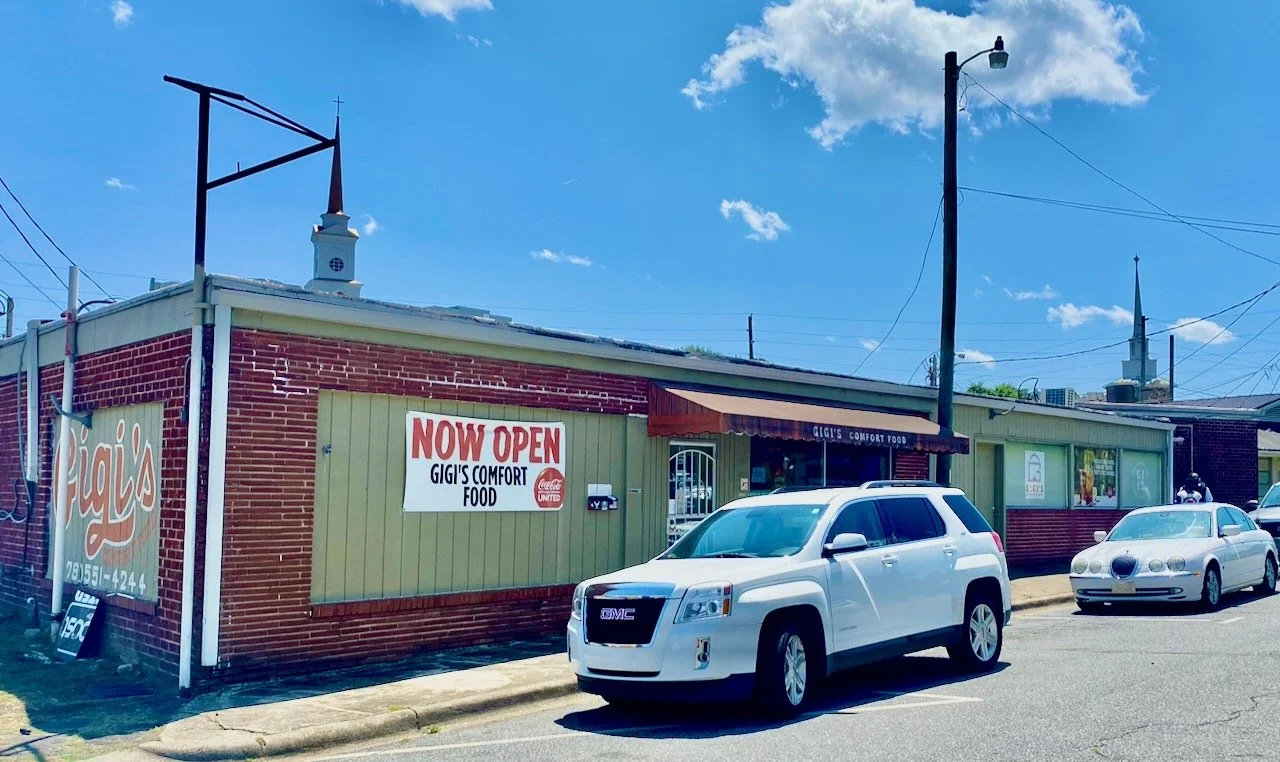
Back then, the building that now houses Gigi’s Comfort Food on Manor Court was Guthrie’s Music Store, where a young Mike Causey once took guitar lessons as a boy. The room that now fills with lunch plates and conversation once held amplifiers and teenage ambition.
Over time, Commercial Circle declined as newer development pushed farther outward across Houston County. Some storefronts emptied. Paint peeled. Older buildings weathered. Yet the district never fully lost its identity. Today the city is working to revitalize the area, reclaiming portions of the Circle for new community life while the old water tower still rises nearby like a marker from another era.
And right in the middle of that transition sits Gigi’s.
Owner Debbie Boyd came to Warner Robins through the same military pipeline that brought generations of newcomers into Houston County. Originally from Mississippi and trained as a nurse, she arrived through military life, stayed, built a home here, and eventually opened the restaurant in June 2019 with the help of her fiancé, David Smith.
Named after the affectionate title her grandchildren gave her, Gigi’s feels less like a business than an extension of someone’s home. People linger. Conversations stretch across tables. Regulars know one another by name. Music people drift in and out throughout the day.
When the pandemic hit, rather than lose the restaurant, Debbie returned to nursing for eighteen months to keep the business alive until she could reopen permanently. That persistence feels deeply aligned with the Stillwater story itself: endure the hard years, keep the room alive, come back when you can.
Today Mike Causey, Rob Walker, Jimmy Hall, and Sebie Lacey eat there regularly and bring friends. Gigi and her staff go watch the guys play with Tres Hombres at La Cabaña, sometimes sending someone early just to grab a good table. The relationship is reciprocal in the old-fashioned sense of the word, built through repeated presence rather than publicity.
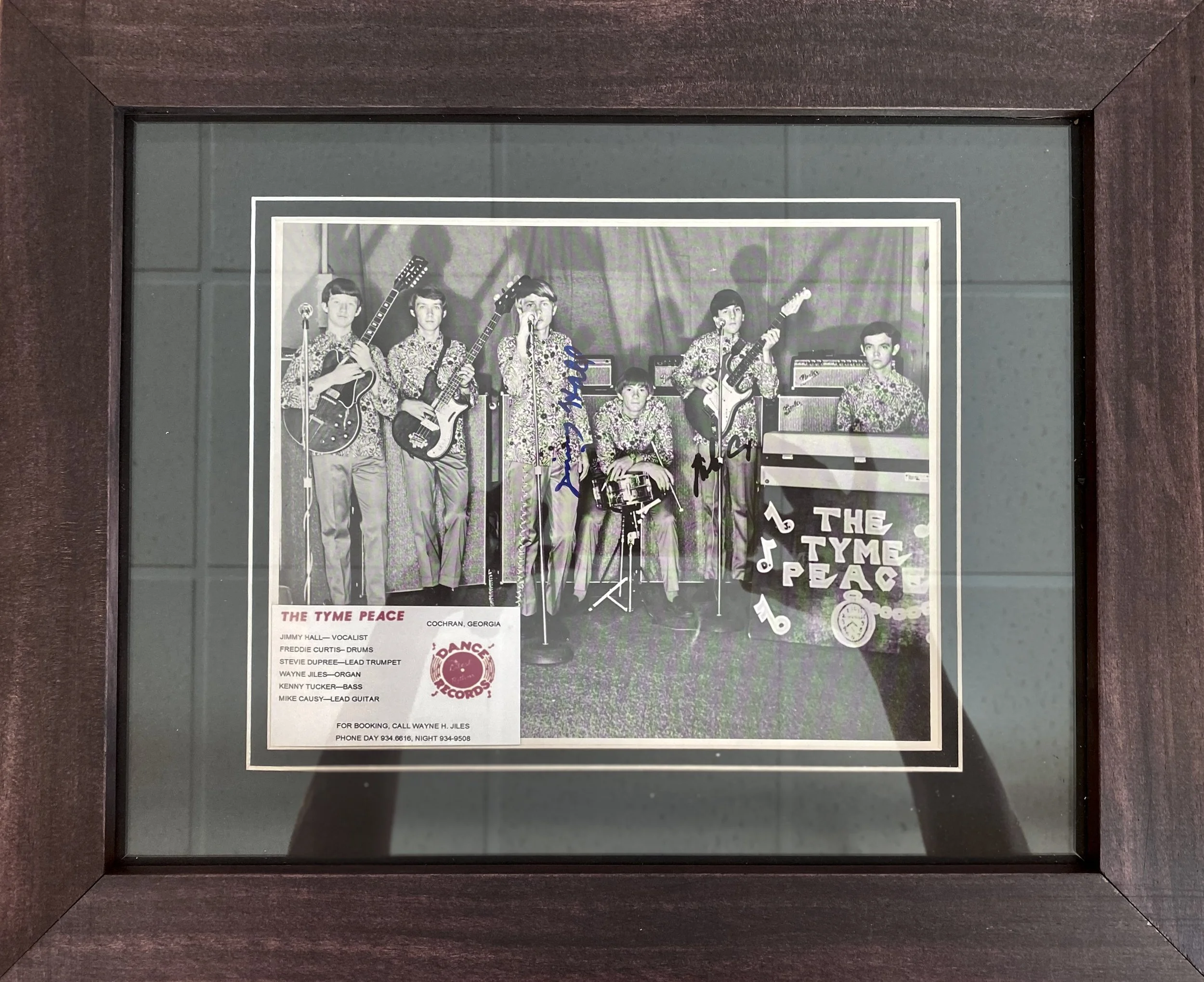
Gigi also understands instinctively that the building carries musical memory inside its walls. She has begun creating a Stillwater display featuring framed albums, photographs, flyers, and memorabilia connected not only to the band but to the larger Warner Robins music scene. Jimmy Hall even built a custom wooden frame for an old Tyme Peace promotional flyer and donated it for the wall, another piece of local music history finding its way home instead of disappearing into storage.
The effect is unexpectedly moving.
If H&H Restaurant and Mama Louise in Macon belonged to the years when hungry young bands were becoming legends, Gigi’s belongs to what comes afterward, when the musicians return home and find the community still waiting for them.
The members of Stillwater move through Gigi’s not as celebrities but as neighbors. Which, after all their years of hanging around the Circle, is exactly what they are.
The Circle, in every sense, still holds.
The International City
Warner Robins exists because Macon went out and got it. In the early 1940s, Macon's civic leaders lobbied the War Department to put an air logistics depot in middle Georgia. When the War Department approved the site in June 1941, it was Macon city fathers, working alongside Wellston leaders, who assembled land from twenty-six different owners and delivered the deeds to the U.S. Army Air Force. Bibb County spent more than $100,000 in raised taxes to secure the deal.
Warner Robins was incorporated in 1943 and named for Brigadier General Augustine Warner Robins.
The town that grew up around that depot was Macon's creation as much as the federal government's. Less than sixteen miles separate the two cities, and for three generations the distance between them has been practically meaningless.
Macon had started as a military town too. In the early 1800s, 11 forts lined the Ocmulgee river corridor, starting with Fort Hawkins being built where the federal government wanted protection, trade routes, and expansion into Creek territory. The river brought soldiers and settlers, and eventually railroad men into the region. Later it brought mill towns, cotton warehouses, highways, and Robins Field.
People arrived here carrying pieces of somewhere else.
By the time Stillwater’s generation came along, families were pouring into Warner Robins from towns across the state, bringing with them church and country music, blues, storytelling habits, river-town memory, and small-town ways.
The kids in town absorbed it all.
Robins Air Force Base became the largest industrial installation in Georgia, and the state's largest employer, now contributing nearly four billion dollars annually to the state's economy.
Warner Robins wasn’t Macon. The city had a different rhythm, one more transient, more disciplined, and shaped by the particular culture of military families who moved in and out, leaving their sonic signatures behind.
What the military environment gave them was rigor, coming from marching bands, from call-and-response cadence, from the military's insistence that timing is everything and sloppiness is a form of disrespect.
Another influence marched down Watson Boulevard every December in the Christmas parade: the Fort Valley State Blue Machine Marching Band. Formed by Navy Band veteran George Dewey Adams, the band was built on a foundation of military precision and Black performative flair, the same call-and-response tradition that had traveled from African oral culture through slavery, through church and the blues, into the marching cadences of Jody Town just across the railroad tracks from the base gate.
Jody Town was the neighborhood Black workers built for themselves when they came to construct Robins Field and discovered that segregated Warner Robins had no place for them to live. They built a complete world of churches, barbershops, schools, and cafes, raised on red clay streets by the same hands that built the base beside it.
The House of Soul in Jody Town, named with intention, had welcomed Otis Redding and Little Richard, threading the music of Macon and her Pleasant Hill neighborhood directly into the fabric of Jody Town’s life.
For years, the base had been an invisible music school for the guys who would form Stillwater. They were its graduates. They didn’t come from Macon's Cherry Street or Capricorn's Broadway. They came from somewhere adjacent, a place that heard the same music from a slightly different angle, filtered through parade grounds and base housing and cadences that dated back further than rock and roll.
Meanwhile, the base had been pulling the world inside the city limits since 1942, cycling Air Force families through on two- and four-year assignments from every part of the country and beyond.
By the 1960s and '70s, the kids who grew up here were absorbing R&B, country, rock, and soul in quick succession, from Armed Forces Radio, Macon stations, Warner Robins' own WRBN, and from records brought back from overseas postings. The town certainly earned its nickname “Georgia’s International City,” coined by drummer David Heck’s father in the city’s early days.
Warner Robins occupied a strange cultural middle ground during the 1960s and ’70s, modern and newly prosperous, still a blank slate to be written upon, yet deeply tethered to the older South Georgia worlds many of its families had left behind.
Parents working on the base arrived from places like Macon, Dublin, Hawkinsville, and Lumber City, carrying generations of river-town culture with them. Warner Robins is a river town, too, but most residents have rarely even see the Ocmulgee flowing beyond the secured edges of the base.
The musicians growing up in Warner Robins inherited all of that history and culture, whether they realized it or not. But not all of those young musicians came from the same backgrounds. While some families had deep roots in Georgia stretching back generations others arrived through the military.
What Warner Robins did unusually well was throw all those influences together.
Southern kids found themselves playing beside military transplants, band kids, theater kids, church musicians, and teenagers absorbing records from far beyond middle Georgia. The result was neither fully old South nor fully modern America, but something restless and hybrid sitting directly between the two.
Warner Robins was not an old courthouse town shaped over centuries by cotton, tobacco, and river commerce. It was a fast-built military city organized around federal payrolls, subdivisions, highways, electronics, airplanes, shopping centers, and national mobility.
Culture arrived here unevenly, however. Before the internet, trends traveled physically, through radio signals, records, touring bands, magazines, military transfers, and word of mouth. Atlanta often heard things first. Warner Robins absorbed them a little later. The smaller towns radiating into South Georgia sometime later still.
The culture lag created a regional identity from which Stillwater emerged, and they sounded like it.
The military base also meant professional musicians were always nearby. The 581st Air Force Band, one of the oldest active or reserve bands in the Air Force, had been stationed at Robins since 1961 and would remain until 2012. Its musicians were conservatory-trained professionals who rotated through the community on assignment cycles, living in local neighborhoods and performing in school gyms. More than one future rock musician in Warner Robins first understood what "professional" looked and sounded like by watching the 581st play in their high school gymnasium, close enough to feel the sound in their chest.
Two high schools also shaped what teenagers did with all that listening. At Warner Robins High, Ronald "Ronnie" Barnes, a History and Government teacher, built a simple talent show into the annual Follies, a full-scale musical revue that turned the school auditorium into a proving ground for singers, band kids, and actors who needed to know if they could carry a spotlight. Ronnie directed the Follies for forty years.
Future Stillwater members Mike Causey, Sebie Lacey, and Rob Walker all passed through his program, along with a teenager named Eddie Stone who would later anchor Doc Holliday. Mike says Eddie Stone was full tilt in The Follies. Ronnie had already pulled future Stillwater member Al Scarborough into a group called The Princes of Wails and sent them on bookings up and down the East Coast.
Also moving through that tradition, a few years behind Mike and Sebie, was a Warner Robins girl named Bobbie Eakes, shaped by the same Follies stage, later recognized nationally for her work on The Bold and the Beautiful and All My Children, and still, fifty years on, one of only two performers Mike Causey describes as someone born comfortable onstage. The other is guitarist Derek Trucks.
Across town at Northside High, legendary speech and drama teacher Ray Horne was building a similarly rigorous pipeline through theatre and one-act competition. Horne began teaching at Northside the year the school opened in 1963 and spent the next thirty-five years turning the auditorium into a proving ground for performers, actors, singers, and students who needed to learn how to command a room. His drama program competed fiercely at the state level for decades, treating performance as something you trained for, not just tried.
Horne’s influence reached far beyond theatre kids alone. Students who passed through his productions carried that confidence into bands, classrooms, broadcasting, music, public speaking, and community leadership throughout Middle Georgia. Future performers from the Warner Robins orbit, including David Heck’s younger sister Karen Heck, found their artistic footing under his guidance before moving into professional performance careers of their own.
By the time Horne retired, he had become such a defining figure in Georgia school arts education that the Georgia High School Association named an award in his honor, the only GHSA award ever named for an individual.
Together, Barnes and Horne helped build an environment in Warner Robins where young musicians, actors, and performers had room to discover who they were becoming artistically.
Young musicians grew up surrounded by talent shows, drama productions, marching bands, school revues, and local band performances that rewarded discipline as much as raw talent. Before Stillwater ever stepped into clubs or concert halls, they had already been shaped by adults who treated performance as serious work.
And, of course, Blind Lemon on Commercial Circle had been a training ground for youngsters in the 60s.
Stillwater's future members grew up in that environment, where stepping onto a high school stage or into a local club felt like a natural next move, not a leap.
The People Who Built the Pipelines
What Ronnie was doing at Warner Robins High through the Follies, and what Ray was doing at Northside High, reflected a larger pattern in Middle Georgia, where certain adults treated young people’s musical instincts as something worth encouraging rather than dismissing.
In Macon, promoters like Clint Brantley had helped create those kinds of musical pathways years earlier through clubs, live bookings, and informal mentorship networks that connected local players to larger regional scenes. Around Warner Robins, figures like Lonnie Lacey created similar gathering spaces for younger musicians through places like Blind Lemon near Commercial Circle, where music became part of everyday community life.
Glenn Heck, Stillwater drummer David Heck's father, was working at a different scale but along the same instinct. He arrived in Warner Robins in 1952 as a bassoonist with the 769th Air Force Band, a Wisconsin dairy farm boy who had earned a Bachelor of Music from the University of Redlands and then enlisted, arriving in Middle Georgia through the Air Force, along with many of Warner Robins' founding generation.
What Glenn built in Warner Robins across the following decades was extraordinary in its range: two terms as Chamber of Commerce President, thirteen years on the Houston County Board of Education, the founding of arts alliances in both Macon and Warner Robins, a career running Cox Communications. In addition to naming the town “Georgia's International City,” he also wrote the city’s official bicentennial song for 1976, “Two Hundred Years of Freedom.”
But it's Glenn’s work with the arts that belongs most squarely in the Stillwater story. He served as President of the Macon Arts Alliance, the organization that became the official arts agency for Macon and Bibb County, and he chaired the community committee that established Midsummer Macon, a summer training program in music and the arts for young people. Then he came home to Warner Robins and helped found and lead the Houston Arts Alliance, building the same organized infrastructure for artists in his own county.
Both organizations are still operating today to support artists from across Middle Georgia. The infrastructure he helped create has outlasted him by decades and continues to give the region's artists, musicians, and performers places to show up and be taken seriously.
What Glenn was doing at the institutional level, other parents were doing at the personal level. Across the Warner Robins households that produced Stillwater, parents paid for guitars and drove to practices and answered their children's longings. When Glenn's son David told him he wanted to play drums, and the school band director said there was no budget for another snare drum, Glenn went to Bibb Music in Macon and ordered one that matched Northside High's blue drums.
Mike Causey's parents bought him the $17.50 Sears & Roebuck guitar he had silently coveted since standing in front of one in a pawn shop in Texas. No audition was required. Just a mother and father who saw their son's longing and answered it the way good parents do.
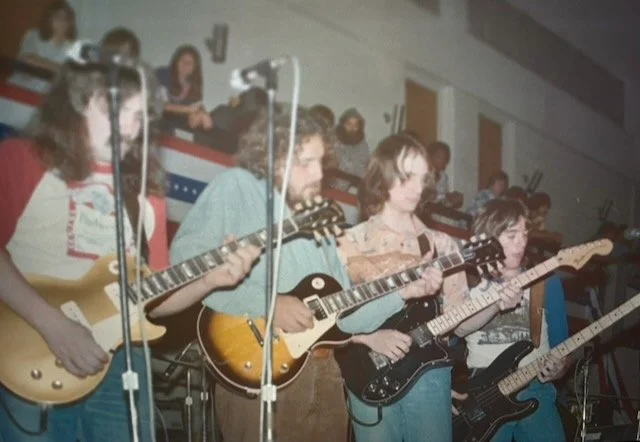
Bobby Golden, Mike Causey, Rob Walker, and Al Scarborough.
Duke Golden sat at the far end of that continuum. Bobby's father didn't just believe in the band, he became part of its machinery. Duke co-managed Stillwater alongside Phil Walden's organization, and he made space on their property where the band could live together and rehearse daily. Bobby instilled discipline into the band during those years. “We were rehearsing Monday through Friday, from ten to five, and we were tight, hittin' like a B-52,” Mike says.
That rigor was only possible because Duke Golden had given them a roof over their heads and a room to do it in. Duke’s parental investment as a supporter and manager, landlord and believer, is what separated Stillwater's development years from the loose, scattered trajectory that derails most young bands.
The infrastructure behind Stillwater was more than Capricorn. It was built more personally by a father in Kathleen, Georgia, who looked at his son's band and decided they were worth betting on.
Bobby Golden, looking back at all of it, has said that all their parents were extraordinarily supportive. It’s easy, knowing what we now know about those families, to understand what he meant. This was not a community where parents grudgingly tolerated their children's music. It was a community where parents actively built the conditions for it, by buying instruments, booking and attending shows, making costumes for school musicals, providing rehearsal space, founding arts organizations, ordering snare drums from Bibb Music.
The band that came out of Warner Robins didn't just happen to be good. They were grown in soil that had been carefully tended by people who believed music, and children, were worth tending to.
Warner Robins & Fillmore South
By the summer of 1970, the ground had already shifted in a major way nobody in Warner Robins could ignore. Just up the road at Middle Georgia Raceway in Byron, the Second Atlanta International Pop Festival drew hundreds of thousands to a soybean field and briefly turned a racetrack on the edge of town into one of the largest rock-festival sites on earth.
Jimi Hendrix played to the biggest American crowd of his career. The Allman Brothers Band opened the festival Friday night and closed it after dawn on Monday. I-75 backed up for miles in both directions with cars full of long-haired kids driving in, and curious local families easing out from Warner Robins to see what the noise was about.
For fifteen-year-old bassist Al Scarborough, the weekend was a hinge. "Yes, I attended and it changed my life," he says. "I was playing in bands, so seeing the music world's greatest stars in a field in Byron meant peace and love."
For many future Middle Georgia musicians like Al, the Byron Pop Festival felt less like a concert than a portal opening.
Mike Causey was there as a teenager, one more long-haired kid standing in the Georgia heat watching the counterculture arrive almost literally in his backyard. The crowds became so massive at one point that gates were knocked down and thousands poured inside without tickets, and without paying, adding another layer of chaos to a festival already teetering between utopian dream and logistical collapse.
“There was a lot going on in there,” Mike says with a laugh.
Sebie Lacey experienced the festival from a different angle entirely. He and several friends camped at Byron for nearly five days, sleeping in tents and wandering through the enormous temporary city that had sprung up just outside Warner Robins.
Ronnie Barnes’ youth group, U.S. Kids, performed during the festival, placing local young musicians close enough to glimpse the machinery behind a major rock festival. Ronnie was backstage among performers, organizers, and crew members.
For teenagers from Warner Robins, the festival didn’t feel impossibly far away. It was happening just up the road, and people from their own community were already participating in it.
Sebie still remembers standing in the crowd on July 4, 1970, watching Jimi Hendrix perform “The Star-Spangled Banner” as fireworks exploded overhead and hundreds of thousands of people stretched across the fields around him. The surreal experience was part concert, part cultural earthquake.
Meanwhile, Mike drifted through the enormous crowds watching acts that still sounded larger than life: Mountain, The Chambers Brothers, and especially The Allman Brothers Band.
“They killed it,” Mike says about the Allmans. “That show got them into the spotlight.”
More than that, it eventually put Macon on the world map.
Mike remembers returning afterward to the TV repair shop where he worked during high school and finding himself daydreaming about what it might feel like to play on a stage that large someday.
Years later, he would.
For those teenage musicians in town, the scale of what felt possible had just been permanently rearranged.
Warner Robins had its own room where that scale could be tested. In the 1970s, promoters Mike McEver and Robert Hintz opened Duck's Breath Saloon on Watson Boulevard, a deliberately anti-disco room, no dance floor, barn-wood walls, and burlap-damped ceilings built low for listeners who wanted to be close enough to feel the kick drum.
The Duck's Breath moved roughly twenty-two kegs of Budweiser a week plus heavy liquor sales, enough volume that Anheuser-Busch sent a team from St. Louis to see what was happening in "little old Warner Robins." The sound crews who traveled with touring acts spread word that the room was exceptional, so good that bands sometimes recorded straight off the board.
For four years in its first incarnation, musicians and regulars described Duck's Breath as "the closest thing to Fillmore South there ever was." Capricorn-connected acts like Stillwater, Doc Holliday, Eric Quincy Tate, and Grinderswitch used it as a home-field room, and on any given weeknight Chuck Leavell, Gregg Allman, Dickey Betts, Warren Haynes, or members of Atlanta Rhythm Section and Cowboy might step up to sit-in.
Capricorn's Phil and Alan Walden dropped by. National acts like The Guess Who, Humble Pie, and blues legend John Lee Hooker came through, giving Houston County fans arena-caliber artists within an arm's length. Hooker reportedly sent McEver a Christmas card every year after his set.
Duck's Breath was the kind of room that made Warner Robins feel, for a few electric years, like it didn't need Macon's permission to matter.
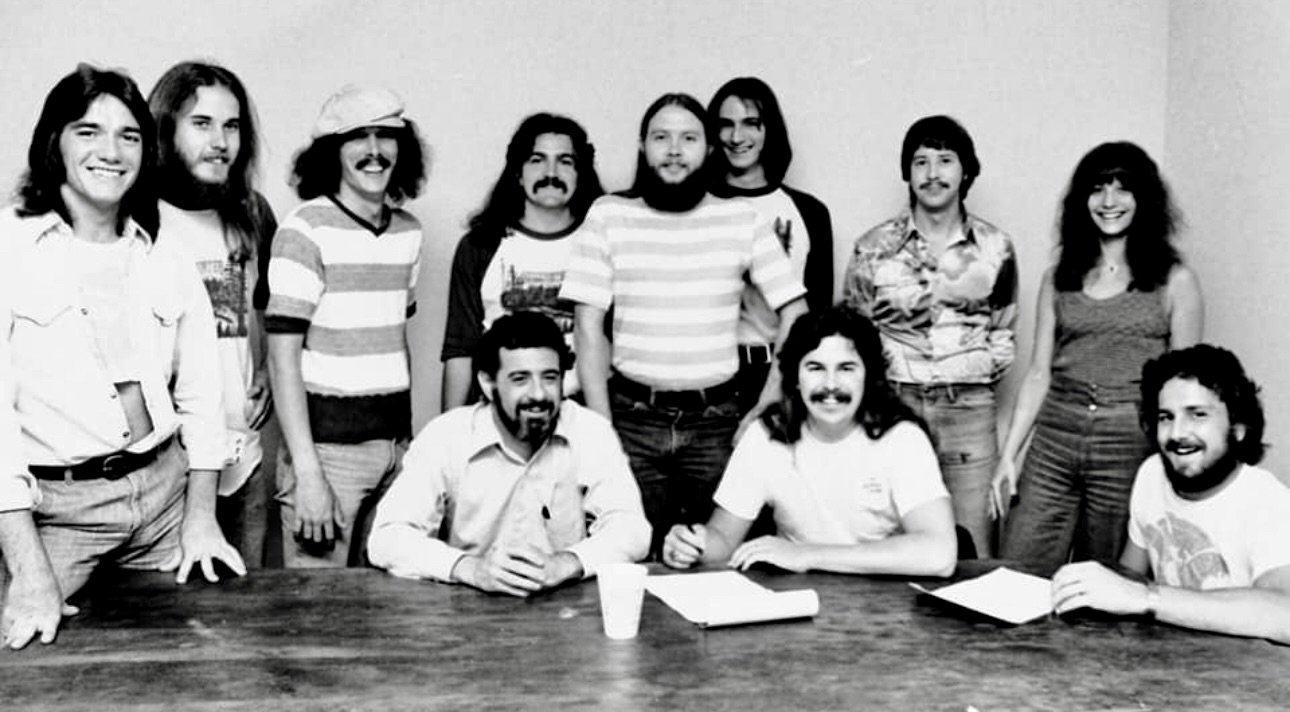
Bobby Golden captions this photo “Signing Day.”
How the Band Came Together
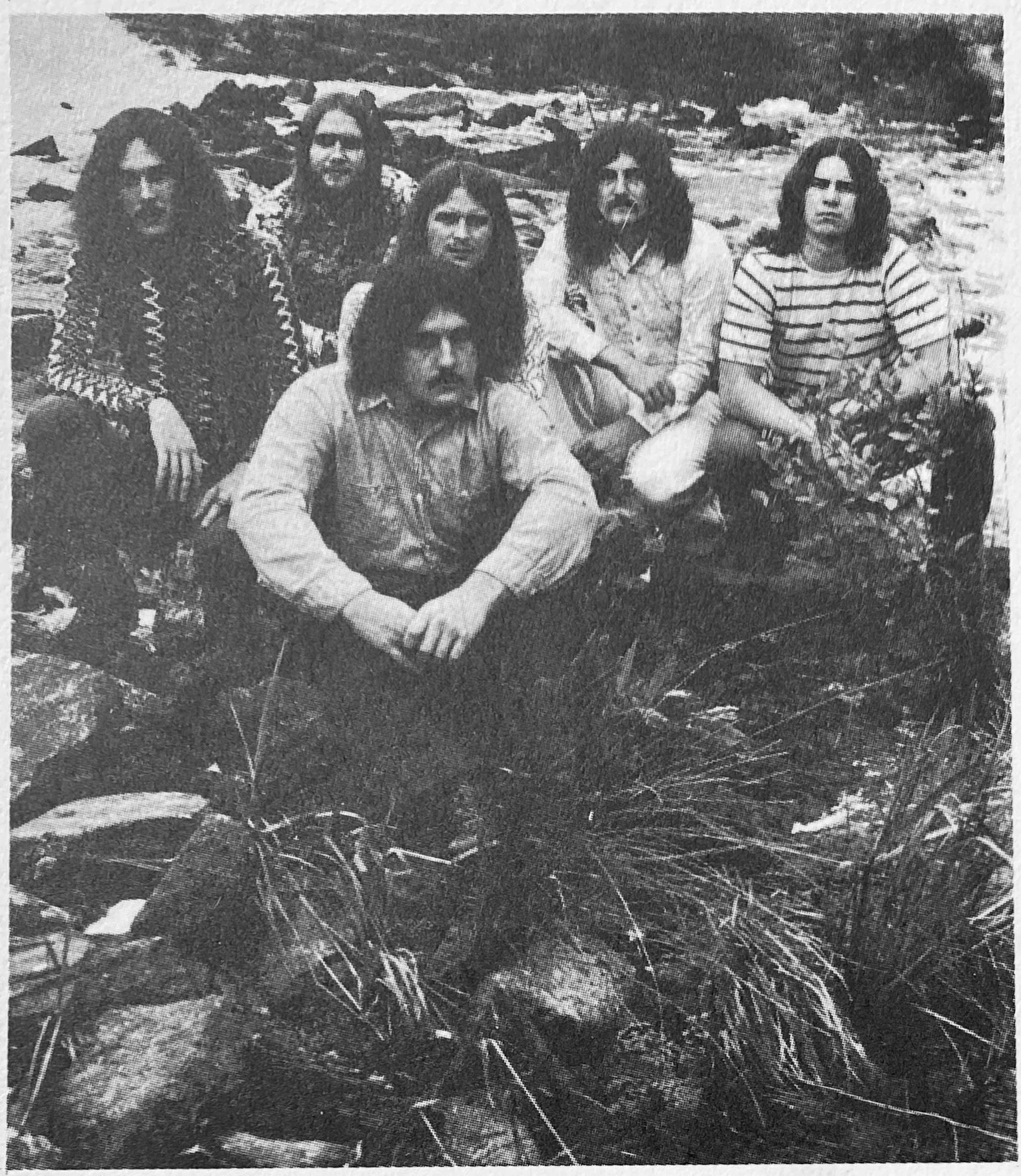
The seed for what would become Stillwater was planted at Warner Robins High, where Ronnie Barnes recruited Mike, Sebie, and Rob into his school variety revue. Ronnie also booked local acts, and a teenage Al Scarborough was already a client gigging on weekends to fund a private education (after he refused to cut his hair and was kicked out of Warner Robins High School).
These future members of Stillwater were orbiting each other. At school, they called themselves the Stage Band, with the class president playing bass. They loved the group Free and Chicago and would play “Statesboro Blues,” “Saturday in the Park,” and any Beatles tunes.
Over the next few years they gigged around Middle Georgia and toured out of state with other local musicians in bands like Tyme Peace, Roundhouse, Blackbird, Prisoners of Time, Princes of Wails, U.S. Kids, and other configurations arranged by Ronnie. One of those configurations, Roundhouse, eventually became Doc Holliday, a name change that happened fast when A&M Records came to town, liked what they heard, and signed them on the spot with members Bruce Brookshire, Eddie Stone, John Turner Samuelson, Daniel "Bud" Ford, and Danny "Cadillac" Lastinger. The U.S. Kids drew a faithful following across the country and included Lee Godfrey, Larry Banks, Flip Jones, Freddie Edgler, and Ricky Cox.
Meanwhile, also in Warner Robins, Bobby Golden and his brother Kenny, along with keyboardist Bob Spearman and vocalist Jimmy Hall, had formed Coldwater Army, a horn-driven Chicago-style rock outfit that had already recorded an album. When Sebie, Mike, Rob, and Al later stepped in, the name changed and the sound tightened.
In 1972, Mike and Bobby had met at Georgia College, and in early 1973 they made a mutual decision, as Bobby put it, "to give the music a full time shot."
Mike suggested the band name.
"We were sitting at Bobby’s house, in the kitchen," he recalls, "and I threw it out there, and everyone thought it was good, so we just ran with that. I pulled it out of the air."
Third guitarist Rob Walker joined in 1975 when band members drove to his college and invited him in, completing the triple-guitar frontline that would become Stillwater's defining feature.
It's worth pausing on what Bob Spearman brought to that lineup beyond keyboards. A Georgia native born in Fulton County, Bob had found his way to Middle Georgia through the Air Force. He was a sergeant stationed at Robins AFB when Bobby first met him, during the years when the base's clubs were packed with live music and the Vietnam War was still burning.
That's how the region worked. The base pulled talented people in from across the state and beyond, and some of them never quite left. Bob was one of them. Macon became his home, and Middle Georgia held him for the rest of his life. By the time he sat down at the B-3 for the first album's sessions, he was carrying a professional standard forged through years of working musicians' stages, and it showed.
Dues and Destiny
Stillwater members had been circulating through Middle Georgia's local scene for years. Bob later recalled that before Stillwater fully cohered, the musicians cycled through all of those bands playing “soul, pop-rock like Three Dog Night, anything that was on the charts at the time.” That eclecticism mattered to Bob because it meant Stillwater emerged from a middle-Georgia music scene less stylistically rigid than later Southern rock mythology sometimes suggests.
When they finally came together as Stillwater, the guys were scattered across Georgia colleges. Middle Georgia in Cochran, Georgia Southwestern in Americus, Georgia College in Milledgeville. After enough gigs and jam sessions to make the answer obvious, they quit school and committed fully to writing, recording, and the road.
What followed was a textbook rock and roll education.
They spent years surviving on little more than ambition, cheap motel rooms, and stubborn belief. Money was often so tight on the road that the band would sometimes wait until mid-afternoon to eat, buying Burger King meals at $1.55 each to make it through the night’s show.
Sebie Lacey remembers those years without bitterness. To him, the sacrifice was simply part of the bargain they had willingly made as hometown kids chasing a narrow window most people rarely step through.
“The worst thing is to grow older and wish you’d done something,” he says. “Well, we did it. We rolled the dice and went after it.”
They played club circuits and frat houses across the Southeast, from Miami to Richmond, and they covered it relentlessly. When home, the band members shared an old farmhouse near Bobby's parents' in the little hamlet of Kathleen, Georgia, to keep rehearsals practical and costs manageable.
Bobby's father, Duke Golden, served as co-manager alongside Phil Walden's organization, an arrangement that gave the band both family roots and professional infrastructure. Between tours, they were cutting demo tapes in Atlanta at Master Sound Studio, Studio One, and Web IV Studios, building a recorded body of work before they had a label to put it on.
The crew taking care of the band and gear on the road became known as the Bear Brothers: Billy Clyde "Little Bear" Wendt served as road manager and front-of-house mixer for the first five years; Bailey "Teddy Bear" Pryor handled the drum kit, lighting, and road management; David "Papa Bear" Buckman took care of guitars and stage; and Mike "Hoss Bear" Hoyt was keyboard tech and monitor mixer.
The bear crew nicknames suggest something about the culture. This was a tight unit, loyal and self-contained, the kind of crew a band needed to survive years of highway.
Also working the road through the years were friends of the band who Bobby says wanted to travel and party, like Ernie Harris, Bo Dempsey, Tommy Lee, John Nixon, Kelly Bellflower, and Eddie Stone.
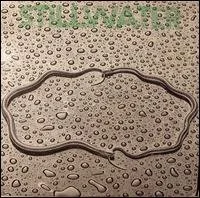
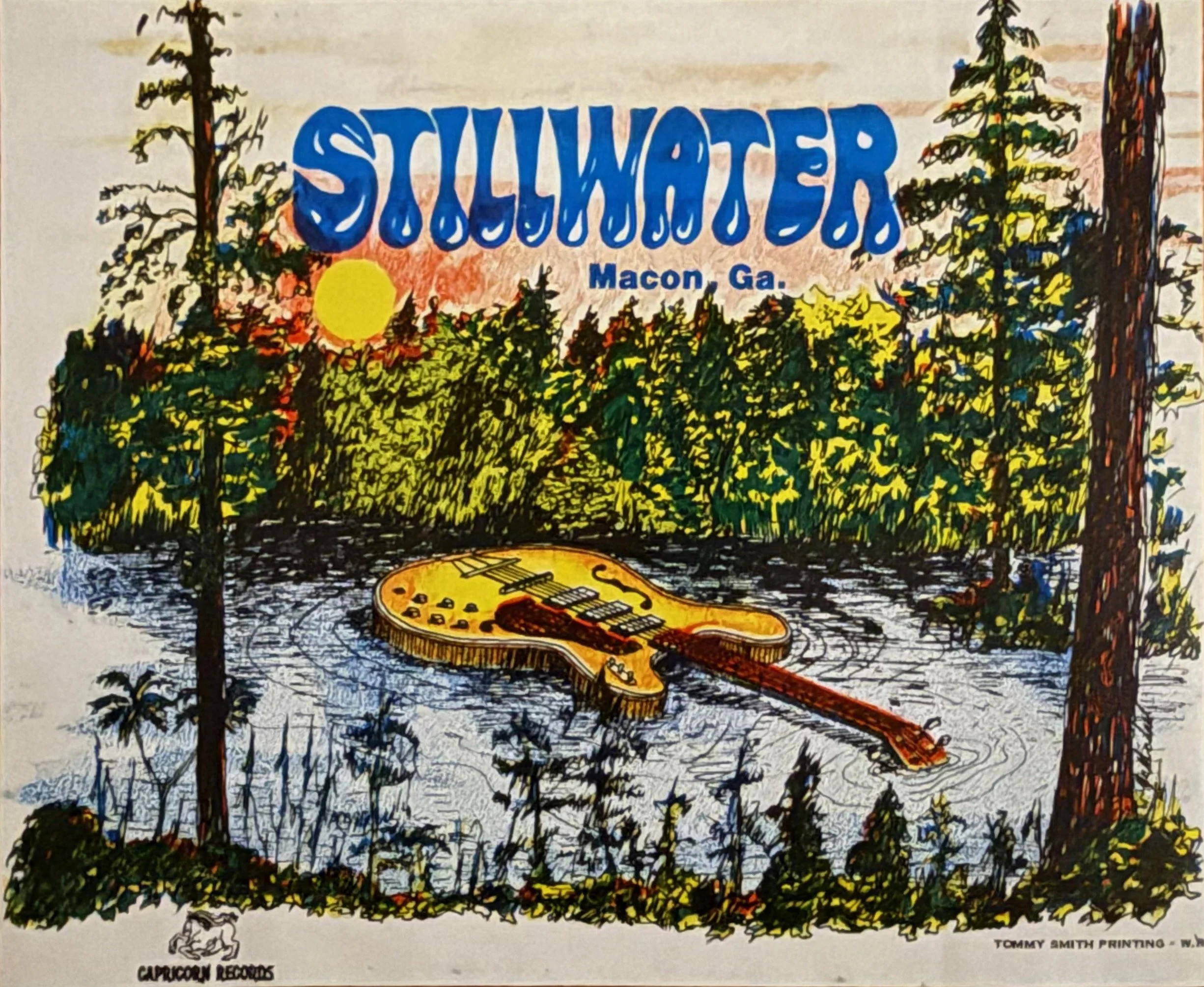
Their first big break was a regular booking at the pavilion at Lakeside Park in Macon, where in 1975 they found themselves sharing a stage with Dickey Betts, Gregg Allman, Bobby Whitlock of Derek and the Dominoes, and Charlie Daniels in informal jams. Lakeside Park was Phil Walden's property, a sprawling tract on Jeffersonville Road with a thirty-five-acre lake, a covered pavilion, walking trails, all part of nature that invited people to linger.
Walden used it every year to host the Capricorn Barbeque and Summer Games, an annual gathering that drew musicians, industry figures, journalists, and friends into the Georgia woods for a day of food, open bars, and music under the trees. In 1976 the guest list included Jimmy Carter, then the Democratic presidential nominee, and Andy Warhol.
Stillwater played for a few of those Capricorn picnics, and Cameron Crowe, then writing for Rolling Stone, came to a few, hearing the band both at Uncle Sam's and at Lakeside Park. Years later, when Crowe made the movie Almost Famous, he gave his fictional band the name Stillwater, saying it had been unintentional. But still...
Being named house band at the Lakeside pavilion wasn't a neutral gig. It was an audition in Phil's backyard. The Macon circle was noticing these Warner Robins kids before Capricorn had officially decided what to do with them.
The connection that pushed them toward a record deal came through Uncle Sam's, a Macon club owned by Phil Walden where they were also house band. Phil used Uncle Sam's as a regular nightclub and also as a showcase and gathering room for the Capricorn orbit, where Phil could put his acts in front of industry visitors and let the music do its own lobbying. It occupied a different space in Macon's music landscape than Grant's Lounge, the integrated room on Poplar Street where Ed Grant Sr. had been running several acts a night on a dollar cover since 1971, building the informal community that gave Southern rock its home and much of its early momentum. Grant's was public and democratic. Folks showed up, paid a dollar, and heard whoever was on. Uncle Sam's had a more music-industry feel.
Stillwater met producer Tom Dowd at Uncle Sam’s when he was in town working with Wet Willie. In 1976, the BBC filmed a set at Uncle Sam's during the annual Capricorn picnic. The all-star jam included Dickey Betts, Elvin Bishop, Dan Toler, Bonnie Bramlett, and Stillwater closing the evening. That footage became a guest appearance on the Old Grey Whistle Test program, in an episode called "Macon Whoopee," that broadcast their triple-guitar attack to British audiences before most of the American South knew their name.
That introduction to Tom Dowd was the hinge for Stillwater. Tom was one of the most accomplished producers and engineers in American recorded music, the man behind the Allman Brothers' foundational albums, Derek and the Dominoes, and sessions with Ray Charles, Eric Clapton, and Aretha Franklin, among dozens of others. Tom’s home base was Criteria Recording Studios in North Miami.
When Stillwater encountered him at Uncle Sam's, Bobby was almost certainly the one with enough confidence and courage to ask Tom to record them. And Tom did, squeezing them into studio time early one morning before a Wet Willie session, an act of generosity the group hasn't forgotten.
The fact that a band from Warner Robins, not yet signed to anything, had the nerve to corner one of the most worshipped producers in rock and roll and ask him point-blank to work with them says something about who they were.
The resulting demo didn't land a deal immediately, but it introduced Stillwater formally to Capricorn. First came a booking arrangement with Paragon, the talent agency founded by Alex Hodges, who had met Phil Walden while both attended Mercer University, operating out of 560 Arlington Place in Macon.
Landing a Paragon booking deal was a recognized first step into the Capricorn ecosystem and meant Phil's infrastructure was behind them even before his label was. For Stillwater, the progression was deliberate. Booking came first, then management, then the record deal itself. Phil's operation worked in layers, and the band climbed each one.
When Tom Dowd and Atlantic Records both expressed interest, Capricorn moved fast. Phil signed Stillwater the same day Atlantic's interest became known.
The World
To understand what it meant for Stillwater from Warner Robins to sign with Capricorn Records in 1976, you have to understand what Capricorn was, not as a business, but as a fact of gravity in the Southern imagination.
Phil Walden's label had spent the first half of the decade making the South the center of American rock and roll. Not Nashville, which had its own machinery and its own definitions, but Macon, Georgia, a mid-sized city on the fall line, an hour south of Atlanta, a place that had no particular reason to be important except that it kept producing people who were.
The Allman Brothers Band had come out of Capricorn in 1969 and by 1973 were selling out stadiums and redefining what American music could be. Wet Willie, the Marshall Tucker Band, Charlie Daniels, Elvin Bishop, the roster reads like a syllabus for everything that mattered in Southern rock, and all of it radiated outward from Capricorn’s executive office at 535 Cotton Avenue in Macon, the building that once housed Redwal Music, the publishing company founded by Otis Redding and Phil Walden, assisted by Alan Walden. And from nearby Capricorn Sound Studios (now Mercer Music at Capricorn), located at 536-540 Martin Luther King Jr. Boulevard.
For the young men of Stillwater, Capricorn wasn't an abstraction. It was sixteen miles up the road. They had played Phil Walden's backyard. They had jammed with Dickey Betts at Lakeside Park and been seen by the people who mattered in the room that mattered. When the label signed them, it was an induction into a lineage, a confirmation that what they had been building in Warner Robins since high school was real enough to belong to something much larger.
What no one could have fully understood, standing at that threshold in 1976, was how late in the story they were arriving.
Southern rock's cultural peak was that brief, extraordinary window when the music of the American South was commercially dominant and morally serious, when "Ramblin' Man" and "Simple Man" and "Can't You See" were saying something the country needed to hear about place and roots and the dignity of an ordinary life. That window was already sliding shut on Stillwater.
The Allman Brothers had fractured. Ronnie Van Zant and Skynyrd were two years from that tragic Mississippi crash. The cultural machinery that had made Southern rock feel like a movement was starting to feel, to the people who controlled American taste, like a region. And regions, however beloved, are easier to dismiss than movements.
The view of Southern rock’s slow slide into the margins may have appeared foggy for folks in Warner Robins in 1976. What was clearly visible was a label, a city, and a moment that felt, from the inside, like it would last for decades.
And in a way, it has.
The Dream, the Single, and the Machinery That Failed It
With a record deal finally in hand, Stillwater went to work with producer Buddy Buie at Studio One in Doraville. The studio was designed and built by Rodney Mills in 1970, co-founded with music publisher Bill Lowery and Atlanta Rhythm Section members. Mills spent the next sixteen years recording some of the most important rock albums made in Georgia, shaping the sonic identity of an entire regional movement from behind a console in Doraville.
What started as a rehearsal and writing room had grown into one of the most important recording facilities in the South, the room where Lynyrd Skynyrd cut their 1973 debut, where .38 Special was shaped, and where much of Georgia's rock canon had been laid down.
Buddy brought the precision of a hit-maker to material the band had been living with on the road for years, co-writing six of the album's eight tracks. Buddy was a great sound engineer, but his true passion was songwriting, and he was remarkably prolific in ways that put him in rare company, with 340 BMI-registered songs, and "Traces" ranked among the 34 most-performed songs in BMI history.
Stillwater’s single, "Mind Bender," had an odd origin. Buddy heard Rob working with a talk-box and suggested they write something that used it, inspired by the effect Peter Frampton and Joe Walsh had made famous. Rob's initial reaction was skepticism. "I didn't know what to think. It was pretty out there," Rob says.
But Buddy’s skills meant the song was written quickly, a strutty blues with some of the strangest lyrics in Southern rock history. "My daddy was a Gibson / My mama was a Fender / That's why they call me Mind Bender." That song put Rob front and center, and had a life of its own.
A Capricorn VP put it plainly at the time. When he saw Stillwater, it reminded him of the early Allman Brothers. The guitarist who could play almost as well as Duane Allman, he said, was Mike Causey. Then you throw in Rob and Bobby and things start quaking.
Their release in July 1977 hit at what many consider Southern rock's high-water mark. Skynyrd's live album, recorded at Atlanta's Fox Theatre, had just been released and was everywhere. The Atlanta Rhythm Section had broken out with "So Into You." Molly Hatchet hadn't arrived yet and Blackfoot's album Strikes was two years away. Stillwater appeared to be the next act in line.
"Mind Bender" climbed to the Billboard Hot 100 and Cash Box Top 100 by February 1978.
"We had a hit record," Al Scarborough says, "and couldn't support it."
What happened next reads like a dark comedy of compounding misfortune. A truck containing all the band's equipment was stolen from a Chicago hotel parking lot during their first major tour, opening for The Outlaws. All that survived was one band member's dirty sneakers. They drove home to Georgia and waited a month for Capricorn to supply new gear.
While they waited, Capricorn was caught in a disastrous distribution transition from Warner Brothers to PolyGram. Phil Walden, already financially overextended, had borrowed heavily against publishing assets and future income to keep the label afloat during the changeover. When the relationship with Warner collapsed, so did much of the machinery supporting Stillwater’s record, at the exact moment “Mind Bender” was gaining momentum.
In fact, a Warner Brothers promoter received a call instructing him to “go cold on Stillwater,” effective immediately. According to Al Scarborough, the band’s single was effectively frozen in place while industry politics played out above their heads.
Some promotional singles of "Mind Bender" had already been pressed with the artist credit misprinted as "Artie Stillwater," instead of “Artist: Stillwater.” And then an appearance on NBC's Midnight Special was canceled without explanation.
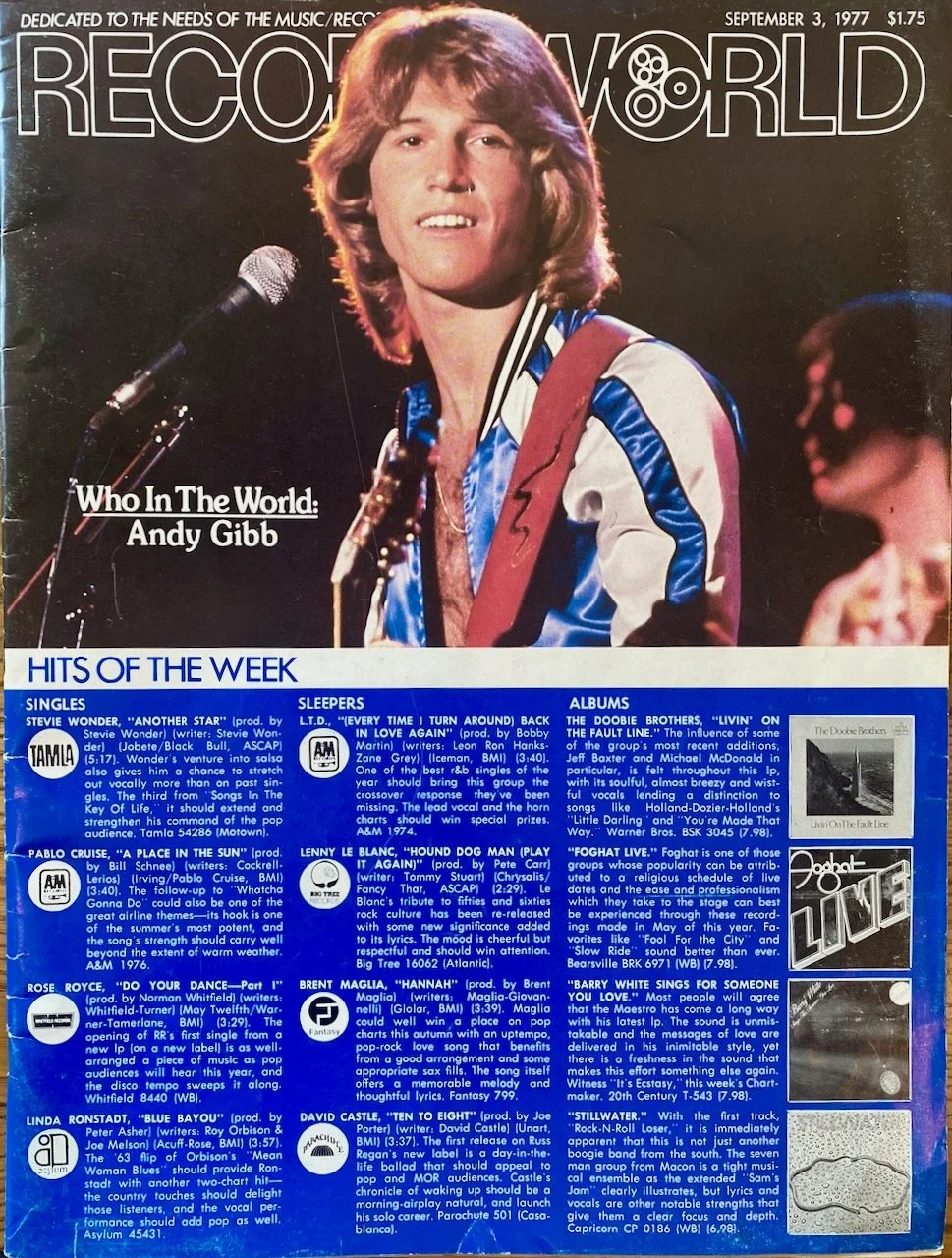
Yet, there were signs the record still had life. Legendary Denver concert promoter Barry Fey reportedly became interested in managing the band and believed he could push “Mind Bender” even higher on the charts. Barry even got Stillwater mentioned on the cover of Record World. But Stillwater remained contractually tied to Phil Walden and Capricorn as the label’s financial crisis deepened around them.
The hard hits kept coming. A support run with Frank Marino and Mahogany Rush fell apart when Marino got sick. A forklift operator dropped the band's organ in Florida.
There was one moment of unintentional comedy amid the wreckage. Six Flags Over Georgia amusement park named its new triple-loop roller coaster the Mind Bender after Stillwater’s song, billed it as the world's first when it opened on March 31, 1978, and invited the band to play a show and take the inaugural ride. They were the only ones on it. Rob recalls the scene with a laugh that contains the absurdity, the sweetness, the sheer Spinal Tap-quality of it all.
Just west of Atlanta, a song about a talking guitar had become steel loops in the Georgia sky. The band participated in another dedication of a new Mind Bender roller coaster somewhere in middle America at another Six Flags park.
And then they kept going.
They performed shows with the Allman Brothers, The Outlaws, Wet Willie, Foreigner, Elvin Bishop, Delbert McClinton, Blue Oyster Cult, the Cars, and others. A New Year's Eve show for 25,000 people at Georgia's World Congress Center. Jimmy Carter's inauguration ball. The 1978 Rebel Jam at Atlanta's Fox Theatre with the Dixie Dregs and Sea Level, broadcast live on 96 Rock.
They opened for Charlie Daniels at the Winterland Ballroom in San Francisco, where Bill Graham watched from the wings. And they played an outdoor Athens, Georgia, concert where the opening act was a local band nobody had heard of yet, called R.E.M.
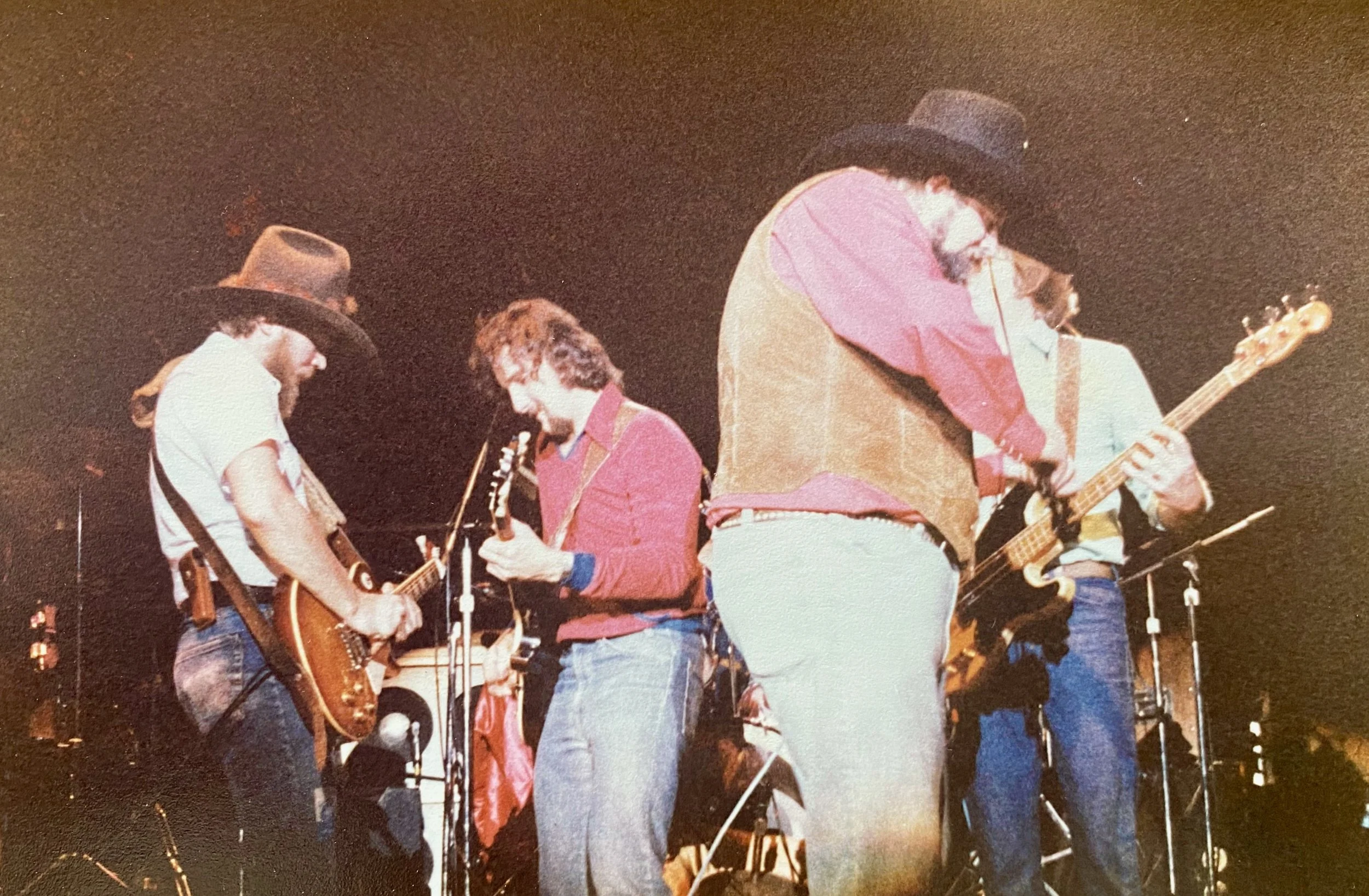
Playing with the Charlie Daniels Band.
But not every show could paper over what was happening at the label. Phil himself acknowledged the failure in a meeting with the guys telling them outright, “Boys, we lost ‘Mind Bender,’ that was our fault. We’ll do better.”
The music business has a way of ending things that doesn't look like ending. It looks like a phone call that doesn't get returned, a promoter who's suddenly busy, a radio station that's moving in a different direction. By the time you understand what's happening, the decision has already been made somewhere you weren't invited, and the language being used to describe your future sounds a great deal like the language being used to describe your past.
For Stillwater, that language arrived in the form of disco.
What disco did to Southern rock wasn't simply commercial, it was cultural. Disco repositioned the entire aesthetic of what these bands represented, which was rural, guitar-driven, predominantly white and male, rooted in a Southern identity that American popular culture was actively trying to leave behind in the late 1970s.
The same industry that had celebrated Southern rock as authentic now found its authenticity inconvenient. Radio formats shifted. Label priorities shifted. The money that had been flowing toward Capricorn found other destinations. And what was left, in Macon and Warner Robins and all the small cities where this music had meant something, was a silence that took years to fully understand.
The collapse of Capricorn in 1979 was a bankruptcy in the legal sense, with debts, distributors, and court dates. But the bankruptcy was also a kind of civic event, the kind that a city feels in its body before it recognizes outright what’s going on.
Macon had organized much of its identity around the music Capricorn represented. The studio on Broadway, session players, booking agencies, and the music economy’s infrastructure had grown up around the label, and all of it contracted when the label fell.
What had made Macon briefly the center of American rock and roll became, almost overnight, a history. Something that had happened. Something the plaques on the buildings would eventually describe.
For Stillwater, the loss was more personal than civic. They had given their twenties to this. They quit school, lived six to a farmhouse, rehearsed five days a week for years, and drove highways from Miami to Richmond in a van that smelled like cigarettes and greasy gear. They had done everything right by the rules they'd been given and then the rules changed while they were on the road.
The music they made at Studio One was honest and tight, built on years of living together, arguing together, and playing together until the songs meant something. It was as good as anything coming out of the South, but it arrived at the exact moment the South stopped being what the industry wanted to sell.
That's not a tragedy with a dramatic finale. It's quieter and harder to shake. It's the feeling of having believed in something completely, built your life around it, and then watched the culture move on without you.
Mike Causey describes how the full weight of such a realization hit him one day as he drove down Highway 247 toward the Pio Nono/Broadway split. "The dream had gone. You've played for ten years and that's gone. It crawled all over me for a bit, that part of life won't be the same." Not long after, he was installing insulation while Sebie laid carpet for new construction, the two of them quietly orienting themselves to the new world, finding their place in the new Macon.
They adapted.
Southern rock had tried to hold that same tension in its music: proud of its roots, honest about its cost, unwilling to pretend the contradictions weren't there. But the ground was giving way beneath it, and not only because the industry had moved on. Phil Walden had lost his footing. The cocaine that moved through the music world in the late 1970s brought distorted judgment, financial overextension, and deals that didn't close.
Phil had stretched the label past what its income could support, spending too freely, owing a lot of people a lot of money, and losing acts because it had neglected them for Carter’s campaign.
Al, curious about the business side, even attended portions of the court proceedings with Duke Golden and watched the implosion unfold up close. What shocked him most was how quickly an empire that had once seemed untouchable simply collapsed inward.
When the music business fell, there was nothing underneath to catch it. Bands like Stillwater that had done everything right found themselves standing in the rubble of someone else's decisions, holding songs that nobody was pressing anymore.
The industry's pivot to disco finished what the bankruptcy started.
Yet Stillwater had never been purely a backward-looking Southern rock band in the first place. Al still argues that keyboard player Bob Spearman helped push the group toward a more modern sound through synthesizers, clavinet textures, piano, and organ layered into the band’s triple-guitar attack.
“Bob made us sound more modern,” Al says. “That’s what set us apart.”
The tragedy was not that Stillwater failed to evolve. It was that they arrived at the exact moment the industry machinery around them stopped functioning.
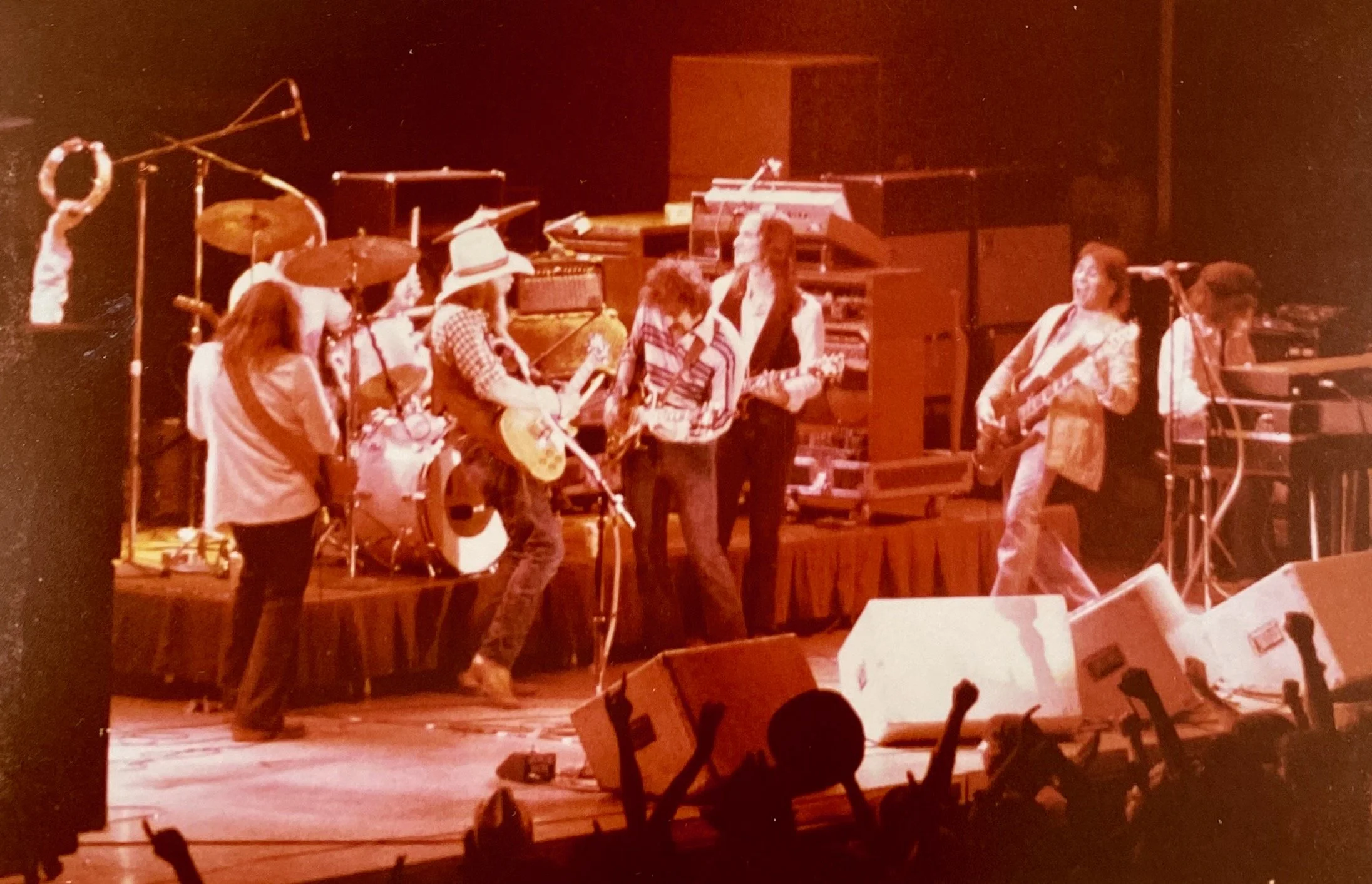
I Reserve the Right, and the End of the First Chapter
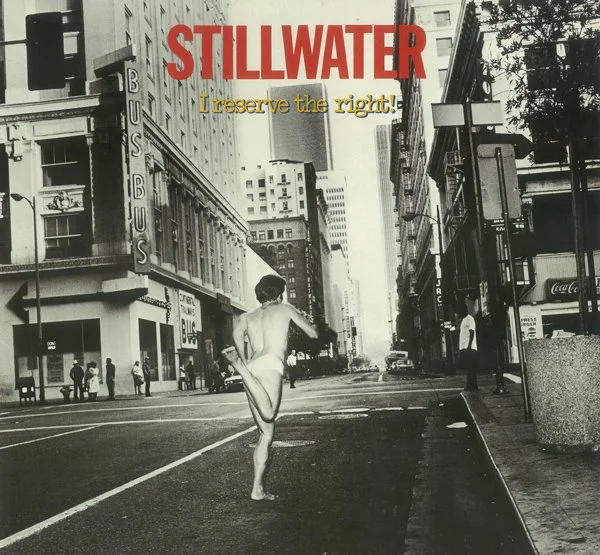
The second album, I Reserve the Right, recorded at Studio One and released in 1978, showcased a band that had grown into itself. Where the first record introduced them, this one pushed them forward with tighter arrangements, a fuller sound, and a clearer sense of what three guitars could do when they were given room to breathe, rather than stacked.
Buddy brought in the Muscle Shoals Horns and a guest vocal from Bonnie Bramlett, whose name was shorthand for credibility in the Capricorn world. Bonnie had been half of Delaney & Bonnie, toured as part of the Derek and the Dominoes family, and her presence on a session told other musicians something was serious.
Critics again praised Stillwater’s sound. “The brightest of the new Southern rock bands," wrote one Illinois reviewer; "the best I've heard on the Capricorn label in a long time," said a Virginia columnist.
But Capricorn was by then in the early stages of a financial collapse that would swallow the label entirely. Phil's admission, when he said, “We’ll do better,” had been a moment of unusual grace from a powerful man. But those words weren’t fulfilled and what followed was much less clean than the promise.
The collapse came fast, and was completely unexpected, with nothing to be done about it. As noted, Al had been monitoring the situation, along with Jimmy, as best they could, wondering what was happening, attending court hearings and soon understanding, as Jimmy put it, "That's pretty much it, we're done."
Jimmy left the band in 1980, his wife pregnant and the band generating roughly a hundred dollars a week per member. He had been in Stillwater since the beginning, and his departure was the clearest signal yet that the arithmetic of continuing no longer worked. The band lost a founding presence at the moment they could least absorb it.
In came a new drummer, David Heck, which allowed Sebie Lacey to step into Jimmy’s former role as lead vocals. David vividly remembers his first gig with the band in Jacksonville, Florida, in front of 15,000 people, opening for the Rossington-Collins Band, and how it took total concentration to play the two-hour set from memory. The concentration was so complete he has no idea what happened.
With their new drummer in place, Stillwater began pursuing other label opportunities. A West Coast deal they had previously turned down ultimately fell through a second time. Approached by yet another label, they relocated briefly to Colorado for discussions that also dissolved.
By 1983, back home in Georgia with fewer gigs and smaller rooms, they made an unspoken decision. Time to pursue other career opportunities that might, or might not, involve music.
"It was clubs to concerts," Rob says, "and then back to clubs and bars."
Mike Causey describes it without bitterness. "We had to find something else to do,” he says. “It was disappointing, but you felt like you gave it the best try you could. Welcome to the real world."
What they don't say, because they don't need to, is that the real world had been watching all along, and the real world turned out to contain, among other things, the sounds they'd made together and the people who could never forget them.
Stillwater's music found another unexpected audience in 2003, when “I Reserve the Right” played over the opening scene of the television series Tremors. Actor Victor Browne, whom Bobby Golden remembers as Buddy Brown from Warner Robins, starred in the series. A graduate of Northside High School and alumnus of Ray Horne's theater program, Browne went on to a career in television, including a role on One Life to Live. According to Bobby, it was Victor who helped get the band's song into the show, which can still be viewed on Science Fiction Station on YouTube.
Decades after their record's release, Stillwater was still finding its way onto television.
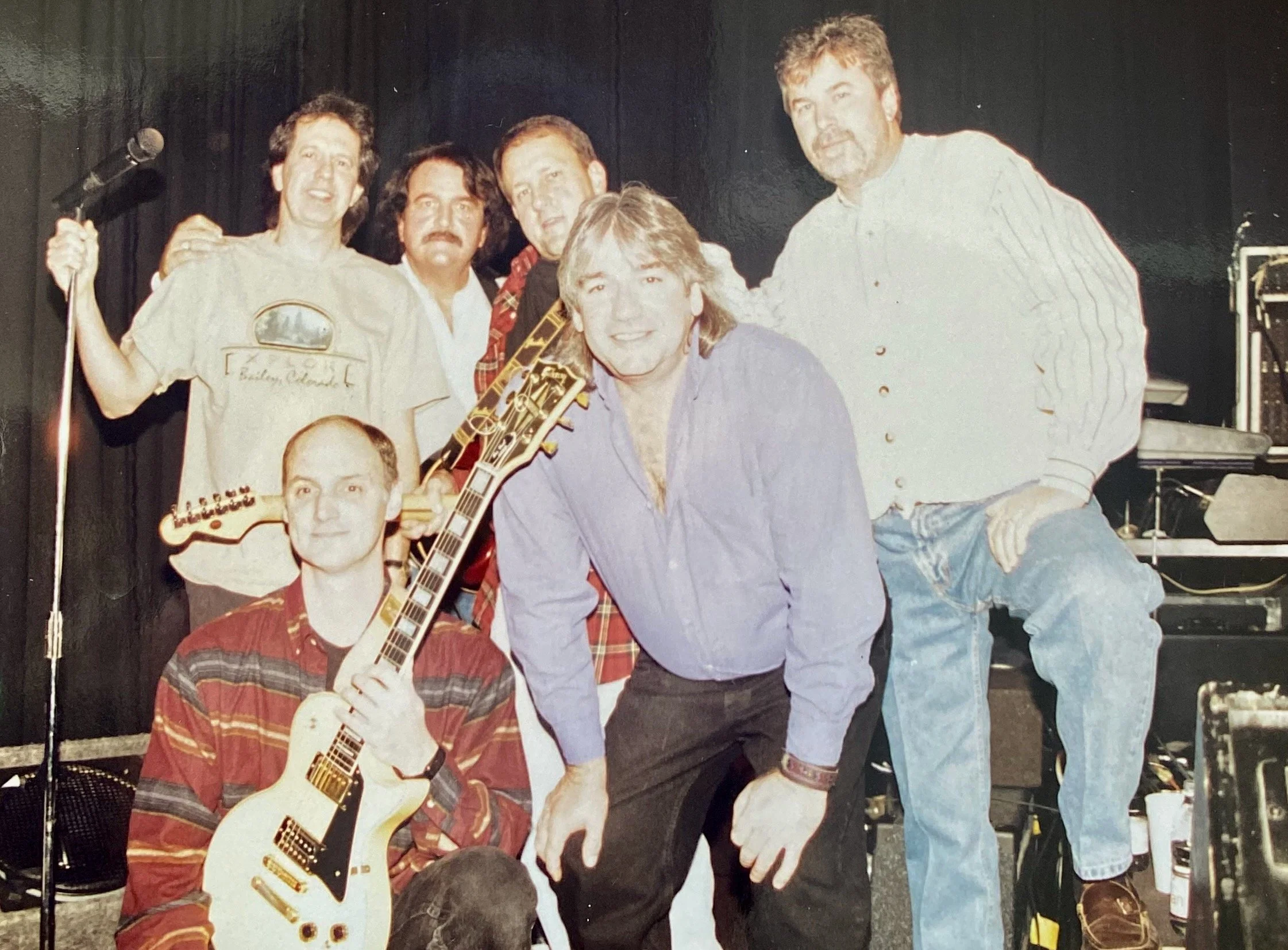
Ordinary Lives
Here is what gets lost in the mythology of being almost-famous: the texture of the years after.
In their late twenties and early thirties, the band members had organized their entire sense of themselves around a shared project, and the project had ended without a clear finale. There was no ceremonial closing. Just a label that filed papers in a courthouse, and the slow realization the next chapter wasn't going to be written in a studio.
The former bandmates scattered into careers that looked, from the outside, like acceptance.
At first, Mike tried roofing, substitute teaching, even a peach packing plant for a day, realizing it wasn’t for him. Sebie laid carpet.
Later, Mike went into newspaper sales for the Warner Robins Independent, which led to radio advertising sales at WMAZ and WPEZ in Macon. He worked in TV sales until age 55 and then started teaching guitar, going back into sales for a couple of months until realizing his heart just wasn’t in it any more.
Jimmy landed in sales too, starting out at a box manufacturing plant in Macon through a connection with Robert Hintz, the former co-owner of Duck's Breath Saloon, and later moving into machinery parts and tools, working a middle Georgia territory out of Byron. He did well. Mike and Jimmy would get together and talk the trade, how sales is fundamentally a relationship business, a people business, and how being known from their music had a way of opening doors. When they walked through those doors, their natural abilities took over.
David Heck went back to Nashville after the band dispersed, returning to the road with Cristy Lane, playing Opryland, the Grand Ole Opry circuit, and eventually following Cristy Lane to Branson, Missouri. By 2000, David had landed at University of Colorado Health, where he has spent twenty-five years, is still with them, and now works from home full-time.
Al settled into decades with the United States Postal Service while continuing to play with tribute outfits and weekend bands. Sebie sold banking products and then owned a men's clothing and dry-cleaning business in Warner Robins.
Bobby taught guitar at Tommy Blanchett’s Ideal Music on Commercial Circle for a bit. Then he earned an electrical engineering degree and spent fifteen years doing software engineering for military aircraft, including F-15s and F-22s, and a stretch in Italy working on the Eurofighter. That last detail has a certain geometry to it. The band that grew up in the shadow of Robins Air Force Base, absorbing the world that the base brought to Warner Robins, sent one of its members back into the aerospace world.
Rob joined the Air Force Band system, first with the Band of New England at Pease Air Force Base in New Hampshire, and then later with the Band of the U.S. Air Force Reserve at Robins, back in the town where it had all started. Rob had been one of those teenagers who heard the military band in the WRHS gym and ended up on the other side of that stage.
Keyboardist Bob Spearman, who had given the records so much of their depth, went on to play with Joe Dan Petty and the Lifters before he died of cancer in October 2002. His name is spoken now with respect for a player who shaped something permanent.
None of them put their instruments away. They played reunion shows almost annually at Whiskey River night club for 30 years. What made those annual gatherings distinctive wasn't just that the band kept showing up. It was the people who attended. Stillwater's reunions always felt like class reunions. But not of a single year or a single school, but of a whole era, a whole community of people whose lives had been shaped by the same music at the same time.
Their current sit-ins at La Cabaña carry that same quality. In a band whose members came up through NCO clubs, the Follies, fraternity rows, and Capricorn Studios, the crowd was always more than just an audience. They were classmates who waved across rooms and asked for hugs. They still are.
Sometimes the guys played gigs as a side outfit they called the Has Beens.
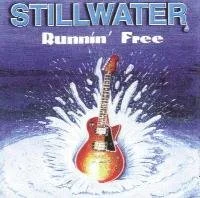
In the 90s, they went back into Studio One with producer Rodney Mills, returning to him for their third album Runnin' Free, which was built largely from tracks laid down in 1980, combining new sessions with those remixed ’80 tapes.
And it may represent the band's best work.
By then they had been writing together for two decades and it shows in the songs, which represented years of living compressed into fifty-five minutes of music that sounds like a band that never lost the thread.
Then, in 2000, a DreamWorks executive tracked down Sebie Lacey and informed him about the movie Almost Famous using his band's name. Director Cameron Crowe had drawn on his years as a teenage writer for Rolling Stone, when he had covered the Allman Brothers, Led Zeppelin, the Eagles, and others in the early 1970s, to create the film's fictional Stillwater, an amalgam of the bands he had traveled with.
The band name itself did not come from the real band, although Capricorn's Stillwater existed in the same world Cameron had been moving through. Cameron has said he got the name by thinking of the saddest or grossest thing imaginable, like algae-coated stagnant water, to reflect his fictional band’s aura.
But stagnation certainly doesn’t represent Warner Robins’ Stillwater. The name had been borrowed accidentally, so once DreamWorks confirmed the real Stillwater did exist, they cleared naming rights with the members, paying them $5,000, split seven ways. Sebie's reaction was to say, "I think about that one. Was I thinking, or what? But we looked at it like it might help us get things back on track, which it did."
The film sent a new generation to look up the real band, and what they found turned out to be way more interesting than the fiction.
When the gigs got fewer and further apart, as Mike describes their final year, Stillwater had two strong albums, a third of unreleased material, and a group of men who had gotten off the tour bus and built actual lives without walking away from the music.
Those records didn't stop existing when Capricorn went under.
The people who had been at Duck’s Breath Saloon, Lakeside Park, Uncle Sam's, frat houses and civic centers where Stillwater played had been present for it all. And presence, unlike airplay, doesn't expire.
They had given Warner Robins something real and the city had held onto it.
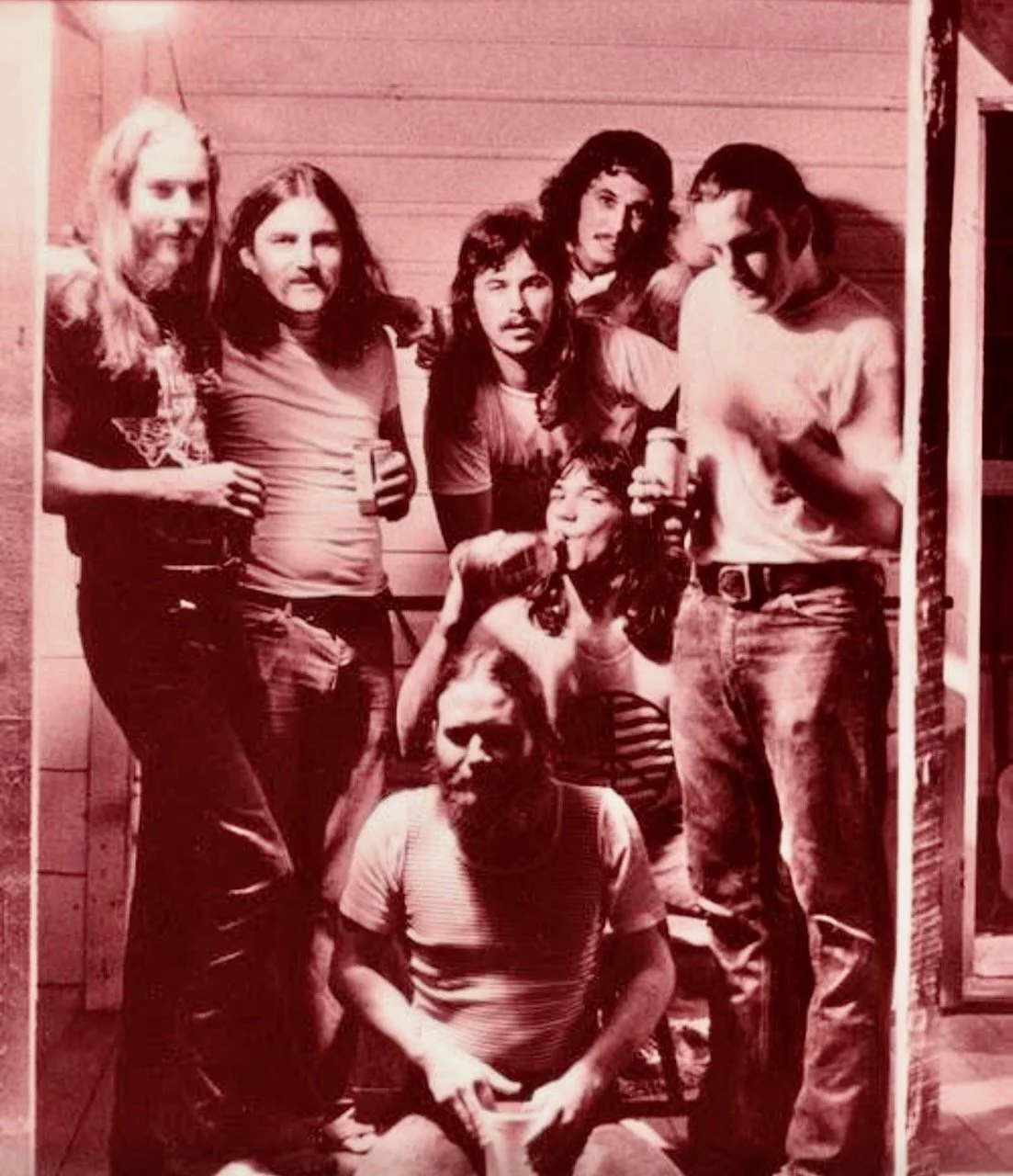
Stillwater, on the porch of The Shack, an old farmhouse that belonged to Bobby’s mother, Mildred Golden, where most of the band members lived in their early years.
Companion Pieces in this Stillwater Series
The broad outline of their second lives is one thing. What their second lives look like up close is much more fascinating. Read how each member of Stillwater carried the music, and everything else, differently.
What Remains
Today the band's presence is both local and strangely expansive. In Warner Robins, they slip into nights like the Tres Hombres gig, stepping onto cramped stages in restaurants and bars where their teenage selves might have once watched other bands. In Macon and Atlanta, they show up in archives and films. A Studio One documentary being made by Chuck Camp includes footage of Mike, Al, Bobby, Sebie, and Rob situating their records in the broader story of that room.
Attorney and music-industry veteran Tim Griggs, who built a career in Los Angeles and Nashville and then relocated to his hometown of Macon, has launched the Community of Older Music Professionals (COMP), with Mike on its board, working to ensure that the musicians who built the region's sound receive not only recognition but practical support as they age. That Tim and Mike are working on this together says something about how the Macon and Warner Robins circles have always overlapped. Al, Bobby, and Rob also attend COMP luncheons, held monthly.
Seen from that angle, the attention gathering around Stillwater is a correction of sorts. While Macon's role in Southern rock is well-documented, Warner Robins' role is less so. Yet from the same town that produced Stillwater came Doc Holliday, another hard-touring band that took the region's sound into the wider world. Doc Holliday's Eddie Stone, who once stood in Ronnie Barnes' school revue alongside future Stillwater members, is now touring with Wet Willie, still working stages while his Warner Robins peers play local gigs and plan reunions.
The pipeline that built all of them never really closed. Ronnie’s Follies and Northside's competition program laid down a template where stage work was taken seriously, and today Houston County's newer schools have extended that culture into the present.
Houston County High fielded its first regional championship one-act program in 2019 under director Brett Taylor, a HoCo graduate himself, and has since collected six region titles, four state championships, and a run of Georgia Theatre Conference wins through 2025.
Veterans High runs its own drama program alongside full bands and choirs. Travis Greene and Liz Wright, both products of the Houston County school system, raised in the same performing culture that Ronnie built, have carried that training into national careers in gospel and jazz.
Warner Robins continues to produce performers who outgrow it.
What makes the Stillwater story matter is the way its members have learned to hold two truths simultaneously. They were close enough to the center of things to land in Rolling Stone retrospectives and on the edges of films about rock mythology. They were also far enough from the center to have had to build second careers, to clock in at post offices and government offices, to sort out retirement accounts.
Talk to Mike today and what comes through isn't bitterness over what might have been, but gratitude for what was, for the fact that he and his friends chose, over time, to ground their lives in something sturdier than a tour schedule. Watch Al Scarborough with a bass in his hands, or Sebie Lacey standing at a mic and singing after beating throat cancer, and you understand what it cost them to get here and why they haven't stopped.
Stillwater's music has always been about interplay, those three guitars braiding lines, keys filling the gaps, bass and drums making room for it all. The men who made that sound are now doing the same thing with their histories, braiding them into the larger narrative of a region, a label, a town.
And they’re doing good work for the community.
At COMP’s April fundraiser concert, nearly five hundred people filled the room, many drawn by Stillwater’s name on the schedule.
The lineup itself looked like a map of Middle Georgia music history. Rusty Smith and the AtoZ Band opened and closed the evening. Rick Burnett of Grinderswitch rotated in on drums. Leroy Wilson, a Marshall Tucker Band drummer and longtime Capricorn session player, played drums on “Can’t You See” while Chris Hicks handled guitar and vocals. Legendary producer Paul Hornsby sat at the keyboard for that song and for his own “Georgia Moon,” which Hicks had previously recorded on Dog Eat Dog. Newt Collier from Sam & Dave fame stepped forward with his trumpet while Early Clover sang “Soul Man.” Eddie Stone played keyboards with various musicians throughout the evening.
Then Mike Causey, Rob Walker, and Sebie Lacey took the stage together and launched into “A Whiter Shade of Pale.” The crowd erupted immediately. They followed with “Mind Bender” and when the song ended, Sebie stepped to the microphone and shouted, “See you in July!”
This is the circle Mike, Rob, Al, and Sebie move through now. They are aging musicians still playing, still laughing, still showing up for their fans, carrying decades of history while helping each other survive the realities that come with aging. The songs remain, and so does the responsibility.
Documentaries, nonprofit boards, barroom jams, archives on a restaurant wall, and fundraisers all point in the same direction. In Warner Robins and Macon, there's a generation of fans who can hear Stillwater in a restaurant or a local convention center and feel themselves snap back to who they were when those songs were new.
There's also a new generation watching from the edges, seeing that it's possible to chase the dream, miss it by an inch, and still wind up with a life you're proud to play your way through.
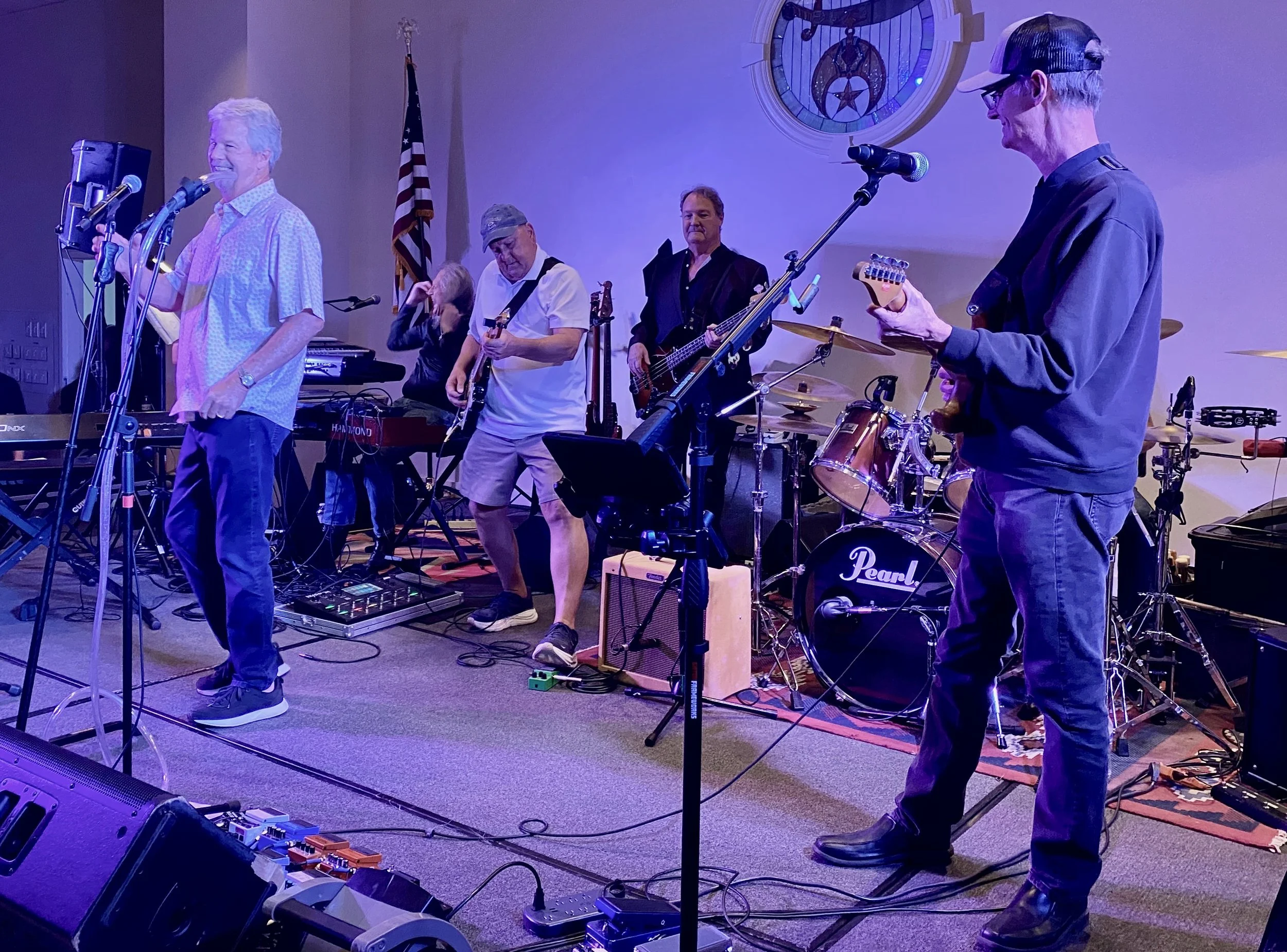
Sebie Lacey singing, Mike Causey and Rob Walker playing guitar at April 2026 COMP Fundraiser.
What’s Next
The attention Stillwater has earned isn't only local. European fans have followed Stillwater with a seriousness that occasionally surprises the band members themselves. In 2011, when Sebie mentioned an upcoming show in a radio interview, he noted that people from Europe were already asking how to get tickets. Buddy Buie's production work, the Capricorn connection, and the Old Grey Whistle Test broadcast that introduced them to British audiences in 1976 all left traces that have lasted.
In the Southern rock world, which has always had an outsized European audience, Stillwater's two albums circulate among collectors and fans who know exactly what they're hearing.
What comes next locally for Stillwater are reunion concerts this summer, and later concerts in the fall.
The symmetry of Stillwater playing a concert in their hometown is hard to miss. Here’s a band that grew up in this town, playing rooms that men like Mike McEver built, and now coming back to an eager crowd of loyal fans and friends.
The logistics of the reunion have their own poetry. Stillwater needed a drum kit for the July shows because David Heck is flying in from his home in Colorado. Sebie asked local musician Steve Holcomb if the band could borrow his kit for the reunion and Steve’s answer was immediate. “Of course David can play my drums. He's been playing them since we were teenagers.”
Steve and David had grown up in the same Warner Robins neighborhood, and young David used to go over and sit behind Steve's kit. Half a century later, in a venue on the edge of town, David will sit down behind those same drums, metaphorically at least, and play for a room full of people who have been waiting a long time for exactly this.
Mike and the band members had been stunned when the Stillwater reunion tickets sold out so quickly.
They shouldn't have been.
Warner Robins has always known what it had.
About the Author
Cindi Brown is a Georgia-born writer, porch-sitter, and teller of truths, even the ones her mama once pinched her for saying out loud. She runs Porchlight Press from her 1895 house with creaking floorboards and an open door for stories with soul. When she’s not scribbling about Southern music, small towns, stray cats, places she loves, and the wild gospel that hums in red clay soil, you’ll find her out listening for the next thing worth saying.
