
Stillwater’s Rob Walker: The Technician
Thoughtful, musically restless, and deeply collaborative, Rob Roy Walker emerged from the rich ecosystem of young Middle Georgia players who spent the 1960s and early 70s moving between talent shows, rehearsals, and stages across the South.
As one-third of Stillwater’s famed triple-guitar lineup, Rob helped shape the band’s distinctive musical identity during Southern rock’s most ambitious years. But the qualities that made him essential to the group were never just technical.
Decades later, his friendships with the other members remain rooted in the creative chemistry and emotional trust they built as young musicians coming of age together in Warner Robins.
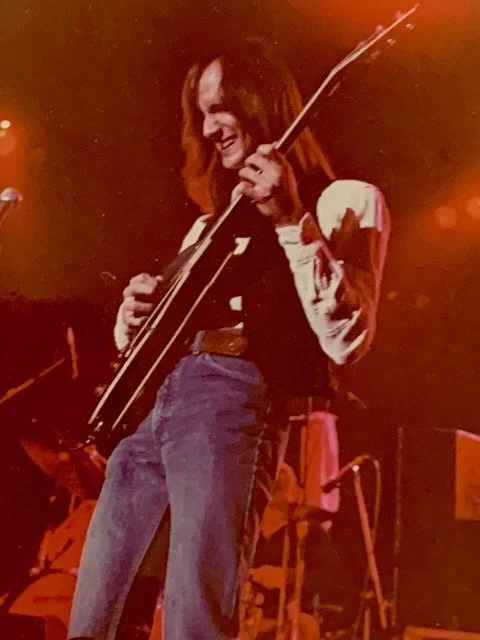
Rob Walker has spent a lifetime a half‑step to the side of the spotlight, not because he couldn't hold it, but because he never seemed to need it. And that's part of why people tend to relax around him.
He is tall, but has a way of folding his attention entirely toward whoever is speaking to him, considering carefully, and offering something back that feels genuinely thought through. Mike Causey, who has played beside him for decades, puts it simply. Rob Walker is one of the nicest people on the planet. If not The Nicest. One of the kindest people. If not The Kindest.
No one would argue with that.
Onstage with Stillwater, Rob is one of the three guitars across the front, trading lines with Mike and Bobby Golden, driving songs like "Mind Bender" and "Sunshine Blues," but rarely behaving like a man trying to outshine anyone.
Offstage now, at Community of Older Music Professionals (COMP) luncheons, or in rooms like La Cabana in Warner Robins, he carries himself the same way; always gentle, receptive, and moved that people still come up to tell him what those records and shows meant in their lives. What he has meant in their lives.
An International Kid in an International Town
Rob's path into that frontline began a little differently than the others. He was born in Germany, the child of an Air Force family, before landing in Warner Robins, and then becoming an international kid in an international town whose soundscape was already shaped by Armed Forces radio and the 581st band.
Rob's earliest formal guitar instruction came not in Warner Robins but in Utah, when his father was stationed at Hill AFB near Ogden. He was in sixth grade, and his teacher was a man named Johnny Hall. It was the first time someone sat across from Rob with a guitar and pointed him somewhere specific, and it planted something that the next several military postings couldn't uproot.
When the family landed in Warner Robins in 1971, Rob was already a guitar player looking for a room full of other guitar players. He found one quickly. Warner Robins offered infrastructure, including music stores with lesson rooms in the back and teachers who had chosen to stay and build something.
Boudleaux Allen at Bibb Music Center in Macon was one of those teachers. Rob studied with him, as did Mike Causey and Bobby Golden, three of Stillwater's eventual guitarists tracing lines back to the same man. Boudleaux was, by all accounts, a guitarist of rare ability who could have gone anywhere. He reportedly turned down an offer from Lawrence Welk, choosing instead to remain in Middle Georgia and teach. In retrospect, the musicians he produced are his discography.
Mike also took lessons from Doyle Bulloch at Ideal Music, Tommy Blanchett's shop on Commercial Circle in Warner Robins, and at Jimmy Guthrie’s Music Store on Manor Court near the Circle. These days, Mike, Sebie, Jimmy, and Rob have lunch regularly at Gigi's Diner on Manor Court, the exact spot where Mike took lessons at Guthrie’s Music. Gigi is starting a display of Stillwater memorabilia in homage to Mike, Rob, and the band’s connection to her restaurant space.
By the time Stillwater came calling in 1975, driving to Rob’s college to invite him into what would become their three‑guitar "army," he'd already learned how to be both insider and outsider at once, close enough to belong and conscious enough to watch. Rob had moved through the Middle Georgia music community, revealing how tightly woven that world always was. He played in Roundhouse, the outfit that would eventually evolve into Doc Holliday, rooting him in the sound and fury Warner Robins and Macon would eventually produce.
When he joined Stillwater, the band’s sound snapped into its final shape.
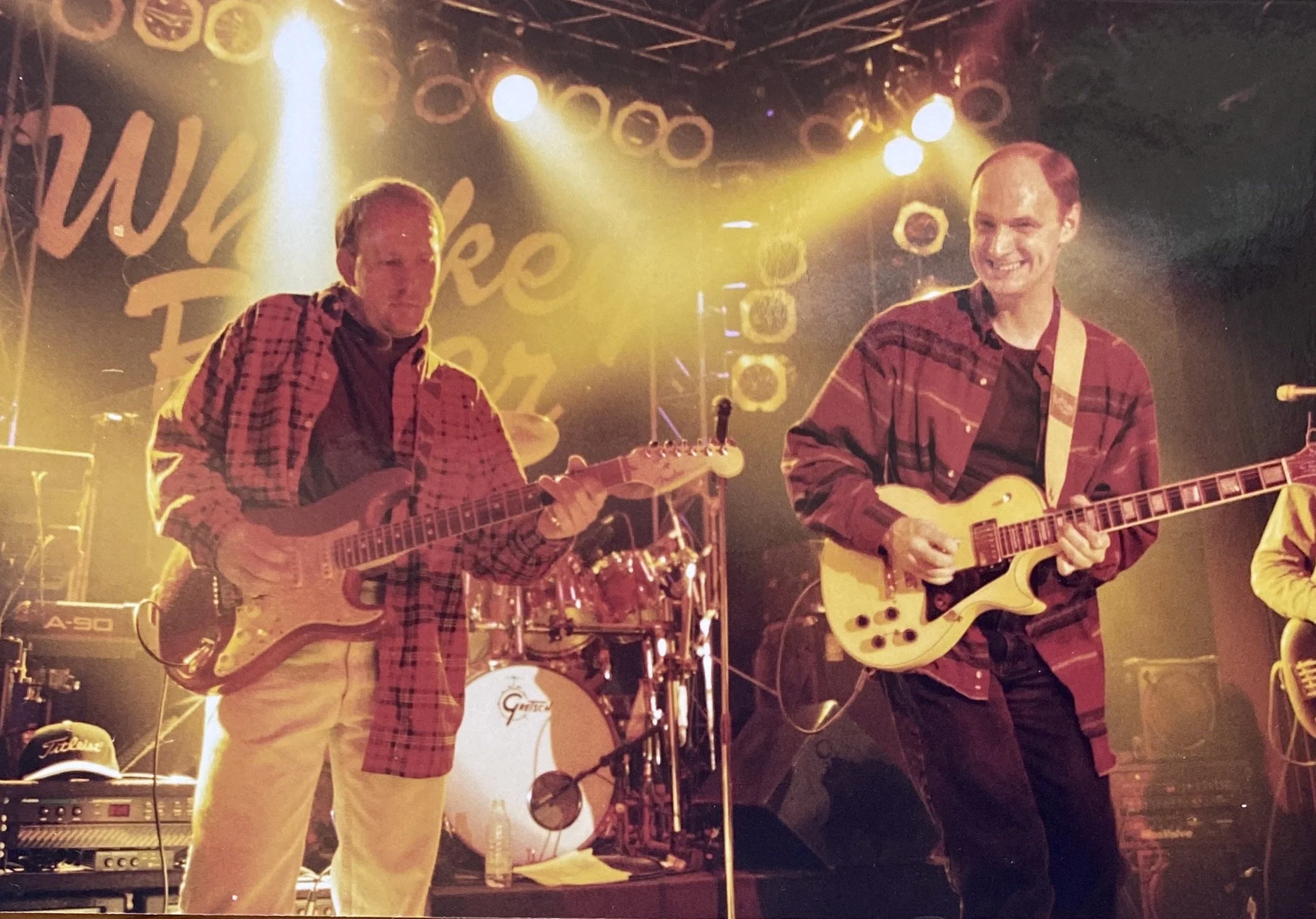
John David Walker Sr.
The military base that shaped Rob's childhood in Warner Robins was not an abstraction in his family. It was the living context of his father's life, and his father's life was extraordinary in ways Rob is still absorbing.
John David Walker Sr. came of age at exactly the wrong, and right, moment in American history. He entered the Army Air Corps in 1940, before the Air Force existed as a separate branch, before the United States had officially entered the World War II, and his first assignment brought him to Robins Field for a time. What followed was twenty-eight years of military service that took him everywhere history was being made. But his sights were set on returning to Robins one day.
During the war, John was a flying sergeant and flew a Northrop P-61 Black Widow. He became a commissioned officer as the war progressed.
On D-Day, he was in the air over Normandy aboard a flying command post carrying generals who were assessing troop movements and the shape of the battle below in real time. While thousands of young men were landing on the beaches, Rob’s father was above them, part of the machinery behind the largest military operation in history.
Then there was Amsterdam.
In the spring of 1945, his plane developed fuel problems over occupied Holland and landed in a field near the Dutch town of Bussum, between German and Canadian forces. Local residents hid the crew until Canadian troops secured the area. The Americans saw firsthand what occupation had done to the village. People were starving.
John Walker and his crew later returned voluntarily, flying hundreds of miles back into the region with four tons of food requisitioned from a German POW depot. They landed again in the same rough field, delivered the supplies to the village, and flew back to the war.
Fifty years later, the story found its second act.
In 1995, John began searching for the Dutch family that had sheltered his crew. At the same time, a Dutch woman named Maria, the young girl who had watched the plane land in her village decades earlier, was searching for him. They found each other just before a reunion of his old unit. Maria sent photographs from the original food delivery along with a letter remembering how the liberation restored “trust and faith in the future.” Rob says there was not a dry eye at the unit’s reunion.
The story stayed with him because it revealed what people are capable of in terrible times. Hiding strangers, hauling food across enemy territory, carrying gratitude across half a century. The Poelman family never forgot the Americans who returned. John Walker never forgot the village that saved him.
After the war, John stayed in, moving his family from Germany, to Clark AFB in the Philippines, to Hill AFB near Ogden, Utah, to Ohio, to the Canal Zone in Panama. He finally returned to Robins AFB, which is where he had always wanted to land. The family was close enough to Asheville, N.C., and their family in that area, and close to Florida for the fishing John loved.
Rob was seven years younger than his brother John Jr., enough of a gap that the older boy often seemed to belong to an entirely different musical generation. But John became one of the biggest influences of Rob’s life.
In the Philippines, Rob watched his brother play drums in the living room with neighborhood kids while American rock and surf instrumentals drifted through military housing. Later, in Utah, John’s older friends did not necessarily want a little brother hanging around rehearsals, so Rob improvised. He would slip upstairs and sit near the bathroom laundry chute, listening to the music echo upward through the house.
Their father and mother, Laura McRary Walker, whom everyone called Lolly, encouraged both boys early. While stationed in the Philippines, they bought John a six-string guitar and Rob a five-string. Eventually John handed his younger brother the better guitar and took on the challenge of repairing a beat-up twelve-string for himself instead.
That exchange was an act of older-brother generosity.
John Sr. had told Rob about the Air Force band as a career option back in high school, and like most young people given good advice by a father, he didn't listen immediately. He would get there eventually, though, and when he did, he understood where the seed had come from.
"I'm astounded at what he did at such a young age," Rob says of his dad. "He makes me proud."
Music remained one of the strongest threads binding the Walker family together, even as life carried the brothers in different directions. John Jr. never pursued music professionally. Instead, he built a long career with the phone company, beginning with Bell South as a lineman and eventually retiring through the long chain of corporate mergers that ended with AT&T. Their maternal grandfather, Roy Alonzo McRary of Raleigh, North Carolina, had worked for the phone company too, enough of a family legacy that Rob carries his grandfather’s name.
But John never stopped playing.
While attending college in Tennessee, he spent summers in Asheville with Lolly’s extended family, deepening the North Carolina roots that remained important to all of them. He later settled in Jacksonville, FL, with his wife Kathie, whom he met through the phone company, and they raised their children, Meri, Nina, and Josh before eventually relocating to St. Augustine.
Along the way John formed a band called Dawn Patrol, which still performs occasionally today. His musical tastes reflect the seven-year age gap between the brothers. John loved early-1960s instrumental surf music and became an accomplished surfer himself, while Rob gravitated toward the heavier Southern rock sounds that emerged later in the decade.
“I surfed with John once,” Rob likes to joke. “I drank more water than I surfed.”
Despite spending most of their adult lives in different towns, the brothers remained close. They never played together in a formal band, but at family reunions they often wound up entertaining relatives with guitars in hand. John still comes whenever he can to hear Rob and Stillwater perform.
Somewhere, Rob says, there is even an old recording John made years ago of his younger brother playing “Louie Louie” into a tape recorder.
John David Walker Sr. and Lolly were part of what people mean when they say the Greatest Generation, as a description of men and women who were handed an impossible situation and handled it with a matter-of-factness their children have spent their whole lives trying to understand.
There’s one more thread connecting father and son across the decades of military service. John Walker Sr. had arrived at Robins first and spent the rest of his career finding his way back. Rob's own military career traced almost the same arc. He was assigned to Robins at the start, then rerouted to New England and subsequently stationed elsewhere for years, always with Robins as the destination he was aiming toward. The commander of Pease AFB had called Rob personally to ask him to come to New England. Rob went. But the whole time, like his father before him, he was pointed home, back to Robins.
And in the end, he made it back in time.
When his father died in 1997, Rob was with him in Warner Robins, the same town his father had first passed through in uniform nearly sixty years earlier. After decades of assignments, departures, reroutings, and returns, both men’s roads had curved back to the same place. Father and son each pulled away by military service, each eventually finding his way home again.
Laura McRary Walker: Lolly
Behind John's career stood Lolly. She followed a military husband across the world with the same determination military spouses of that generation carried as a matter of course. Germany. Utah. Ohio. Panama. Warner Robins, finally, for good. Each move meant a new school for the children, a new neighborhood to learn, a new community to build from scratch. Lolly built them all.
"She moved mountains," Rob says about his mother.
She was also an excellent golfer, inspired, specifically, by Ed Causey, Mike's father, the civilian golf pro at Robins Air Force Base. That small, specific thread runs through the whole Stillwater story, how the parents knew each other and were supportive of the band. Lolly and Sue Causey, Mike's mother, became great friends, playing bridge together, discovering they shared the same birthday, maintaining a closeness that lasted through the decades.
Lolly had her own brand of loyalty for her high school friends back in Asheville. She stayed connected to as many of them as possible, with Mike and John taking her to class reunions into her eighties, which tells you something about what she meant to the people around her. She remained close to where she came from, no matter where life had taken her in between.
Lolly passed away in February 2016.
The Follies and the Stage Before the Stage
Before Stillwater came calling, Rob had stood on one of the most formative stages Middle Georgia music ever produced, and it was in his own high school gym.
Warner Robins High School's Follies was a spring production that ran for roughly four decades, into the late 1970s, and in its prime it was a must-see event in Houston County. Part rock show, part variety revue, it mixed rock and roll, country, 50s nostalgia, and Broadway numbers in a show, backed by a student stage band whose job was to hold all of it together. They called themselves The Stage Band.
The Follies was directed by Ronald "Ronnie" Barnes, a History and Government teacher whose influence on Middle Georgia musicians is still felt today. And to this day, his birthday brings former students to his home in Chattanooga to perform for him, with Rob, Al, and the Stillwater guys among them whenever they can make the trip.
In 1972, Rob Walker was in The Stage Band with Rob on guitar, alongside Sebie Lacey, Mike Causey, Daniel Bud Ford on bass, Eddie Stone on keyboards, and Chuck Meese. Several of those young men would spend the rest of their lives playing music together in various combinations. Sebie and Mike were months away from joining Bobby Golden to form what would become Stillwater. Eddie Stone would eventually become Rob's musical partner, performing as an acoustic duo and sharing stages in Doc Holliday and the Has Beens for years to come.
The Follies stage band of 1972 was, in retrospect, something close to a rehearsal for the next fifty years.
For Rob, who had only arrived in Warner Robins in 1971, the Follies was also a way of finding his footing in a new town fast. He came in as an outsider, as military kids always do, and the stage gave him a community before he'd had time to build one any other way. It was a pattern he'd repeat. Arriving somewhere new, finding the music and belonging.
Rob returned to the Follies more than once across the years. In 2015 and again in 2019, when former Follies performers gathered for reunion shows, Rob was in the All-Star Band both times, alongside Al Scarborough and other Middle Georgia musicians who had been circling the same orbit for half a century. The 2019 event, held at Robins Air Force Base, was a sold-out sit-down dinner and concert for 600 people at $100 a ticket.
The Follies reunion wasn't just nostalgia. It was a Ronnie Barnes tribute, recognizing how his efforts shaped the trajectory of a whole musical generation, and that generation knew it.
The Guitar Player's Guitar Player
If Mike's guitar sounded like a hot wire running through the center of a song, Rob's was the line that slipped around it, sturdy one moment and sly the next. In the studio he, Mike, and Bobby worked up parts together, fleshing out riffs into interlocking arrangements that became the heart of Stillwater's first two Capricorn records.
The talking‑guitar hook on "Mind Bender" was literally built around him. Producer Buddy Buie heard Rob experimenting with a talk box and suggested a song that would center on its sound. Rob had a blues‑leaning riff, Buddy wrote the lyrics, and the band cut the track the next night.
Rob was a songwriter in a band that took its writing seriously. Mike Causey ranks Rob's songwriting alongside his guitar playing, which, given what Mike thinks of Rob's guitar playing, is saying something. The Stillwater records are ensemble documents, built from the collective creative life of men who had been playing together long enough that the parts fit without being forced. Rob's contributions to that writing are woven into the fabric of both albums. He wrote with the ensemble in mind, not the solo.
Onstage, opening for bands like the Atlanta Rhythm Section, Charlie Daniels Band, and Foreigner, Rob learned how to read a crowd from the edge of the lights. He learned how to ride out nights when everything clicked and nights when nothing did. Neither one would ever rewrite his sense of who he was.
By the early 1980s, however, Stillwater could feel the change coming. Capricorn Records had disintegrated, and with it went the infrastructure that had once seemed capable of carrying the band into a much larger national future.
For a while there was still hope. Barry Fey, the powerful Colorado promoter who had championed Stillwater years earlier and even helped land them on the cover of Record World in September 1977, had once been eager to work with them. During the Capricorn years, contracts and obligations had made that difficult to pursue. After Capricorn's decline, the band finally headed west hoping to revive the opportunity.
But time had moved on. The momentum was gone. Whatever opening had once existed no longer seemed to be there.
When they returned home, the guys seemed to reach the same conclusion simultaneously. They had to admit what so many bands eventually face but few are ever prepared to say out loud: it was time to stop.
“We were throwing in the towel,” Rob says.
It was the end of 1983, and Sebie suggested they play one final show, one last night together before everyone scattered into whatever came next. They meant it literally. This was not framed as a hiatus or a break. They believed it was over for good and this would be their last gig ever together. A local newspaper even ran a headline announcing that Stillwater was hanging up their guitars.
What none of them anticipated was that the audience had not let go nearly as easily. They announced their first reunion performance at the old Whiskey River location in Macon and were stunned by the turnout. Fans traveled in from all over. People who had carried those songs with them since the 1970s packed the room out of genuine affection for what the band had meant in their lives.
That night quietly changed everything, and the reunion evolved into annual Christmas shows that continued for decades, moving from Whiskey River to the Capitol Theatre and later to venues like The Crazy Bull. The annual shows lasted until the interruption of COVID in 2020, with only occasional missed years along the way.
Over time, those reunion shows became less like ordinary concerts and more like gatherings of the extended Middle Georgia music family. Friends and fellow musicians drifted in and out of the lineup across the years, including keyboard players Eddie Stone and Tony Cooper, both longtime fixtures in the regional music scene and both deeply appreciated by Rob.
Eddie Stone in particular became part of the rhythm of those reunion nights, stepping in on keys and helping bring fullness back to songs that had lived inside people’s memories. Tony Cooper, another beloved Macon-area musician whose career intersected with countless local bands and venues, also regularly joined the group onstage. Cooper had long been woven into the same musical circles surrounding places like Whiskey River and the broader bar-band world.
The affection between those players runs deep and has endured in the way musicians here continue showing up for one another.
In May 2026, when friends organized the Coop Jam benefit concert at Society Garden to support Tony Cooper during ongoing health struggles, Rob was there alongside many of the same familiar faces who have circled through Middle Georgia stages for decades. Musicians from bands including Tres Hombres, Big Mike & The Booty Papas, Lizella Reign, and Shelly Palma all turned out to play. So did Alphonza Thomas. The lines between bands, generations, and eras had long since dissolved into something closer to community.
What has endured surprises even the band members themselves. The connection has not faded with time. If anything, it’s deepened. Fans still travel long distances whenever Stillwater announces a show. The gatherings take on the feeling of family reunions or class reunions, rooms filled with people who had grown older together while somehow remaining connected through the music.
For Rob, that enduring loyalty became one of the clearest measures of what Stillwater had actually built. Familiarity over the decades had not produced indifference. It had produced lasting, genuine affection. And appreciation flowing both ways.
Another Kind of Band
When Stillwater's first chapter closed alongside Capricorn's collapse, Rob took music with him and stepped into a different uniform. He enlisted in the Air Force Band system, first with the Air Force Band of New England at Pease Air Force Base in New Hampshire, and later on active duty with the Band of the U.S. Air Force Reserve at Robins back home. In between, the Air Force took him to Japan, another chapter in a life that had already moved from Germany to Georgia and back again, always finding music waiting at the other end.
Friends from the base who had been showing up at Stillwater gigs helped nudge him toward the idea of joining the military band. The plan was for him to go through basic training in a Drum and Bugle Corps flight, the path where band recruits train alongside other musicians headed for the same post‑graduation stages. But timing shifted and Rob found himself in a regular flight instead, which meant he had no built‑in music community, no one else practicing scales in the next bunk, just the same Texas heat and marching orders everyone else got. He went through it, made it, and has ever since shrugged off any attempt to make it sound heroic.
A civilian touring band and a military band share enough surface similarities, such as instruments, set lists, buses, and sound systems, that the differences can be easy to miss from the outside. From the inside, they are almost entirely different organisms.
The Air Force band Rob joined was a self-contained unit. There was no outside road crew, booking agent, or management team. The musicians handled all of it. Someone managed operations and scheduling. Someone handled supply. The band members loaded trucks, drove to gigs, unloaded gear, performed, packed everything back up, and cleaned the vehicles before returning them to the motor pool. In a military band, the musicians were also the roadies.
The full band at Robins had around sixty members and performed large community-relations events at schools, colleges, air shows, and public ceremonies, often alongside Air Force recruiters. The larger ensemble regularly split into smaller units, including jazz groups, pop combos, rock bands, even a bagpipe ensemble, depending on the assignment.
Rob played in the rock group Reserve Generation, which occasionally slipped off-base to play local venues like the Drop Zone in Warner Robins, though not under their official military name.
Military band names evolved constantly anyway. Rob joined what was then called the 581st Reserve Band before the Air Force shifted toward more formal titles like Band of Liberty or Band of the Air Force Reserve. The music stayed the same while the paperwork kept changing.
What the military structure ultimately gave Rob was a formal relationship between music and service. The mission was no longer record sales or club attendance, but morale, diplomacy, recruitment, and community connection. One night the audience might be thousands of people at an air show. Another might be a single ambassador’s residence overseas. The expectation remained the same either way: play well.
That discipline of playing for the integrity of the work itself rather than for industry validation fit Rob naturally.
He had been pointed toward the Air Force band by two different men at two different moments in his life, years apart. His father had mentioned it as an option when Rob was still in high school. Then Randy Blatterman, guitarist for the Air Reserve band at Robins, had planted a second seed in 1983. Randy had watched Stillwater play and recognized what Rob was. When Randy was being sent to Clark AFB in the Philippines, he told Rob his guitar position would be open and Rob should consider filling it, by joining the Air Force.
Rob had shrugged off his father's suggestion the way teenagers do. Yet, by the time Randy said the same thing, the idea had been sitting long enough to take root.
His first gig in the military band was a six-piece rock set at an outdoor picnic area at an office park, part of the 45-piece 541st band. He had gone from playing arenas and festival stages with Stillwater to a gazebo.
"It was a shock at first," Rob says. "I thought, ‘What have I done.’" But the musicians around him were serious, and that changed everything. Before, much of his energy had gone into making the band happen, the hustle, the hope, the industry machinery. Now the focus shifted entirely to performance, to getting the notes right.
He found himself learning music theory in a formal way, seeing the science and mathematics behind sound that some players might never glimpse. "I got a deeper understanding of what I was playing," he says, and it shows in everything he has played since.
The most unexpectedly formative chapter of Rob's military career happened in Europe, after the Berlin Wall came down and the map of the continent was still being redrawn. The Air Force band was sent into countries that had spent decades under Soviet control, including Romania, Bulgaria, Slovenia, all places where the state had not merely regulated music but monitored it, restricted it, and shaped it into a tool of ideology. Western music had been, in many of those countries, a form of contraband.
They were the first American military unit to perform in Slovenia since World War II. Their band’s crossing into the country should have been straightforward as their local contact meet them at the border. But he didn't show up on time. The armed guards had no context for a busload of American musicians with instruments and no handler, and they began questioning band members. The contact eventually arrived and cleared up the confusion. "It was nerve-racking for a little bit," Rob says..
What happened inside Slovenia was the opposite of nerve-racking. In a small theatre in a small town, Rob's jazz group performed for an audience that had never heard anything like it. The band played "On the Street Where You Live" from My Fair Lady, along with other American standards. They also played contemporary pop, like James “Cully” Joyce's arrangement of Seals’ “Kiss from a Rose,” filtered through big band jazz vocabulary. The audience witnessed the whole breadth of what American music could do compressed into a single set.
After the performance, a man approached Rob and spoke to him in careful, broken English. He wanted to understand what he had just heard. "What kind of music are you playing?" he asked. It's the question a person asks when something has reached them before their vocabulary, or society, has caught up to it.
Standing in that small theatre in Slovenia, Rob got to watch someone encounter blues, rock, swing, jazz, and soul, from the outside, fresh, without the scaffolding.
Rob has always been a listener before a player, the quality Mike describes as The Technician, the quality that makes him watch other musicians while he's performing rather than disappearing into his own part. The man in the Slovenian theatre was paying attention the same way, just from the other side of the stage.
The international life continued into the late 1990s and early 2000s, when Rob received orders to Japan. The Band of Pacific-Asia operated in three parts: one in Hawaii, one in Alaska, and Rob's jazz band and rock group in Japan. They played public relations events around the country and the region. Sometimes Rob would play solo guitar at the American ambassador's residence in Tokyo for private gatherings. A driver would collect him, he'd bring his guitar and amp, and that was the whole operation.
At one gathering, President George W. Bush was a guest. Rob was the non-commissioned officer in charge, and Bush's staff came to him to coordinate the band's introduction. They said "the Band of the Pacific-Asia" was too long and they wanted to shorten it. Rob checked with his commanding officer, who held firm. When Bush acknowledged the band from the podium, he called them "the Band of the Pacific" anyway, shortening it without ceremony, like presidents do. There was also another evening, at a political rally for Ted Kennedy, when Kennedy's microphone went dead mid-speech. Rob took the mic his keyboard player was offering and walked it over to Kennedy without fanfare. Kennedy kept talking.
These moments don't make it onto a resume but they make a character.
For years after that, guitar was Rob’s full‑time job in a new context of ceremonies, public concerts, school outreach, morale tours, and work where the mission was as much about representing the Air Force as playing a solo. And then there was the Georgia Big Band, where Rob extended his range into jazz big band territory, a dimension that surprises people who only know him from "Mind Bender,” but makes perfect sense to anyone who has watched how carefully he listens before he plays.
Still in the Room, Still in the Music
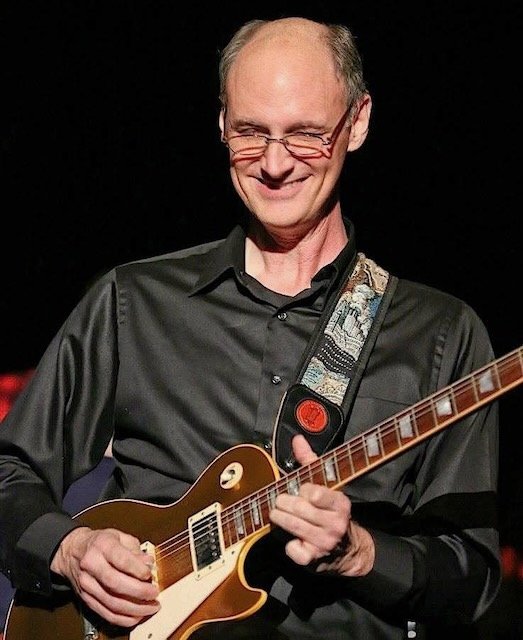
That military discipline seeped back into every other musical space he entered. When Rob joined the reformed Doc Holliday alongside Eddie Stone and guitarist Michael Gilbert around 2014, Stone noted that Rob and Gilbert understood each other immediately, that they complemented rather than competed. It was the same quality that had always defined Rob's playing, of having ensemble instincts that made room rather than taking it.
Away from the bigger stages, Rob and Eddie Stone also perform regularly as an acoustic duo, working through James Taylor, Marshall Tucker, Eagles, and Beatles material at local venues, quiet nights that suit both men and speak to a shared belief that music doesn't need a crowd of thousands to mean something.
Come to think of it, Rob does resemble James Taylor a little bit.
And then there are the Has Beens, with Rob alongside Eddie Stone, Al Scarborough, Sebie Lacey, and Mike Causey, playing 10 to 12 times a year around the Warner Robins and Macon area. Allmans, Doobies, Beatles, Stones, Free, Skynyrd, a little Motown, the occasional Stillwater song. A room full of people who grew up on those records, and the men who helped make them, sharing the same stage all over again.
Along the way, Rob accumulated a network of fellow musicians that spans the full arc of his unusual career. Leroy Wilson, whom he met in the reserve band, has lived in Middle Georgia since the late 1990s, drums for the Marshall Tucker Band, and does session work at Capricorn Sound Studios, the same building where Stillwater recorded a few songs decades earlier.
Alphonza Thomas, whom Rob met at a talent show at Hanscom AFB in Massachusetts, took college courses and became a commissioned officer, retired from the Air Force, moved back to Warner Robins, and now performs with Rob around the region.
Frances Billows, a vocalist Rob met while both were stationed in Japan, also eventually found her way to Middle Georgia. After retiring from military service, Frances settled in Warner Robins, opened Synery Wellness & BodyCare, and continues singing professionally, eventually joining Macon’s favorite party band, AtoZ.
The strange thing about long musical lives is how often the circles close back in on themselves. At a recent COMP fundraiser at the Macon Shriners Temple, Frances and Rob once again found themselves sharing a stage, after first performing together overseas in military service. Leroy Wilson was there too, sitting in on drums for part of the night. Three military-band friends, now veterans of entirely different journeys, reunited again in Middle Georgia, this time playing to raise money for fellow musicians facing hard times.
And the reunions keep happening. Not long after, at a May benefit concert for longtime Macon musician Tony Cooper at Society Garden, Rob was back onstage again alongside many of the same extended musical family. The night brought together Tres Hombres, Big Mike & The Booty Papas, Lizella Reign, and Shelly Palma, while Alphonza Thomas and Rob joined Big Mike’s set.
For Rob, these overlapping scenes have become part of the deeper rhythm of life in Middle Georgia, where musicians from different eras and chapters keep finding one another again under stage lights.
One evening, when Rob and drummer James Brown were playing together at the Cherry Street Cabaret in Macon, Alphonza walked in unexpectedly and stood there taking in the scene. He saw two musicians he knew from completely different chapters of his life, sharing the same stage in his hometown. The look on Alphonza's face was, by Rob's account, worth everything.
There is also Tony Dorsey, a Macon native who played trombone with Paul McCartney and Wings and appeared on Wings over America. Rob met Tony through Bruce Brookshire, from Doc Holliday. Rob auditioned for Tony's band and brought sax player Rusty Jesup along. Tony offered Rob the spot but couldn't use Rusty. Rob turned it down. That choice cost him a gig, and Rob has never seemed to lose a moment of sleep over it. Rusty was his friend. That was the whole equation.
At La Cabana, when Stillwater sits in with Tony Elmore's Tres Hombres band, Rob gives as much focus to Tony, the slightly older hometown hero he and Mike look up to, as to his own past, locking in with the current rhythm section and treating the night as a shared conversation rather than a cameo. He always has a smile and he's always looking at his fellow musicians, watching for changes and signaling joy.
Somewhere inside all those overlapping circles of military life, music, old songs, and Middle Georgia timing, Rob also met Ganine.
Like Rob, Ganine Dale Walker grew up in a military family. Her father served as a master sergeant in the Air Force, and her childhood carried the same familiar rhythms of bases, relocations, and adapting to new places. At one point her family was stationed at Robins AFB, and like many military families who passed through Middle Georgia, she eventually chose to stay.
Long before she ever met Rob, she already knew who Stillwater was.
While working at Brown & Williamson in Macon, Ganine would occasionally drive past Whiskey River and see Stillwater’s name on the marquee outside. Every time, she found herself thinking the same thing: I need to go see those guys one day.
Years passed before she finally did.
In 2010, Rob was performing at Calvin’s in Warner Robins with musicians from the Air Force band when Ganine walked in with a group from church. A couple of weeks later she returned while Rob and the Has Beens were playing. Rob spotted her from across the room and spent what felt like an eternity working up the courage to walk the length of the bar and introduce himself.
When he finally reached her and said hello, she smiled and said hello back.
That was the beginning. They married in 2015, though Rob still talks about the relationship with the enthusiasm of a newlywed.
And somehow, even their family histories carried strange musical echoes.
Ganine’s maternal family came from New York and possessed their own deep ties to American popular music. Her uncle Geoffrey Clarkson worked as pianist for Bob Hope, while her great-grandfather Harry Clarkson emigrated from England and wrote songs alongside Geoffrey for years. One of those compositions, “Home (When Shadows Fall),” co-written with Peter Van Steeden in 1931, survived long enough to be rediscovered decades later by Paul McCartney, who included it on his 2012 album Kisses on the Bottom.
Which makes one particular moment in Rob’s earlier life feel almost impossible in retrospect.
While stationed in Germany years before meeting Ganine, Rob once performed on a show involving Bob Hope’s touring troupe. At one point he was asked to stand by backstage in case Hope’s guitarist became unavailable and a replacement musician was suddenly needed.
He didn’t step in, but if he had, he would have been playing with Ganine’s Uncle Geoffrey.
Decades later, after meeting Ganine and learning her family history, Rob realized just how close those paths may have crossed long before either of them knew the other existed.
Still Tuning Up
Rob has already started rehearsing for their summer concert, which is exactly what you'd expect from the man his bandmates call The Technician. Stillwater's sound was always built on precision, playing the songs the same way every time, clean and exact, the way Lynyrd Skynyrd and Atlanta Rhythm Section did it. That's the standard Rob holds himself to. Precision was drummed into him in the military band.
Which makes it worth noting that his ring finger has been giving him trouble lately. He's sometimes navigating shows with essentially two fingers, and on his mind lately is "Women,” the track from I Reserve the Right that he considers one of Stillwater's most technically demanding recordings. He wants to play it right. That's The Technician talking.
But here's what The Technician may already know, even if it's hard to absorb from inside the music. The rooms these reunions fill are not concert halls full of strangers waiting to be impressed. They are class reunions. The people coming through the door this summer have been carrying these songs for fifty years. They know every note, and they love the men playing them.
A slightly bent phrase, a moment where the ring finger doesn't cooperate, a beat that lands a hair late, none of that changes what those songs mean to the people in those seats, or on the dance floor. If anything, it makes the men playing them more real. More present. More worth the drive.
Stillwater has always had the audience eating out of their hands before the first song ends. Their summer show will be no different.
The Quiet Through‑Line
Like the other Stillwater guys, Rob has lived through enough wildness that he could be forgiven for hardening up. He's seen labels go under, watched a near‑hit single stall for reasons that had nothing to do with the song, stood backstage at moments that became Southern rock lore, and sat in hospital rooms and funeral homes as time thinned out a once‑young community lineup. He also lived through the peculiar afterlife of Almost Famous, watching a fictional Stillwater move through a movie that felt eerily familiar.
When people ask if the movie is based on his band, he laughs and says what the others say, that they just used the name. What struck him most wasn't the plot, but the texture. The cramped bus scenes, the boredom between shows, the tangle of egos and loyalties all trying to coexist in a rolling metal tube.
"The movie really nailed it," he's said. Even the "press is the enemy" joke rang true around the edges, though in his memory the reporters he met were more curious than combative.
All of that could have made him guarded. Instead, he's settled into a posture that's both careful and open. Still tall and slender, he's now one of the older men at the table, lending his weight to efforts like the Community of Older Music Professionals, making sure musicians with lives like his have support as they age.
In the Stillwater story, Rob's presence is a kind of humble through‑line. He was there when Warner Robins kids turned riffs into Capricorn records, there when "Mind Bender" nudged the band toward national recognition, there when the phone stopped ringing, and there again when reunions and second acts bring the music back to local stages and small restaurants.
For fans who approach him with old LPs and new questions, he offers a rare chance to meet someone whose long life in music, from Germany to Capricorn Studios to New Hampshire and Japan, has left him softer, not harder.
He listens, smiles genuinely, and makes you feel, in that moment, like the most important person in the room.
It's a gift. And like his guitar playing, he offers it without making a show of it.
Stillwater’s story stretches across decades. Explore these other voices that helped shape the band and the world around it:
About the Author
Cindi Brown is a Georgia-born writer, porch-sitter, and teller of truths — even the ones her mama once pinched her for saying out loud. She runs Porchlight Press from her 1895 house with creaking floorboards and an open door for stories with soul. When she’s not scribbling about Southern music, small towns, stray cats, places she loves, and the wild gospel that hums in red clay soil, you’ll find her out listening for the next thing worth saying.
