
Stillwater’s Bobby Golden: The Architect
Robert “Bobby” Golden was part of Stillwater’s celebrated triple-guitar frontline, helping create the hard-driving sound that took the Warner Robins band from rehearsal rooms onto Southern rock stages during the Capricorn Records era.
Alongside fellow-guitarists Mike Causey and Rob Walker, Bobby helped shape a musical identity rooted equally in precision and the restless creativity flowing through Middle Georgia’s music scene in the 1970s.
But like many musicians from Warner Robins’ first great wave of Southern rock players, Bobby’s story stretches far beyond the brief window of record deals and touring mythology.
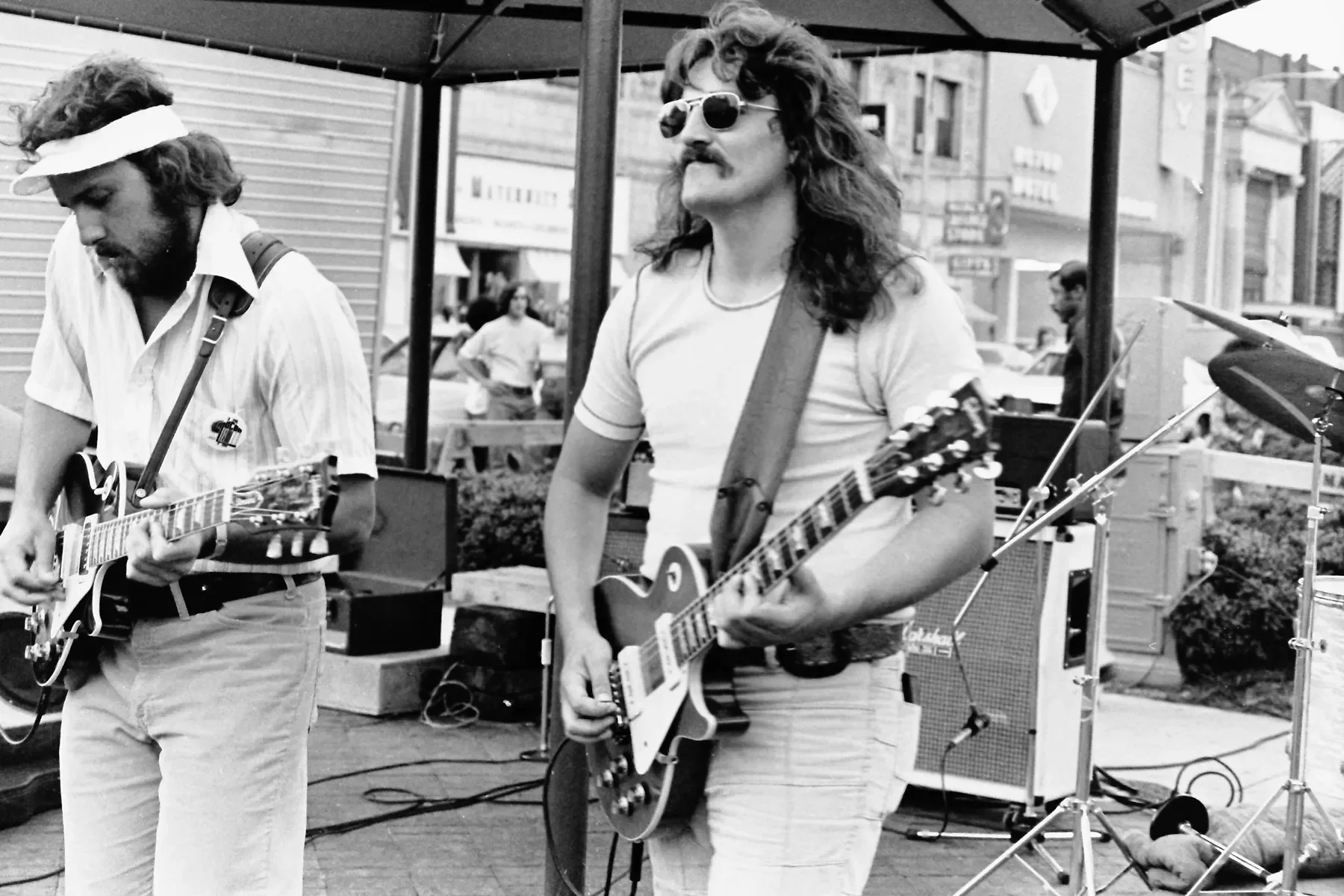
Bobby Golden's fingerprints are all over Middle Georgia music, whether people realize they're seeing his name or not. As lead guitarist for Stillwater, he helped invent a three‑guitar Southern rock sound rooted in Warner Robins and Macon, but his story starts earlier, with a family band, a trumpet, and a willingness to play anything if it got people moving.
Born Robert William Golden in Detroit on July 24, 1952, his family moved to Perry when he was a small child. He attended Perry High School in Houston County, the same system that produced his future bandmates a few miles up the road in Warner Robins.
Music came from both directions in the Golden household, though not in ways you might expect. His father Iverson "Duggan" Golden, or Duke to everyone who knew him, had played in a country band as a young man in Milledgeville, Georgia, in the 1940s with his uncles, performing local dances before the war called him into service as an Air Force captain in World War II.
A Georgia boy who ended up stationed in the North, Duke was in Detroit when Bobby was born on July 24, 1952. When the family eventually settled in the Houston County area near Robins Air Force Base, they planted roots that would last the rest of their lives.
His mother Mildred Allen Golden, a native of Grand Junction, Colorado, was the other pillar. She spent her working years as a Civil Service employee at Robins AFB, while Duke served by working on base in air field operations. Between the two of them, they built a household that gave four children health benefits, community standing, and enough financial footing that a father could also serve as his son's manager without the whole enterprise being a gamble.
In Middle Georgia in the 1960s and 70s, Robins Air Force Base was an economic anchor and the Golden family had two employees planted firmly there.
Duke and Mildred raised four children in that Houston County household: Ike, Kenny, Bobby, and Margaret. The three brothers turned the house into something of a rehearsal space and launching pad almost from the start.
Duke's Boys
Duke and Mildred had married simply, on courthouse steps, a beginning that suits people who build their lives around showing up rather than ceremony. A photograph Bobby posted on Mother's Day 2023, captioned "My mom Mildred with my dad 'Duke' on the courthouse steps right after they were married," shows two young people at a threshold, unaware of the house on Hunt Road, the band, and the decades of music still ahead of them. The word Heavenly in Bobby's caption says what it needs to without elaboration; Mildred was gone by then, and he still marked the day.
Their household, of kid and a garage full of amplifiers, became the foundation that Stillwater would build on. But to understand why Duke threw himself into it the way he did, you have to understand that music wasn't new to him. He had played guitar himself, performed in a country band with his uncles back in Milledgeville in the 1940s, playing local dances before the war called him into service. That part of his life ended when he put on the uniform. It didn't disappear wholly, though, because he continued to love music and would always return to it, even if he stopped playing guitar.
When Bobby asked his father to teach him a song on guitar at age twelve, Duke had a private reason to say yes that went beyond fatherly indulgence. He knew what it felt like to want a life in music. In a 1974 interview with the Macon Telegraph, Duke described his relationship with Bobby in terms that go well past managing a teenager's hobby: "There's never been a generation gap," he said. "I was raised right alongside Bobby." That’s a parent who recognized himself in what Bobby was doing, and decided to go along for the whole ride.
Bobby had started even earlier on trumpet at eight or nine in school, so he arrived at the guitar already understanding how melody moves through an ensemble and how a horn player thinks about space.
When he surpassed his teacher within months of picking up the guitar, Duke didn't step back. He stepped further in. By the time Bobby was fourteen and being paid to play, Duke had become the family band's personal manager, booking shows, looking after the boys, and keeping watch over sons who were already serious about the work.
Eventually he extended that role to Stillwater. In the same 1974 interview, he made clear that the band guys were his sons too, not only by proximity but by intention.
Duke's role as manager was never just paperwork and phone calls. He had just finished building out an old farmhouse on their property where most of the band lived, their unofficial home base from 1975 to 1983, what they called The Shack.
The property sat off Hunt Road near Kathleen, the small community tucked between Warner Robins and Perry that felt genuinely rural in those years. Country enough that a farmhouse full of young musicians and weekend parties barely registered on anyone's radar.
Kathleen is different now. Residential developments are filling in that same landscape, and it has become exactly the kind of place Middle Georgia families want to put down roots, which gives those old rehearsal grounds a strange new context. What was once the edge of things is now the center of somewhere.
There were bands everywhere in Middle Georgia in those years, Bobby remembers. Teen clubs, sock hops, USO clubs on the base, and enough weekend gigs to keep a teenager busy every Friday and Saturday night. He credits the Beatles on Ed Sullivan as inspiring thousands of bands to pop up the very next day, boys grabbing instruments to be like the Beatles and have screaming girls as fans. The bands in Middle Georgia weren't all great, he'll tell you plainly, but they were good enough, and the scenes they created mattered.
What was remarkable was how seriously those young musicians took each other. Technology was changing fast, including equipment, sound systems, lighting rigs. Bands made a habit of going to see what the others were doing. If a band had a light show, you went and watched, and then you went home and figured out how to get one too.
Bobby remembers being in a battle of the bands at the Macon Coliseum and watching a young Ronnie Hammond perform with his band, The Celtics, who came in first place. Bobby didn't meet Ronnie properly until later, but he saw him perform around town in that music world, at arm's length at first and then on the same stages. He also remembers seeing Sebie Lacey's band, The Mikes, playing around Warner Robins, and they were popular enough that you noticed them.
As teenagers, the Golden boys formed groups. First The Golden Boys, playing whatever the radio gave them, from the Bee Gees to the Doors, with Kenny on bass while Bobby pushed the band toward better gigs. Their first outside show came in 1967, playing for airmen at the USO club, part of the Air Force base circuit already weaving itself through Warner Robins' music.
The Golden Arcade band followed, a soul revue built around two Black lead singers and a horn section, playing fraternity parties all over the South. They were an integrated band in the late‑1960s Deep South, holding rooms full of white college students with a sound that had more Stax in it than anything on Top 40 radio.
Golden Arcade expanded into Coldwater Army around 1969, mixing horn‑driven Chicago‑style rock with original material. Coldwater Army recorded Peace on Agape Records in 1971, when Bobby was seventeen. The album never broke out, but the band logged serious studio time in Macon and gave him an early education in how to hold a stage and shape a set.
Coldwater Army had a second album recorded and ready, and the band drove to Nashville to mix it when Bobby was 19, but when the arrangement between their management and Stardate King Records fell apart, the album was shelved. It was not the last time a Stillwater-adjacent project would get that close and go no further. But Bobby had the time of his life being in Nashville, mixing those songs.
One of the musicians Bobby met during those early Warner Robins years was keyboardist Bob Spearman, not yet a bandmate but an airman stationed at Robins Air Force Base. Their friendship predated Coldwater Army and would eventually extend through Stillwater's recording years, another small thread in the larger base‑to‑band network feeding trained musicians into Middle Georgia.
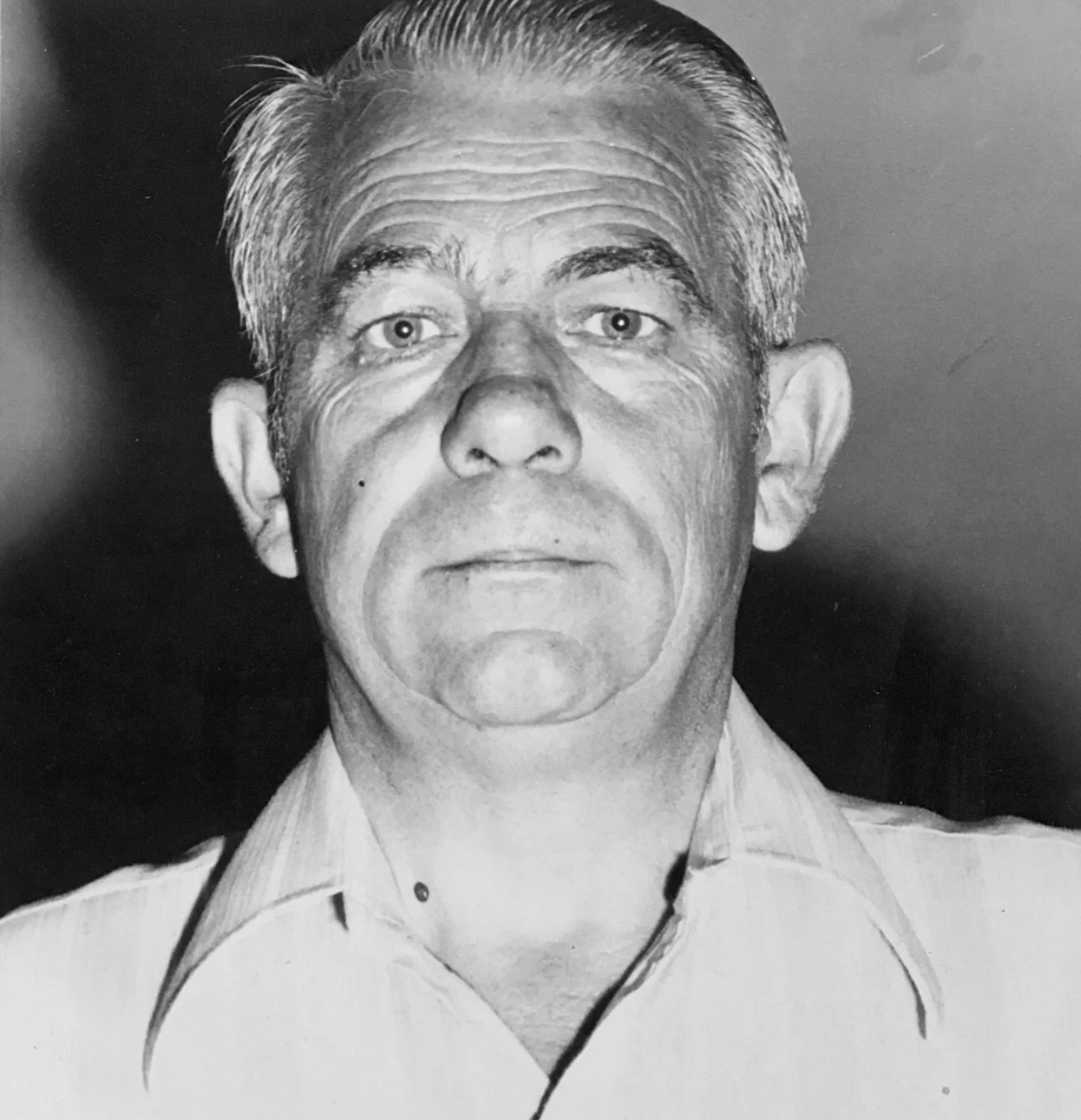
Duke Golden, Bobby’s dad, who assisted and supported Stillwater during the band’s formative years.
The Dorm Room Decision
When Bobby arrived at Georgia College in Milledgeville, he and Mike Causey ended up in the same dormitory. Two guitarists who already knew what they wanted, sharing a hallway. It didn't take long.
Each of them had his own private reason for leaving. For Mike, it was a deal made with his parents, asking them to give him one year to try music, and he’d go back to college if it doesn't work. He never intended to honor the second half of that promise.
For Bobby, the calculation was different and bluntly practical. He had drawn number four in the Vietnam draft lottery. College gave him a deferment. When Nixon ended the draft, the equation changed overnight. "I don't need to go to college anymore," he thought. "No chance of being drafted." With that reason gone and a band in front of him, the decision made itself.
They dropped out together and formed Stillwater at the beginning of 1973, a mutual commitment, as Bobby put it, "to give the music a full time shot."
The Shack and the Sound
The band of seven that coalesced around that commitment nearly signed elsewhere. Capricorn moved only when it learned Atlantic Records was interested and Phil Walden realized another label was circling.
During the Capricorn years and well into the early 1980s, Stillwater practiced at Duke Golden's house off Hunt Road, where they kept their equipment set up in a room that was always ready. Duke had built out the rehearsal space for his musical family and then when Stillwater came along, they used it.
Just down the road on the same property sat The Shack, where most of the band lived at one point or another. Bobby was there until he got engaged in the late 1970s, Sebie was there until he married and moved across the street from Duke's house. Al never lived there. Women, Bobby notes with a dry smile, never would have. The place was old and only semi-habitable, the kind of quarters that work perfectly well for young men who spend most of their time rehearsing and playing elsewhere.
Every weekend they were home, there were parties. Not jams, which only happened at Duke’s a couple of times. Mostly just the natural gathering of people around people who were happy to be there. Sometimes if they arrived home late on a Sunday, cars would be lining the road and folks milling about waiting to start a party.
On Stillwater's first album, critics raved about "guitars the way we like them from Mike Causey, Rob Walker and Bobby Golden," wrapped around melodic vocals from Sebie and Jimmy and a rhythm section "many bands would like to have." Bobby's guitar is a big part of that sound with fluid leads, thick harmonies, and the kind of parts that feel inevitable once you've heard them, even though someone had to dream them up first.
Bobby’s a player, a writer, and arranger, too. AllMusic’s credits list him on Stillwater records as guitar, background vocals, and composer, and fan histories tie him closely to key tracks like "Out on a Limb," "Mind Bender," and "Sam's Jam." The story of "Mind Bender" has been told often. Rob Walker had a riff, producer Buddy Buie heard the talk‑box effect and suggested a song that would make it central, then wrote the lyrics in his fishing trailer by a lake in Alabama. They brought the pieces into Studio One and cut the track the next night. The talking‑guitar hook became Stillwater's calling card, landing them on radio and tours with Atlanta Rhythm Section and the Charlie Daniels Band. Bobby's playing kept the whole thing anchored in bluesy phrasing, even as the effect turned heads.
Ask him his favorite Stillwater recording, though, and he points to "Women" from I Reserve the Right. "Technically one of the best recorded tunes," he says, and the solo on it satisfied him the way only the songs he fought hardest to get right ever do.
All of those pre-Stillwater and Stillwater antics ran for years through Duke and Mildred's house. The equipment stayed set up in a room that was always ready. The Shack held the band. And on weekends when they were home, people gathered, not because anything was planned, but because Duke and Mildred had decided, consciously or not, to keep the doors open.

The Triple Whammy
When the first Stillwater chapter closed in 1983, it didn't close gently. Bobby was stunned with a triple whammy. One, he left the band. Two, his father died. Three, he got a divorce. All arrived at once.
Of the three, Duke's death sits at the center. Painful as the other two were, they could not quite match the death of a parent.
Duke was more than a parent. He had been Bobby’s manager since Bobby was fourteen years old, the man who taught him his first guitar chord and then spent decades helping build the musical world surrounding his son. The house off Hunt Road, the rehearsal spaces, The Shack, the open-door atmosphere around the band. Duke helped create all of it. When he died in 1983, Bobby lost not only his father, but one of the central structures holding that entire chapter of life together.
The last Stillwater show was near Christmas that year. Bobby had been playing for seventeen straight years by then. He was burned out after giving so much to an instrument. He didn't pick up a guitar for four years. It’s not difficult to see why. The music and the man who had believed in it most completely were gone at the same time.
For the next thirty years, the surviving band members gathered for reunion concerts near Christmas, a tradition that became their way of marking time around a loss while celebrating the larger family of fans they had acquired through their art.
Bobby eventually went back to college, earned a degree in electrical engineering, and built a long career in software development. The break gave him what he needed. But the triple whammy wasn’t just three bad things happening at once. They were the simultaneous end of the life Duke had helped him build, from a talent show guitar lesson in Houston County to stages shared with the Allman Brothers and the Charlie Daniels Band.
Bobby is grateful for his father’s support and, looking back, grateful for the decisions he and his bandmates made during those years that brought them into a secure future. Stillwater's survival as a group of living, healthy men is not something he takes for granted. He'll note, carefully and without drama, what happened to some of the bands they shared stages with. Molly Hatchet lost members to addiction and tragedy. Of the original Allman Brothers Band, only Jaimoe remains. The original lead singer of Atlanta Rhythm Section is the sole surviving member of that lineup.
Ronnie Hammond, always a good friend to Stillwater who joined their reunion shows when he could, was shot by police during a mental health crisis. Ronnie survived the shooting, and was doing well when a blood clot took him. "Lots of musicians when not on stage did not have a great life," Bobby says. "They'd create bad habits on stage that followed them afterward."
Stillwater, for reasons that include luck and the choices these men made, mostly escaped that fate. "We didn't make money," Bobby says. "But we got a little fame out of it." Said plainly, without bitterness, it sounds like exactly the right accounting.
And underneath that accounting, if you listen for it, is Duke. The man who said he was raised right alongside his son and understood what music cost. He gave everything he had anyway. Duke had also given Bobby a high enough platform to leap from and Bobby kept going.
The Road Back
He went back to college, earned a degree in electrical engineering, and built a career in software engineering for military aircraft, including F‑15s, the new F‑22, and a couple of years in Italy working on the Eurofighter.
After returning from Italy, he worked for Georgia Tech and would sometimes drive down from his home in Atlanta to Middle Georgia to play with Al Scarborough in The Wall, a cover band that could move from Beatles to Allman Brothers with ease. From 1991 to 1999, music was back in his life in a manageable, enjoyable way. No pressure, no industry, just playing with people he liked.
He narrowed his musical life to Stillwater reunions and occasional sit‑ins after that, a shift from constant gigging to choosing spots where the music and the company mattered most. He spent thirty years in software development. He loved the work, but is glad to be retired from it now.
Bobby has been out of regular playing for about seven years. He's starting to practice for their summer reunion concert, methodical as ever about the work. "I'll take all three months to get good enough," he says. "And after this I won't stop playing again. Even if I don't want to play, I'll make myself."
Before the concert, he'll spend a week in Fernandina Beach visiting producer Rodney Mills, now 79, as he does regularly. Mills, who helped shape the sound of Stillwater's records, is still a friend worth the drive. Some things from that era are worth maintaining carefully, and Bobby does.
He's been interviewed about all of it by Chuck Camp for a documentary about Studio One. The interview was filmed a decade ago at the now-defunct Crazy Bull bar in downtown Macon. Bobby was interviewed alongside Mark Pucci, former Capricorn publicist who has remained a keeper of that era's history, and who continues to promote artists to this day out of Atlanta.
The record of Stillwater recording at Studio One exists, beautifully shot by Branden Camp, Chuck’s son and co-producer. They’re working hard to finish the film and get it onto a streaming platform.
Still Here
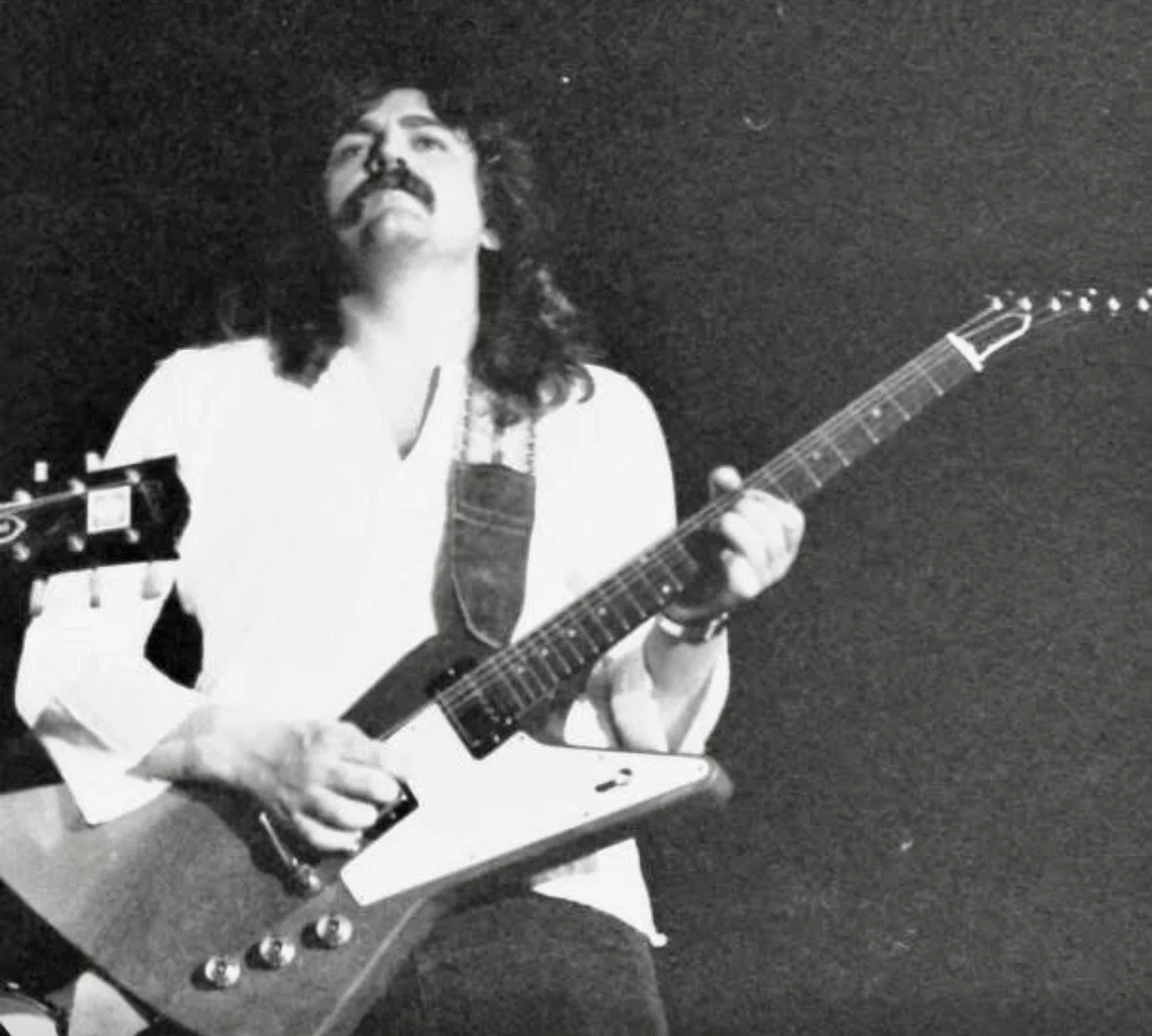
In the broader Stillwater and Warner Robins narrative, Bobby Golden represents a unique Southern rock life. He came up through family bands and soul revues, learned discipline from a trumpet before he ever touched a guitar, held integrated stages in the segregated South, helped invent a regionally distinct guitar sound that caught Capricorn's ear, and then chose to build a stable life without walking away from the music that defined his youth.
When he plugs in next to Mike and Rob these days, the crowd sees more than a guitarist. They see continuity, a through‑line from fraternity rows to USO clubs and Coldwater Army to Capricorn studios and Perry, Georgia, in the present tense.
That continuity is the gift. He offered it then, on stages that asked something real of him. He offers it still. And when the last chord rings out and the room settles back into conversation and laughter, Bobby is usually somewhere near the middle of it all, not commanding the room, but very much a part of it, the way he's always been.
Stillwater’s story stretches across decades. Explore these other voices that helped shape the band and the world around it:
About the Author
Cindi Brown is a Georgia-born writer, porch-sitter, and teller of truths — even the ones her mama once pinched her for saying out loud. She runs Porchlight Press from her 1895 house with creaking floorboards and an open door for stories with soul. When she’s not scribbling about Southern music, small towns, stray cats, places she loves, and the wild gospel that hums in red clay soil, you’ll find her out listening for the next thing worth saying.
