
Stillwater’s Mike Causey: The Shredder
John Michael “Mike” Causey was one-third of Stillwater’s legendary triple-guitar frontline, part of the Warner Robins band that signed with Capricorn Records in the 1970s and carried Middle Georgia’s version of Southern rock onto national stages.
Stillwater played Winterland Ballroom, Jimmy Carter’s inauguration festivities, and the Capricorn circuit during the genre’s peak years, earning admiration from musicians including Steve Morse and members of the Allman Brothers orbit.
But the broader Stillwater story, including the rise, collapse, survival, and eventual homecoming, is only part of what makes Mike Causey compelling. Because like the city that shaped him, Mike’s story didn’t end when the spotlight moved on.
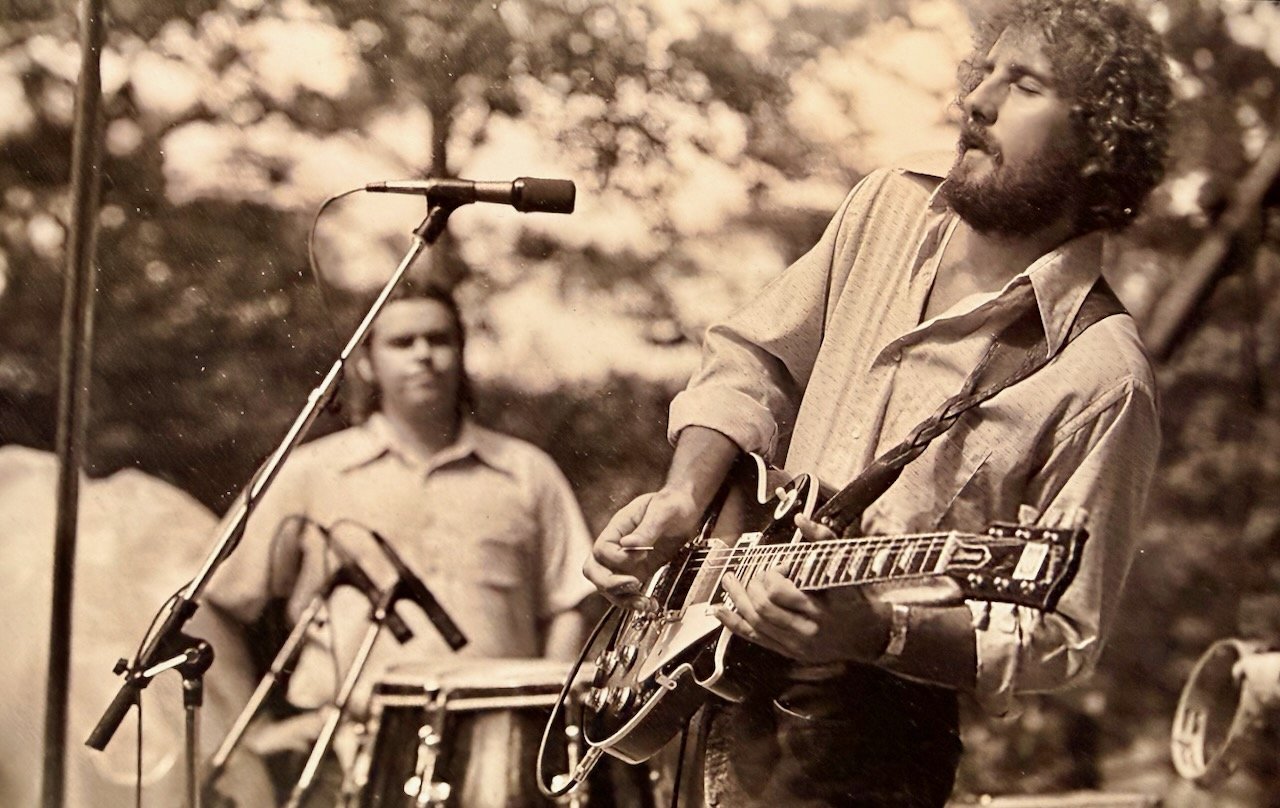
The first time music hit Mike Causey, he was young and felt it before he understood it.
He was riding with his mother to pick up his brother Eddie from a dance at Warner Robins High School. When they pulled up outside the cafeteria with their car windows down, they could hear The Chances playing.
"The music hit me like a bolt of lightning," Mike says. "I literally felt a flash, a physical electricity."
That bolt arrived without warning and has never left. He couldn’t name what had happened, but instantly knew wherever that feeling lived, he needed to be near the source of it.
The guitar came separately, and arrived through a detour, mattering more than anyone knew at the time. Even Mike. He was ten years old and at a family reunion at Callaway Gardens when his aunt and uncle invited him to ride home with them, to Texas. It was a generous, unhurried summer invitation belonging to a certain American childhood now mostly gone.
One afternoon his uncle, a coin collector, took Mike to a pawn shop to look around. And there, hanging on the wall, was a guitar. The wanting was instant and certain, and a little surprising. He didn't say a word to his uncle. Didn't ask for the guitar. Just filed it away.
Back home, he went to the Sears & Roebuck Wish Book, the catalog Americans dreamed over in millions of living rooms, and found the guitar he wanted. It cost $17.50. For his thirteenth birthday, his parents gave it to him with no questions asked, no audition required, just a mother and father who saw their son's longing and answered it the way parents do.
Tyme Peace
Mike took lessons from Peter Skelton and Doyle Bulloch at Guthrie’s Music Store in the fifth grade. Skelton knew what he was hearing from Mike's playing and asked Mike if he'd like to join a group in Cochran. Mike said yes immediately, another dream coming true. His father, however, said no, crushing that dream. What Mike didn't learn until much later was that his father went directly to Mr. Skelton at the music store and asked about that group. Who were the boys, where did they play, what kind of people were they? Skelton reassured Mr. Causey, saying the boys were good guys and a father joined them on every gig.
The next day, Mike's father told him he could join Tyme Peace. His father had simply needed to know his son was safe before he could say yes, a form of love that looked like a closed door but was really a hand on Mike's shoulder the whole time.
Mike's mother would drive him to Robins Air Force Base and drop him on the flight line, where yellow buses ran routes to outlying towns. He’d ride one thirty miles to Cochran, where Tyme Peace practiced at a skating rink owned by a bandmate's father. One of those bandmates was Jimmy Hall, a Cochran kid who could sing, and the two of them fell into the easy, reckless friendship teenage boys build when they're making music together and nothing feels like it has permanent consequences.
Mostly, it didn't. But teenagers, out of youthful ignorance, will do things that can prove harmful. One afternoon in Cochran, Mike took acid, and it hadn't worn off by the time he got home. His heart began racing so fast it scared him, and he told his mother. She drove “like a bat out of hell” to the hospital.
“Have you taken anything,” the doctor asked.
"No, he wouldn't take anything,” Mike’s mom said. Then Mike had to look at her and tell the truth. She was naturally disappointed. "Not one of my prouder moments with her," Mike says.
The doctor gave Mike a shot, his mother took him home, and he slept for hours. His father had to be told, of course, and Mr. Causey, the same man who had quietly done his homework before letting Mike join the band in the first place, did not explode. He simply said, the next morning, that perhaps Mike was going in the wrong direction, and that he could no longer be in Tyme Peace.
Mike agreed.
He didn't see it as a gift at the time, but years later he understood that his father had pulled him from a path he wasn't ready for, and he’s grateful for it.
It was the end of his Tyme Peace chapter, though not the end of his friendship with Jimmy Hall. That friendship had a long life ahead of it, and it came with its own stories. Mike and Jimmy still laugh about the afternoon they were riding through Cochran with bandmate Stevie Dupree driving, and Mike, sitting in the middle of the front seat, decided to throw a lit firecracker out through the louvered passenger window. The firecracker hit the wind streaming into the car and came straight back into his lap. Mike instantly launched himself into the back seat. Jimmy started jumping around trying to get away from it, and Stevie swerved the car off the road. No one was hurt.
"That's one of those stupid things we did," Mike says, echoing every adult who has ever looked back at their teenage years with a mixture of horror and affection. It was ignorance, not stupidity. They were just kids.
That kind of reckless joy, the firecracker summers, and the music, were the ground floor of something that would eventually become Stillwater. By then, Mike had already learned the thing that would stay with him through adulthood. He realized music can pull you toward the wrong crowd or the right one, and the difference is worth paying attention to.
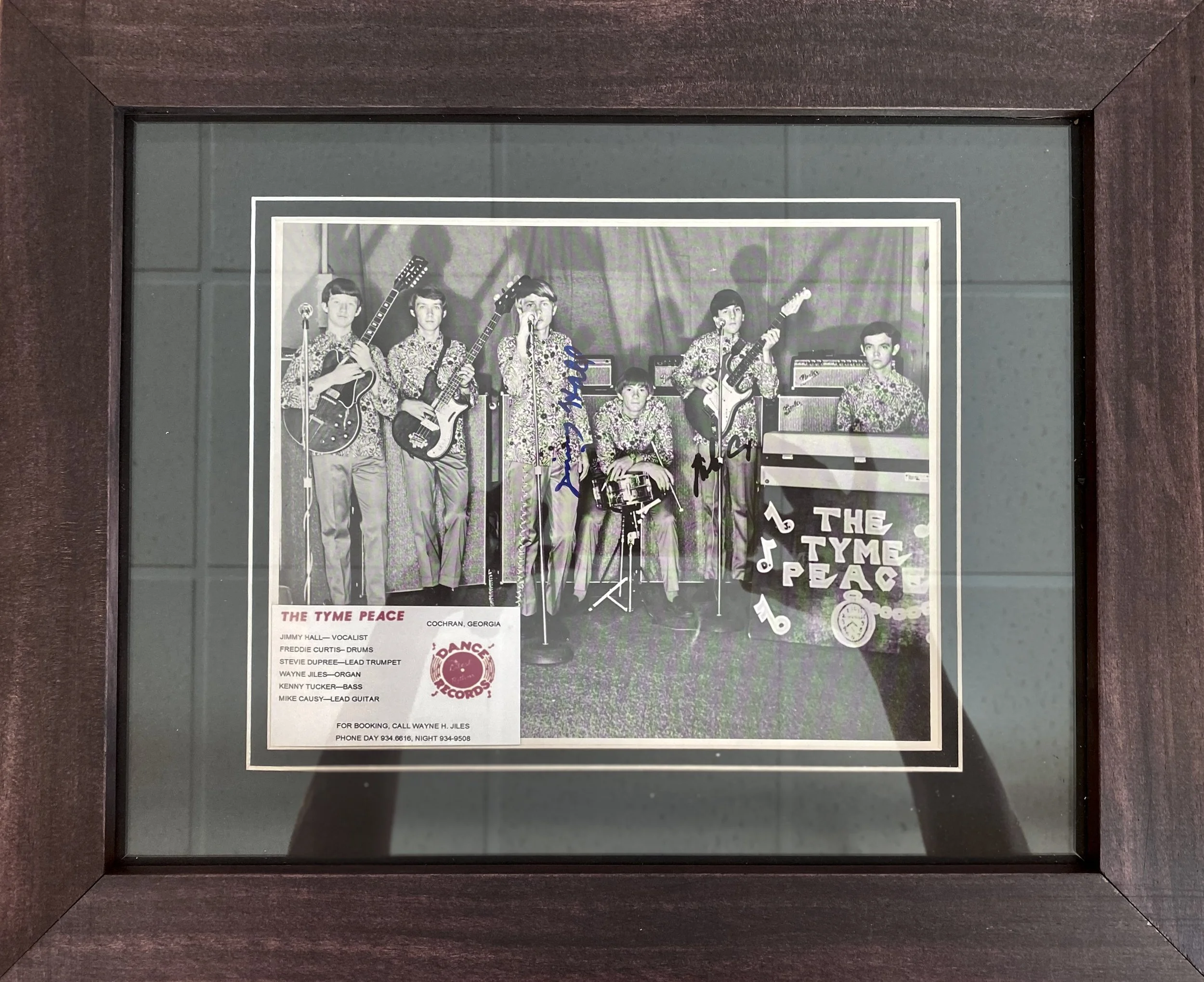
The Tyme Peace out of Cochran, Georgia: Jimmy Hall, Feddie Curtis, Stevie Dupree, Wayne Jiles, Kenny Tucker, and Mike Causey.
The Long Echo
Decades later, Mike and Big Mike were visiting schools together, playing a little and talking about music. During one of those visits, a student asked Mike a question that seemed like something he would've been asked a thousand times already.
“When did you first know you wanted to play guitar?”
Mike started to answer. And something stopped him.
He found himself thinking back to that summer in Texas, the pawn shop, the guitar on the wall. A boy standing still in front of something that changed the course of his life, too young to speak it out loud and too certain to let it go. And then, threaded into that memory, came another. His mother and father handing him a wrapped birthday gift, the $17.50 guitar from the Sears Wish Book.
And when he thinks about that gift now, about what it meant that they did that for him, it can move him to tears. "And I'm glad they did," he says, which, in Mike Causey's vocabulary, means he’s grateful.
And then, arriving alongside both memories like a third wave, came the words to the song that had been Stillwater's biggest hit, the song that had put them on the radio, in the record stores, in the ears of everyone who had ever known them:
While browsing through a pawn shop / I saw this old guitar / Its keys were bent and rusty / Its body scratched and scarred…
Mike had performed those words hundreds of times. He hadn't written the song, but he'd lived with it for decades. And in that moment, answering a student's innocent question, he made the connection for the first time. His own childhood had been living inside their biggest hit all along; the guitar on the pawn shop wall, the boy who didn't ask, and the parents who gave anyway.
And Michael “Big Mike” Ventimiglia, the bluesman and longtime host of Jukin’ on 100.9 The Creek, never stopped showing up for Middle Georgia that way either. The man Mike visited schools with became one of the region’s great carriers of the blues tradition, still recording, performing, and mentoring musicians.
That visit with Big Mike wasn't a one-time thing. For a period in the 2000s, Mike gave guitar lessons and made a habit of going into local schools. Sometimes with Big Mike, sometimes with Sebie or friends from his youth. A 2005 Houston Home Journal item captured one of those visits to Matt Arthur Elementary School, when Mike and Sebie were joined by Eddie Stone from Doc Holliday to talk to fourth-graders about sound, pitch, amplitude, and musical instruments, wrapping up the students' unit of study on the subject. Three old friends from childhood, decades removed from The Follies stage, passing along what they knew. It was informal, unhurried, the kind of thing that shapes a child's sense of what's possible.
But back in his high school days, the story that would lead Mike to all of that was still unfolding.
He took a couple of trips to the Second International Atlanta Pop Festival happening at Bryon’s raceway in July 1970, just a few miles from his house. Mike still remembers paying twelve dollars for his Pop Festival ticket, only to watch thousands of people eventually knock down walls and pay nothing for entry.
“That must have hurt Alex Cooley,” he says now, instinctively thinking like a music promoter decades later.
At some point he donated the ticket itself to the Georgia Music Hall of Fame and never got it back when the hall closed, a detail he claims not to worry about while sounding exactly like someone who still worries about it a little.
Even now, the pop festival still circles back fondly, his memories of standing at the stage and being flooded with Mountain’s sound, or watching Hendrix play. Or leaving the festival to work at the tv repair shop and daydreaming about what it must be like to play on a stage that big.
In high school, Mike was a few steps closer to that bigger stage when he performed in Ronnie Barnes’ Follies, a popular show put on at Warner Robins High which Mike had been attending since he was young.
Mike was already performing with Eddie Stone at school when Rob Walker came in to audition, and he was sitting next to Mr. Barnes when Rob played. Ronnie turned to Mike and asked what he thought. "Get him," Mike said.
The Follies was where Warner Robins found out what it had. Sebie Lacey was on that stage. Now Rob Walker was on that stage. Bobbie Eakes was a few years behind them, but Mike remembered seeing her perform onstage and appearing completely comfortable, born to it. She went on to an acting and recording career that crossed between country and pop.
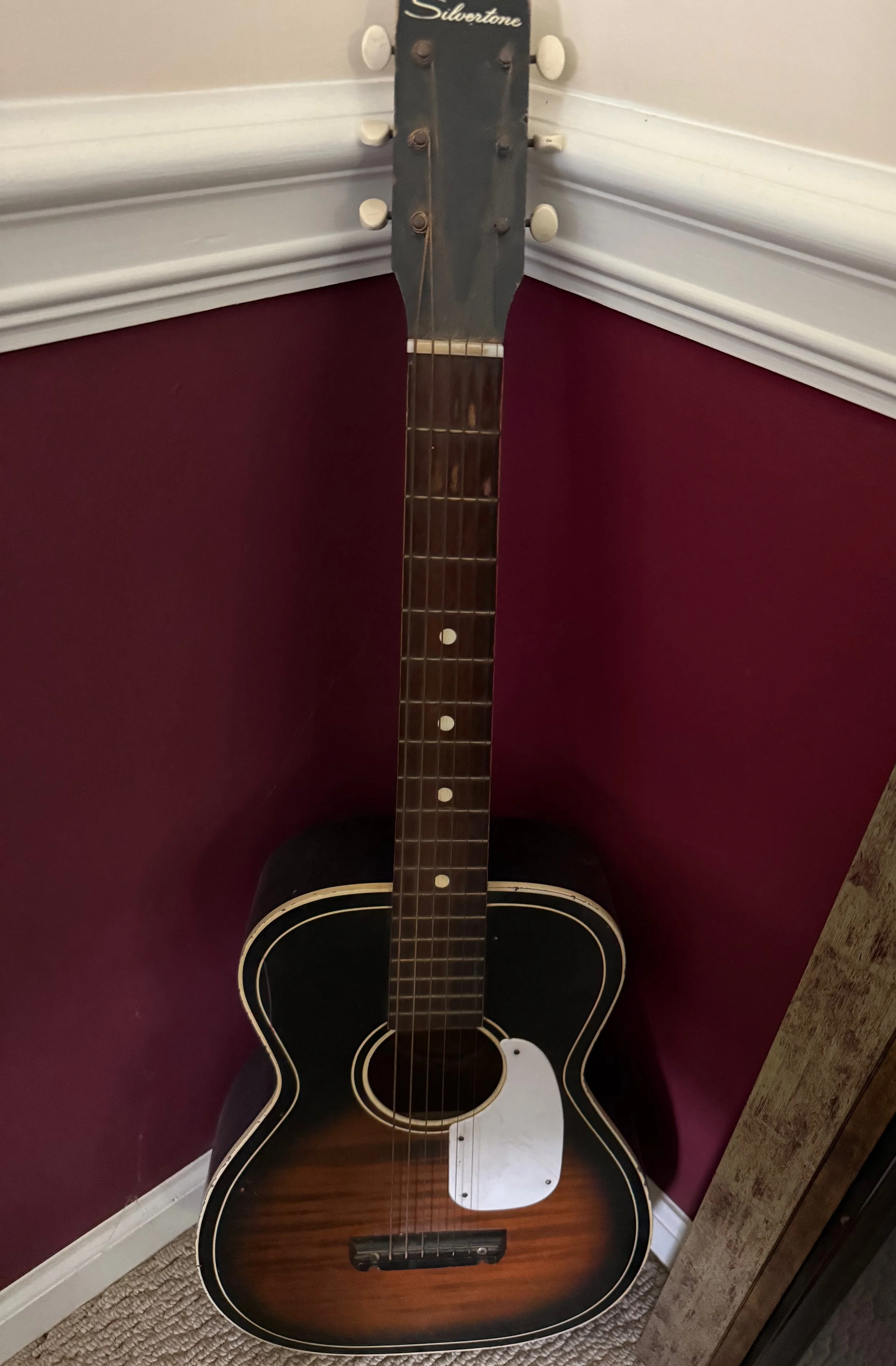
Mike Causey’s Silvertone from Sears & Roebuck, his first guitar bought by his parents for $17.50. He still has it.
Building Stillwater
By 1972, Mike was at Georgia College when he met Bobby Golden. The two guitarists sized each other up quickly and decided they were serious about the same things. Mike will tell you he was not exactly thriving academically. He fell asleep in English class during a visualization exercise and was awakened by the instructor, and then he flunked a math test he was certain he'd passed. "I was not college material," he says. "I was awful."
So he made a deal with his parents, asking them to just give him one year to try music, and if it didn't work out, he’d go back to college.
He and Bobby dropped out together to start a band in earnest. The name came from Mike. Stillwater. Everyone agreed and they ran with it.
When Rob Walker joined and the triple-guitar front line locked into place, Stillwater had something that felt genuinely different, three guitars not competing but converging, creating a wall of sound that could hold its own against anything coming out of Macon or Muscle Shoals.
They played clubs and frat houses across the South, from Miami to Richmond, packing rooms and building the kind of reputation that travels faster than advertising. At Mike's Old Heidelburg on Front Street in Warner Robins a crowd showed them early what they could do to a room. They packed it with 200 young people, who bought out all of the beer. The owner, Mr. Sagrues, asked them to come back regularly and they obliged.
Some of the friendships that came out of those years lasted longer than the gigs. After Stillwater's first album was released in 1977, Mike rode his motorcycle up to Warner Robins High School, where the football team was practicing. He had long hair and a beard and leaned against the fence watching, the way a young man does when he's just done something he's proud of and wants to be near something familiar. Someone came over and said Coach Davis wanted to talk to him.
Robert Davis was already becoming one of the winningest high school football coaches in Georgia history, but what mattered most to Mike was the way Coach Davis cared about the young men around him long after the games were over. His coaching record showed 253 wins, 41 losses, three state championships, two national championships, twenty regional titles, and not a single losing season across 43 years of coaching.
"How’s the album doing?" Coach Davis asked Mike.
They struck up a conversation on the field. Soon they were meeting for lunch every day. "We became best friends," Mike says simply. The friendship had the texture of a good coaching relationship, warmth underneath the give-and-take, faux arguments maintained long past the point of resolution, and road trips to Chattanooga to visit Ronnie Barnes. When they got to Ronnie’s house on one visit and he asked them where they’d like to eat, Coach Davis said, “Wherever you’d like, because you're paying."
Here was Mike Causey, in Chattanooga with two men who had known him when he was a teenager on the WRHS stage, one who had put him in a variety revue and recognized what he had, one who had called him over from behind a fence to ask how the album was doing.
Mike’s family had moved on from Warner Robins, following his father's pro golf career to Sandy Springs and beyond. These men had stayed. So had Mike. And here they all were, decades later, still in each other's lives, still arguing, still showing up, Ronnie still picking up the check.
Coach Davis died on October 15, 2020, at seventy-seven years old. Warner Robins put his name on the football stadium. That friendship helped shape Mike into what he became.
Ronnie is still around. Mike, Sebie, Rob, and Al are woven into the music pipeline Ronnie spent four decades building at WRHS, and they’re still performing, still connected to the tradition that started on a school stage.
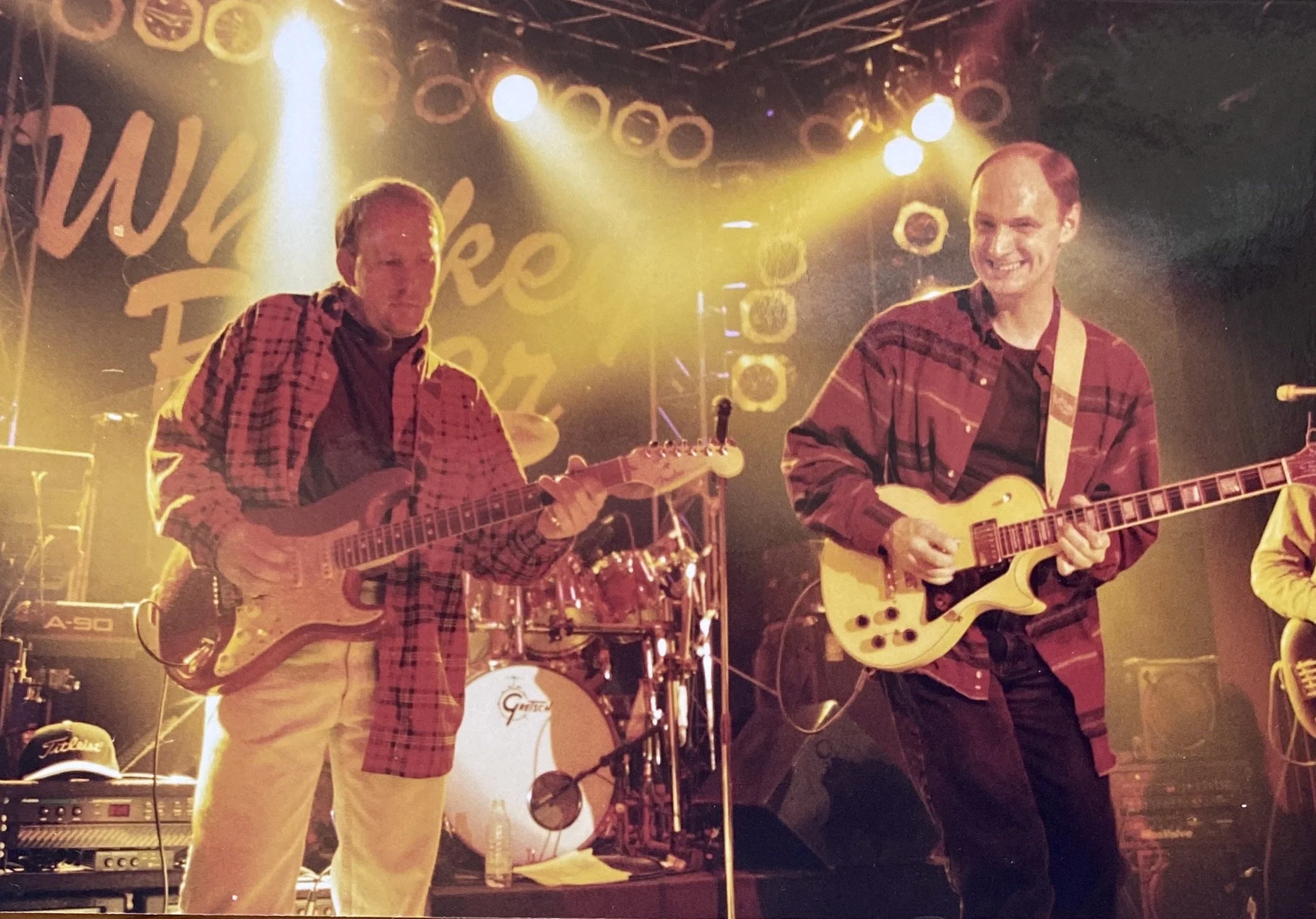
Capricorn, Buddy Buie, and Studio One
When Capricorn signed them and Buddy Buie took them into Studio One in Doraville to record, Mike was nervous in the way that matters. He was aware of the stakes, not sure his hands knew it yet, but then Buddy came out from the booth, tapped Mike on the arm, and said, "You sound good on that guitar."
That was all Mike needed. Five words and a tap on the arm from the man who had co-written “Spooky” and “Stormy” and steered the Atlanta Rhythm Section into arenas. It was enough. Mike got through those sessions and remembers Buddy’s encouragement to this day.
“Mind Bender” had come together fast, at the lake. Buddy kept a fishing trailer on Lake Eufaula that served as his writing retreat, a place where songs got shaped away from the studio clock and industry noise. The talk-box idea, Rob's riff, Buddy's lyric instinct all came together there with Buddy doing speed, and they recorded it soon after. Mike has said that after “Spooky” became a hit, Buddy believed he needed to do speed to write hit songs. It was a superstition the era produced in talented, driven men under enormous commercial pressure, and it shadowed some of what came after.
Mike has a handful of tapes of those songwriting sessions. "Buddy would go to K-Mart and buy packs of cassettes and record every writing session," Mike says. The reason was practical; you never knew which discarded riff or abandoned lyric might be the seed of something. Buddy himself later sat down with filmmaker Chuck Camp and walked through every song he'd helped write, explaining how each topic came up and how the writing unfolded. That footage is part of Camp's Studio One documentary. Buddy's widow, Gloria, now holds Buddy's full musical archive and is featured in the film. The sessions were documented because Buddy understood what was worth preserving, even in the middle of doing it.
Almost Famous
Mike always carried the band's good luck humbly and their bad luck lightly, which is the harder trick. The truck with all their gear stolen in Chicago, the label collapsing, the single stalling. Phil telling the band, "Boys, we lost 'Mind Bender,' that was our fault. We'll do better," with the candor of a man who knew he owed them the truth even if he couldn't give them the outcome.
Each event was digested and filed away without bitterness. What he kept was evidence. Mike has a tape of Stillwater's performance at the Winterland Ballroom, and a copy of the issue of Record World that put Stillwater on the cover. Those things exist. They happened. The tape and the magazine say so.
"We were almost famous," Mike says now, as if that narrow miss were simply another fact in a long, fortunate life. Which, for him, it is.
Jack Pearson also sat in with Stillwater during those years, another guitarist from the extended Southern rock orbit who later played with the The Allman Brothers Band and became revered as one of the South’s great players.
Recently, Mike and Rob made the trip to Nashville alongside Adam Gorman, Conner Kelly, and Dr. Kennebrew to surprise Jack at one of his performances. Jack was visibly moved when he looked up and realized the Stillwater contingent had come all that way simply to see him play and spend time together. At this stage of life, those reunions mean something different than they once did. The music still matters, but so does the simple fact that everyone made it there.
While in Nashville, the group also made a pilgrimage to Gruhn Guitars, the legendary vintage instrument shop that has become almost holy ground for generations of guitar players. They were greeted by founder George Gruhn himself, still welcoming musicians into the store well into his eighties. For a group of lifelong players who still talk gear, tone, and old songs the way some families discuss baseball statistics, it felt less like shopping and more like visiting an old cathedral.
Keep On Keepin’ On
After Capricorn folded, the transition was unglamorous and honest.
There was a moment when it became real for Mike, not as a thought but as a physical thing that hit him like a meteor while he was driving north on Highway 247 in his Honda Accord. "Do you know where Seven Bridges is?" he asks. "That's where it hit me."
If you know the road, you know the feeling. Highway 247 runs along the fence line of Robins Air Force Base, flat and purposeful. If you stay on it past the point where most people veer left toward Pio Nono and I-75, it becomes Broadway, sliding through Black neighborhoods and industries, still feeling like the edge of things even as it pulls you toward the center. The buildings thin out and woods take over, then houses and old juke joints fill back in. And then, as Broadway becomes MLK Jr. Boulevard and downtown Macon opens up in front of you, there on the right, just before Poplar Street, is Capricorn Records.
Or there it was.
Mike had driven that 20-mile route before with everything ahead of him, a record deal, a hit single, a band that believed it was on the edge of something enormous. Highway 247 to Broadway to Capricorn was a road that meant possibility. It meant the South was paying attention. It meant a life in Southern rock was not a dream but a reasonable plan.
On that day, driving the same road, watching the same landmarks slide past, Mike was not heading toward any of that. He was heading toward a record label that no longer existed, in a city that no longer had the industry shine on it, on a route that had become, without warning, a road to somewhere that used to be.
"I wasn't just disappointed," Mike says. "I was very disappointed."
That distinction, however understated, matters. Disappointment is the word you use when something doesn't work out the way you hoped. What Mike is describing is bigger than that. He’s expressing the moment he understood that chapter of his life had closed and no amount of wanting would reopen it. "The dream had gone,” he says. “It crawled all over me for a bit, that part of life won't be the same."
The meteor dropped, leaving a crater. And then, not long after, Mike Causey was installing insulation while Sebie laid carpet for new construction, the two of them finding their footing in the new world.
They adapted. The music had taught them to.
Mike had arranged to work for John Bailey at his furniture store, but Sebie mentioned a job opening at the Warner Robins Independent, a privately-owned weekly paper backed by ten local investors. Mike got the job, his first in advertising sales. "I got to ride around and call on people, not stay inside all day, and I like that freedom," he says.
The Independent’s office sat on Leverette Road just behind his house, the commute barely a walk. He stayed two years and counts himself fortunate he never took the furniture store job.
From the Independent, Mike went into sales at WMAZ 99 Ways, the station with Bill Edler’s show, which Mike had enjoyed listening to when driving between client appointments.
Bill Elder was on in the mornings then, a broadcaster so naturally gifted, so quick and warm, that people across Central Georgia built their days around his voice. Elder signed off every show the same way: Keep on keepin' on. It was a simple thing, a phrase that sounds like a bumper sticker until you're in the middle of something hard, and then it sounds like exactly the right thing.
For Mike, still processing the loss of a decade-long dream, still finding his footing in a life that looked nothing like the one he'd planned, those four words must have had weight.
Mike eventually worked alongside Bill Elder at WMAZ. Elder was a colleague, not just a voice on the radio, and it's easy to understand why Mike loved that crew. Those people gave off the feeling that showing up mattered and doing the work with good humor and genuine warmth was its own form of success.
He was with WMAZ radio for a couple of years and then was recruited by his former general manager, Fred Newton, to go to work at WPEZ, known as Z-108. Fred was fair, Mike says, but he could "part your hair when you needed it.” Straight-shooting bosses like Fred earned Mike’s loyalty.
Mike's reputation as a Stillwater member opened doors, and he made the most of it. Back then salesmen carried pagers, and Mike returned every call immediately, no waiting. He earned freedom by proving he didn't need to be micro-managed, he just needed space to do the job his way.
He retired from ad sales at fifty-five, but was talked into a couple of brief returns to radio sales, one back at WPEZ, one at WMAZ, that each lasted one month. Frank Shurling convinced him to try the second one. "I don't want to do this anymore," Mike finally told Frank. "My heart's not in it."
He hasn’t looked back.
During his sales career, he kept performing around town, kept the relationships alive, and went home to Warner Robins every night.
And music kept finding uses for Mike even after the dream changed shape.
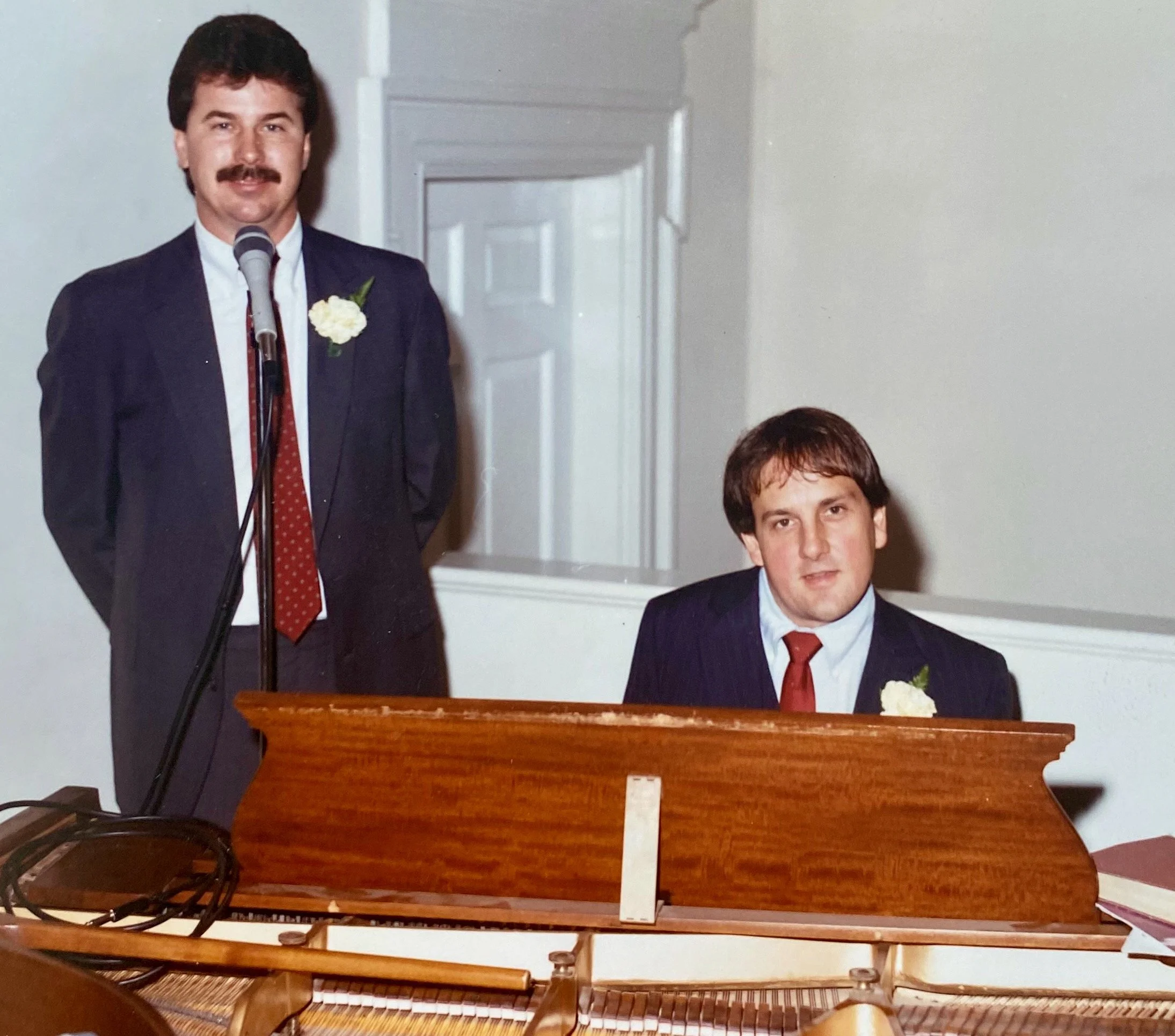
Mike Causey and Sebie Lacey performing at a Middle Georgia wedding in the 1980s, when Sebie’s wife Vicki regularly recruited the former Stillwater bandmates to provide live ceremony music for brides across the region through her bridal shop.
In the 1980s, Sebie’s wife, Vicki Edenfield-Lacey, opened a bridal shop on Corder Road in Warner Robins. Whenever brides needed live music for a ceremony, Vicky had an immediate solution: put Sebie and Mike to work.
So there they were, former Capricorn artists and Southern rock road dogs, showing up in neckties on Saturday afternoons to play weddings. Sebie sang while Mike sat at the piano, helping Vicki’s business however they could.
The gigs were less glamorous than Winterland Ballroom, but probably more dependable.
Mike laughs about it now. His memory of it all is affectionate and funny, another example of how music threaded itself into ordinary Middle Georgia life after the spotlight shifted. Mike and Vicki still talk regularly, close in the way people become after decades of shared history and mutual care.
The photograph from one of those weddings tells the true story. Two musicians in jackets and ties, one standing at the microphone, the other seated at the piano. Not rock stars. Not former rock stars. Just good men helping family.
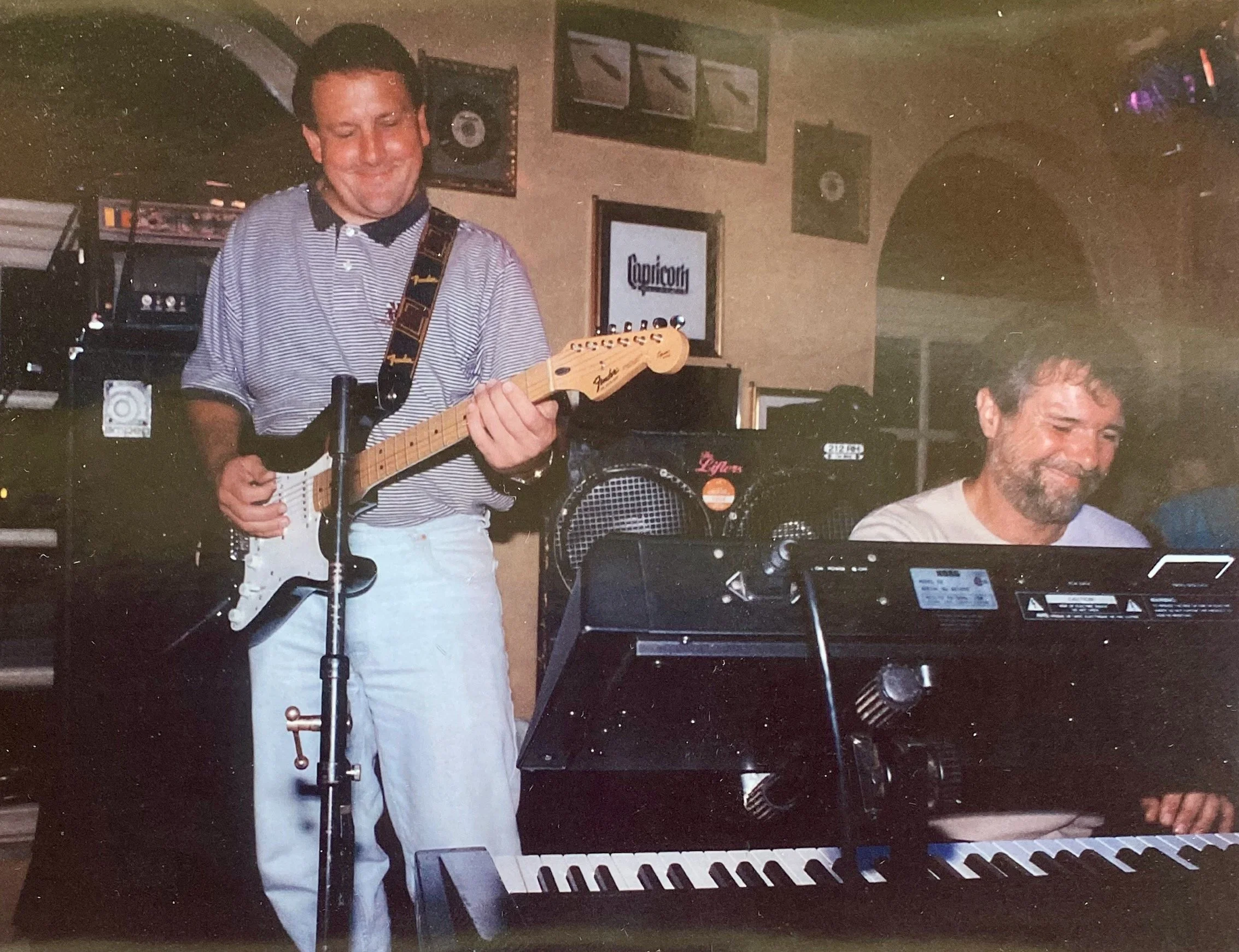
Mike Causey with Chuck Leavell.
The Next Generations
Along the way, Mike taught guitar lessons for a stretch, passing on what his own teachers had given him.
In addition to what he had learned at Guthrie’s Music, Mike later took lessons from Boudleaux Allen at Bibb Music Center in Macon. Yes, that Boudleaux Allen who also taught Bobby Golden and Rob Walker, a guitarist of such rare ability that he reportedly turned down an offer from Lawrence Welk, choosing to stay rooted in Middle Georgia instead. Greatness possessed by a teacher who could have gone but stayed, and then poured everything into his students, threads throughout Warner Robins’ story.
One of Mike's own students was Adam Gorman, a Macon native who came to him as a teenager. Mike heard what was in Adam and taught him accordingly. He went on to be mentored by Stanley Killingsworth as well, stepping into Tony Tyler's place in Stanley's band and learning from two of the region's most trusted musical anchors.
The lineage is visible if you know where to look. Tony Elmore to Mike Causey to Adam Gorman, the same unbroken chain of Middle Georgia musicians quietly handing the torch forward, generation to generation, the way it’s always been done here.
On a Saturday in April, at the Dogwood Festival in Perry, End of the Line, an Allman Brothers Band tribute, closed out the live music as the final act of the day. Adam Gorman stood at center stage as lead guitarist. Kyler Mosely was there. Phil Palma. Rob Walker. Mike Causey. They came to watch one of their own.
From the stage, Adam told the crowd what he tells every crowd, that End of the Line travels the country preaching the gospel of the Allman Brothers Band, carrying regional music to other regions, keeping the embers glowing for the next generation. The crowd was wide and various, including gray-haired regulars who remembered the original records, parents with strollers, kids doing cartwheels in the grass near the stage. Whether those children were registering the sound as something that would stay with them thirty years from now is a question we can't answer today. We can only hope and keep playing.
There’s an old blues tradition, which Muddy Waters said about Little Walter, a teacher watching a student and feeling something that isn't quite pride and isn't quite love but is closer to both than any other word gets. He's my pride and joy. Mike didn't reach for poetry. He just said what he meant about Adam.
"I'm so proud of him."
That's the long game. Not the Capricorn deal, or tours or records. The long game is Adam Gorman on a festival stage in Perry, Georgia, telling a crowd the music matters and he can prove it. Mike Causey and Stanley Killingsworth and Kyler Mosely made that possible.
His Father's Long Game
Mike’s father also played a long game. Hubert Edward “Ed” Causey Jr., built a respected career in professional golf through decades of discipline and steady work, rising from Air Force base golf pro to leadership roles within the Georgia and National PGA. He officiated at the 1975 Ryder Cup, competed in the U.S. Open, and eventually entered the Montgomery Sports Hall of Fame.
What Ed’s resume doesn't say, but Mike's life does, is what it looked like from the inside. His father didn’t burst into success. There was no single bright moment. Instead, he showed up, did the work, earned respect in rooms that didn't hand it out casually, and built a name through decades of professionalism. Ed modeled the long game at home every single day without naming it. When Mike absorbed those lessons, he applied them to music the way his father had applied them to golf.
Mike then built a life that could hold both the almost-famous years and the stable ones without treating either as a defeat.
Mike’s older brother Eddie represents another version of the postwar Warner Robins story, one built less around stages and highways and more on consistency, community reputation, and staying power.
After the family’s decade in Warner Robins, their father’s career eventually carried him onward to other cities. But Eddie and Mike stayed, building their adult lives in the town that had shaped them.
Eddie went into the insurance business and eventually opened his own State Farm agency in town, becoming a steady local figure generations of families depend on. Even now, at seventy-five, financially secure enough to retire comfortably, he still enjoys going into the office each day just to check on things.
“He’s been a great big brother,” Mike says. “He’s always been there.”
Eddie’s wife, Luann Bruce Causey, spent years teaching and coaching at Rumble Junior and Warner Robins High, another life rooted deeply in the rhythms of the community that helped raise them. Together they built the kind of grounded middle-Georgia life that towns like Warner Robins quietly admire: long marriages, careers that matter locally, weekends at Lake Blackshear, friendships that stretch across decades.
Mike laughs when he talks about how much Eddie resembles their father in temperament.
“He doesn’t flicker,” he says.
Like their father, Eddie became an excellent golfer, winning tournaments across middle Georgia over the years. But what Mike seems to admire most is not the trophies. It’s the steadiness beneath them.
Mike’s mother, Sue Lillard Causey, came from Dalton, Georgia, and met Ed Causey while both were students at college in Troy, Alabama. After marrying, the young couple began following the itinerant rhythm common to many postwar military-connected families, moving first to Montgomery, where Ed worked as a golf professional at an Air Force base, and later to Robins Air Force Base and other cities across the South.
The family relocated constantly, often every couple of years, with Sue quietly carrying much of the burden of rebuilding a household from scratch each time. Mike says she handled the moves, organized the family, adapted to new towns, and somehow kept everything steady while life shifted around them.
“She was a very strong woman,” he says.
Only later in life did Mike fully realize just how intelligent his mother had been. Shortly before her death, he learned she had skipped the second grade as a child. But the clues had always been there. Sue was an exceptional bridge player, sharp enough that, according to Mike, people hesitated to sit across the table from her.
“If I took her to Vegas,” he laughs, “she could count cards.”
Like Ed and Eddie, Sue also played golf well, though Mike jokes that he was the only member of the family who never became truly good at it despite trying for years. But what stayed with him more than scores or trophies was his mother’s steadiness, intelligence, and independence, qualities that often expressed themselves at home rather than publicly.
Women like Sue Causey rarely appear as the headline figures in Southern family stories. Yet families like theirs often revolved around women exactly like her, adaptable, observant, emotionally durable enough to keep everybody moving forward while the men built careers.
Other family members are notable too. Mike’s cousin Dink Cook played bass for Toby Keith and recently shares the Grand Ole Opry stage with T. Graham Brown. Another cousin, Luke Black, performs under his own name. Music clearly ran through the extended family. But the steadiness beneath it, the part that held things together long enough for talent to grow, sounds very much like Sue Causey.
On his father’s side of the family, Mike’s grandmother sang with her family as the Kimbell Sisters, traveling and performing around Alabama, and she played piano. Mike found out about that when in his thirties at a family reunion. Music ran in the family before Mike ever knew it.
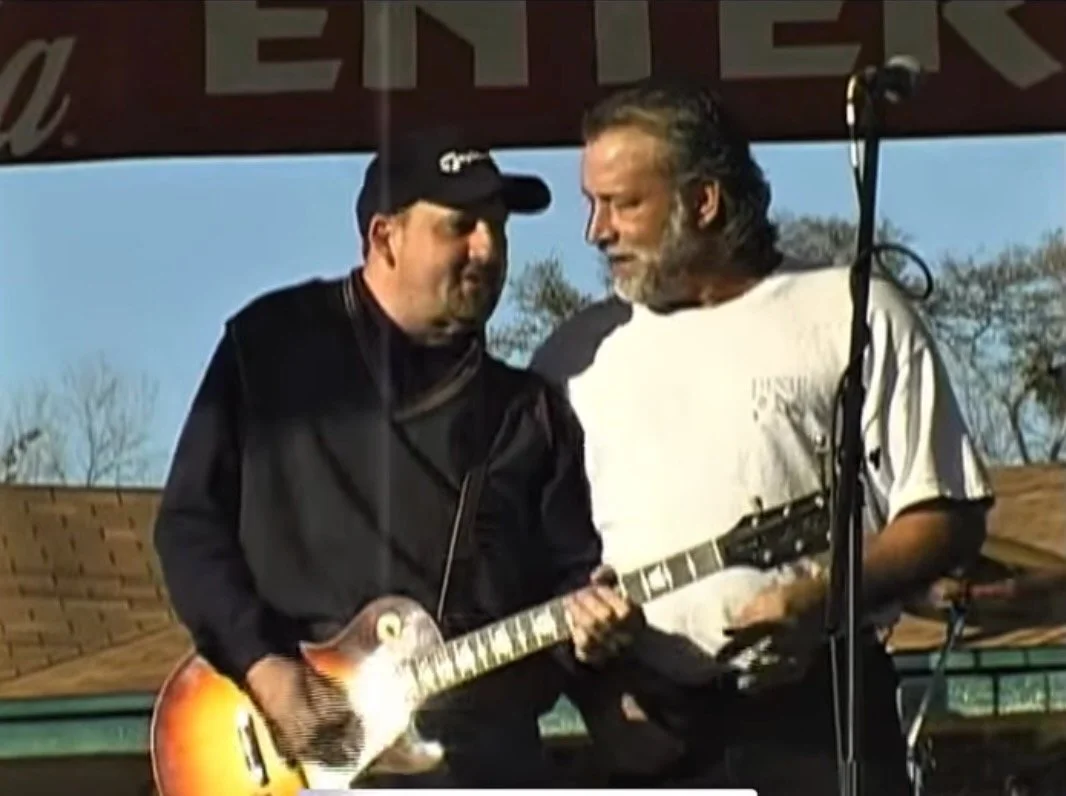
Mike Causey and Macon’s own Ronnie Hammond of the Atlanta Rhythm Section.
Bandmates by Heart
Planning for this summer’s reunion is underway, Mike and the guys pulling it together from the inside out. He wants everyone there. Every friend, every fan, every face from across years that's still willing to make the drive. If that means adding nights, he'll find a way to do it. The only hesitation is Sebie, whose voice is still finding its footing after a serious bout with throat cancer, still healing, still precious. Mike will protect Sebie's voice before he'll add a night. But his big heart wants everyone there. That's his dream.
The people who were around are coming back. Mike’s wife Machelle, who has built a singing career in the region with her own devoted following, will join them onstage. And if Paul Hornsby's judgment of Machelle means anything, those crowds are in for something special. Jimmy Gentry will be there. Peter Stroud, if schedules align, will show. Bobbie Eakes is coming and will sing. Rodney Mills of Studio One fame has his hotel room booked.
The people who knew what it was are coming back too.
There is a detail from those early years that grounds everything else. Mike has a collection of 45s he’s been adding to since he was a kid, starting with Elvis and the Beatles and moving through everything that followed. His collection started early. His aunt had just about every Elvis 45 ever pressed, and Mike would play them at his grandmother's house, absorbing each one before he was old enough to buy records himself.
"I can trace my music history through that collection," he says. That idea is too clean to be accidental. A boy who felt a bolt of lightning in a parking lot in Warner Robins. Who stood in a Texas pawn shop and looked at a guitar on a wall and knew his life had just turned a corner. Who heard three chords and understood what the rest of his days were going to be about. That boy went home and started filing the evidence, record by record, for fifty years. And still has the $17.50 Sears guitar to prove where it started.
Stillwater is unique and special, certainly beyond a legacy act. All but one of the original members are still alive and living within easy distance of each other and the town that made them. They talk regularly. They hang out. David Heck is in Colorado, Bobby is in Perry just down the road, the rest are in Warner Robins.
"We're still healthy, everybody gets along pretty stinkin' good, and we all talk to each other," Mike says, as if this were a simple fact rather than a near-miracle in the long actuarial table of band survival.
He sees his bandmates clearly, with the affection of someone who has had decades to confirm his first impressions. Rob Walker is one of the nicest men on the planet, not an exaggeration, just a fact Mike states and moves on from. A lot of people call Rob The Guy when it comes to guitar playing, and Sebie has told Mike as much directly. “Mike, you’re a great player,” Sebie says, “but Rob’s The Guy.”
Where Mike plays from the heart and has earned the nickname The Shredder, Rob is The Technician, someone who knows music inside and out. “He’s a great writer, too,” Mike says, “and a great buddy.”
Lately Rob's been working through a ring finger that gets hung up, so he plays with two fingers instead of the usual complement. “Rob plays better with two fingers than I do with ten,” Mike laughs.
Sebie Lacey's big personality fills a stage the way Ronnie Barnes' did, the way Coach Davis' did. His presence draws people in without demanding anything from them. Mike calls him Andy Griffith, because that's the effect on folks, everyone seems to take to Sebie, immediately and without reservation. Bobby Golden has an engineer's mind, which makes his creativity precise in a way that pure instinct never could. Al Scarborough has a devilish side, which Al himself freely acknowledges. He's kind and energetic until crossed, and then you see the thing he usually keeps in the drawer.
And David Heck, Mike says, should have been a comedian. The man keeps them laughing enough that some rehearsals are more like performances for each other than preparation for anyone else.
And beneath the shredding and the technique, and the precision and the punchlines, David on drums and Al on bass are building something the whole house rests on. Mike will tell you that a rhythm foundation laid right is invisible until it isn't there, and that Stillwater without David Heck and Al Scarborough would crumble into chaos.
For the Crowd
"I love people," Mike says simply.
And the evidence is everywhere. Mike Causey has been making friends for life since childhood, and he has never stopped. Ronnie Barnes. Coach Davis. Bandmates. Roadies. Club owners. The couple who stood in the front row in 1977 and the guy he met at Home Depot last spring. The circle has been widening for decades and almost nothing falls out of it.
Among the band members, staying connected is a practice, almost a discipline. They share news about the people they know, not as gossip but as stewardship, keeping tabs so they can reach out when someone needs something, or simply to let them know they haven't been forgotten.
For men who have spent their whole lives rooted in the same place, that web of relationships has grown dense and deep in a way that touring bands who scattered to different cities never quite managed. They know their community because they never left it.
Mike expresses his love for his bandmates and their friends and fans, and he holds his heart open for anyone who walks into the circle. The fans who have been listening for fifty years are not quite fans anymore, they're friends. The members know them by face and name, remember their kids, ask about their health, and nobody takes for granted what it means that those people are still showing up. The reunion concert is a gathering of a community that has been tending itself for half a century.
"This reunion is for the crowd," Mike says. "We've been part of their lives. They grew up with us."
When Stillwater plays, Mike wants space in front of the stage, room for people to gather and watch, not just dance. "I feed off those people," he says of the energy a crowd puts out when they're fully present. He is not interested in squeezing every dollar out of those people either. Stillwater keeps ticket prices accessible on purpose. "We're like the Masters," Mike says, invoking the famous Augusta tournament that has charged $1.50 for a pimento cheese sandwich since before most of its patrons were born. It's a point of principle disguised as a sandwich.
In the early 2000s, when Stillwater played the National Fair, they did it on a handshake, not a contract. Stillwater sat down to lunch with Johnny Webb, who ran the event, and they told him, "Just give us a start time and a stop time." That was it. Business and personal were intertwined in the handshake, built on trust.
He's also been thinking further ahead. Mike recently visited the Opera House in Hawkinsville, built by the same architect who designed Macon's own Opera House, small but mighty, beautiful inside, with acoustics that reward a room full of listeners. Marty Stuart once walked into the Hawkinsville Opera House, clapped his hands, and announced his band would play it acoustically.
Mike is turning over the idea of Stillwater playing there someday. The bones of that building were made for exactly this kind of music.
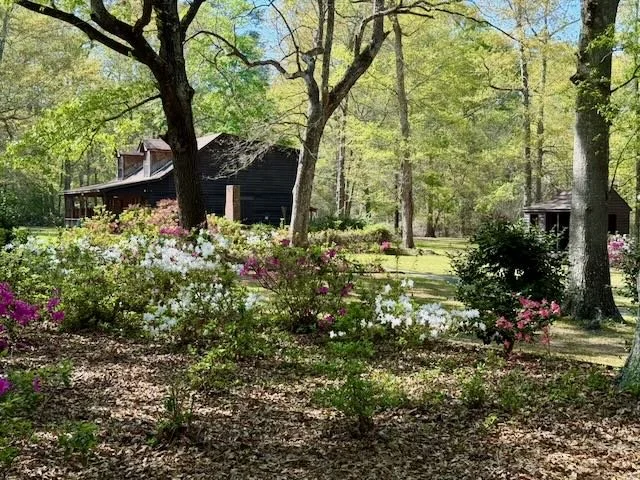
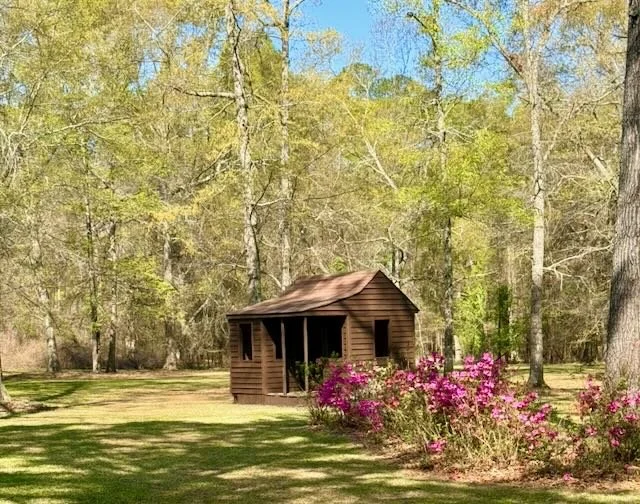
Mike Causey’s Paradise.
Paradise at Wood’s Edge
Mike’s home sits at the end of a road that literally stops at the woods, his driveway the last one on the left. The front yard is a massive, manicured field where he sets up to hit golf balls a hundred yards. Once a deer came within twenty feet of him, just nibbling grass unbothered while he was swinging away.
Banks of azaleas bloom in their season and Mike proudly shares photos of their glory. The yard moves from wild to half-tamed to fully tended in gradients that feel intentional, with curving walkways and hedges and grass rolling toward the woods. Birds. Breeze. The feeling of being inside nature because you are, even though town is only minutes away. He can play a couple hours at La Cabana and be back in paradise within five minutes. He plays golf or piano or guitar to unwind.
He built this life for himself through decades in radio sales, and he’s so glad he did.
Stillwater breaking up, he says, was probably the best thing that could have happened to them. It sent them into lives that gave them this: financial security, roots, mornings that belong to them. And when a film borrowed their name, sending a new generation to find their records, Mike's reaction was the same as to everything else. He expressed gratitude for what was, not grievance over what might have been.
Al Scarborough living on the edge of Echeconnee creek. Mike Causey living at the forest’s edge, hitting golf balls while a doe watches. They gave up the spotlight and got paradise, and they had the sense to know a good trade when they made it.
Now the band is getting the spotlight back, on their own terms, this summer. Rodney Mills will be there. Bobbie Eakes and Machelle will sing. The people who grew up listening to them on these same streets will be in that crowd. And Stillwater will be on the stage, in their hometown.
Fifty years after the lightning bolt first hit him outside Warner Robins High School, the current is still running through him.
Mike Causey will plug in. He'll smile that open, thankful smile.
And then he'll tear it up.
Stillwater’s story stretches across decades. Explore these other voices that helped shape the band and the world around it:
• Stillwater: Hittin’ Like a B-52
About the Author
Cindi Brown is a Georgia-born writer, porch-sitter, and teller of truths, even the ones her mama once pinched her for saying out loud. She runs Porchlight Press from her 1895 house with creaking floorboards and an open door for stories with soul. When she’s not scribbling about Southern music, small towns, stray cats, places she loves, and the wild gospel that hums in red clay soil, you’ll find her out listening for the next thing worth saying.
