
Stillwater’s Bob Spearman: The Foundation
Robert “Bob” Spearman was part of the original pulse of Stillwater, helping drive the Warner Robins band during the years when Southern rock was exploding across the South and Capricorn Records was transforming Macon.
Stillwater’s rise placed Bob inside one of the most vibrant musical moments the region had ever seen, sharing stages and circuits with artists who would become part of Southern rock history.
Even after the industry shifted and lives moved in different directions, Bob remained part of the emotional memory of Stillwater. His absence is now deeply felt within the surviving circle of bandmates and friends.
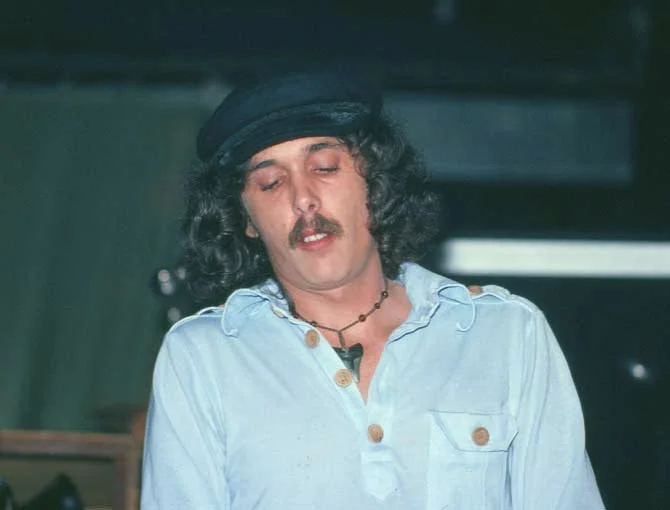
Bob Spearman performing in the mid-1970s. This newly shared archival photo reveals another side of Bob’s musicianship, not only as a guitarist and bandmate, but also behind the keyboards during Middle Georgia’s fertile Southern rock era.
Photo courtesy of Markham White.
Bob Spearman’s name doesn’t get shouted as often as some of his bandmates, but if you follow the keys in Middle Georgia rock of the 1970s, you keep running into him.
As a teenager, Bob was already front and center as singer and keyboardist in Coldwater Army, a horn‑driven Macon/Warner Robins band whose 1971 album Peace blended brass psych, soul, and rock in a way that now sounds like a prequel to Capricorn’s Southern‑rock years.
Reviews of that record single out his keyboard work and vocals on tracks like “Time for Reason,” where his playing gives the songs both shimmer and weight. When Coldwater Army eventually folded, Bobby Golden and Bob Spearman resurfaced together in Stillwater, bringing that sense of harmony and arrangement into a new guitar‑heavy context.
One detail about Bob still surprises the musicians who knew him best: he once said he didn’t touch a keyboard until he was nineteen years old. Given the fluidity and instinct in his playing, the claim seems almost impossible. No one now can ask exactly why he started so late, or what drew him to the instrument so suddenly, but perhaps that mystery fits him. Spearman never carried himself like someone seeking virtuoso status. He simply played.
Friends describe Bob as deeply talented and maybe too gentle for the rough-edged bar and club circuits he moved through. Phil remembers him as “a very, very cool guy” with an impossibly deep voice who never said one negative thing about anyone. Offstage, Bob collected arrowheads and loved Steely Dan’s “Deacon Blues,” a song about outsiders, dreamers, and musicians who build identities somewhere between heartbreak and late-night escape.
The Center of Gravity
In Stillwater’s classic lineup, Bob is the band’s hidden center of gravity. Official lineups list him as keyboards and backing vocals alongside the triple‑guitar team of Mike Causey, Bobby Golden, and Rob Walker; Jimmy Hall on percussion and vocals; Al Scarborough on bass; and Sebie Lacey on drums.
On the 1977 debut and 1979’s I Reserve the Right!, his Hammond and piano parts do the invisible work of thickening choruses, answering guitar lines, and giving the arrangements a church‑and‑soul undercurrent that kept the band from tilting into pure guitar showmanship. Fan retrospectives and French rock zines talk about “the guitars the way we like them from Mike Causey, Rob Walker and Bobby Golden,” but in the same breath they note that those guitars sit on top of a slick rhythm section and keys that “support rather than dominate.”
That compliment fits Bob perfectly.
Fellow musicians remember Bob as one of those rare keyboard players who could disappear into an arrangement or completely take over a room, depending on what the music demanded.
Phil Palma, who later played with Bob in The Lifters alongside Joe Dan Petty, calls him “the most incredible keyboard player I’ve ever played with.” Palma says Bob could handle virtually any style but especially loved old-school honky-tonk piano, attacking the keys hard and loose in the tradition of the great Southern barroom players. “He could play anything,” Phil says. “But that raw playing was his preference.
His path into the band carries a thread running through much of this story, which is the influence of Robins Air Force Base. Mike Causey remembers meeting Bob when he was an airman at Warner Robins during the Vietnam era, playing in base clubs when gigs were plentiful and the mix of service members and locals created fertile musical ground.
Like many musicians circulating through Warner Robins and Middle Georgia during that era, Bob carried Vietnam somewhere in the background of his life. Phil recalls Bob talking occasionally about his military years, including one story about walking toward a chow hall with fellow servicemen when bullets suddenly tore through the area around them. Bob survived, eventually reaching the rank of sergeant, but like many veterans of his generation, he seemed to carry the war’s trauma home with him. Alcohol became a known way for him to cope with what he had experienced.
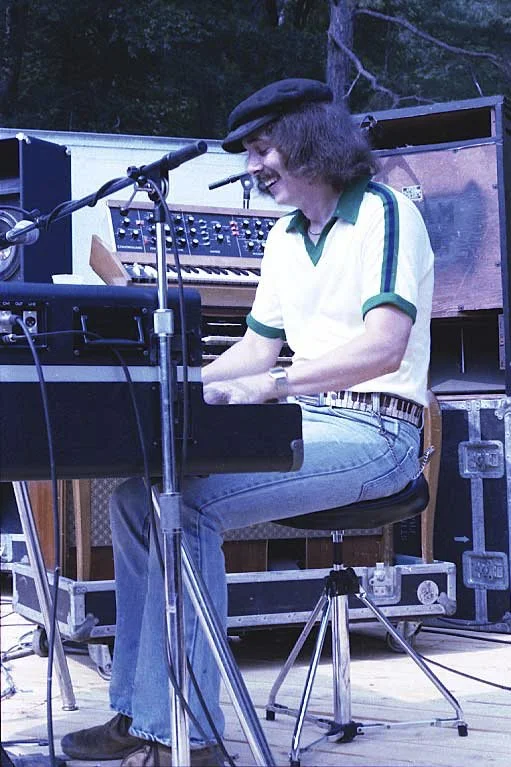
Bob Spearman at the keys in the mid-1970s, captured during the era when Middle Georgia stages, clubs, and outdoor shows were helping shape the wider Southern rock sound.
Photo courtesy of Markham White.
Working Musician
By the time Stillwater formed, Bob had already logged serious time as a working player, comfortable on small stages and in studios alike, another example of how military‑trained or base‑stationed musicians quietly fed into Middle Georgia’s civilian bands.
He approached music almost physically, like an athlete maintaining muscle memory. One night in a Florida hotel room during a Lifters gig, Phil heard a strange rapid tapping sound and looked over to find Bob repeatedly striking the nightstand with his ring finger and pinky. Bob explained matter-of-factly that he was strengthening his knuckle muscles to keep his hands loose and powerful for playing. Phil never forgot the image. “He had these incredible muscles around his hands,” he says. “He kept them strong so he could play.”
Bob’s connection to the Southern rock world extended beyond the stage. Fellow musician and guitar technician Greg McKinney recalls working alongside him at Great Southern Co., the legendary Macon-based rock merchandise company that supplied concert shirts and apparel during the height of the Southern rock era. The job placed Bob inside yet another layer of the music community that surrounded the touring circuit flowing through Middle Georgia in the 1970s and beyond.
He didn’t limit himself to playing with just one outfit. In the 1990s, when Mike and Al re‑formed Stillwater and also poured their energy into The Wall, a Warner Robins cover band that could move from Beatles to Allman Brothers in a single set, Bob was right there with them.
According to Al, the group was originally supposed to be called “The Rhythm Wall,” but the idea was abandoned because, as Al puts it, “nobody could spell rhythm!” Al throws his head back and laughs, and so does everyone else.
Mike recalls a 1997 Margaritaville show in Warner Robins with The Wall’s lineup: “Myself, Bob Spearman (keyboards), and Al Scarborough from Stillwater along with Steve Bloodworth, Mark Johnson, and Dave Ricketson.”
Those gigs, by all accounts, were as musically serious as anything on a festival stage, just closer to home and closer to the people who’d been with them from the start. The fact that Bob kept showing up in the contexts of smaller clubs, weekend bands, and regional parties says as much about his priorities as the Capricorn releases do.
The Lifters left a mark on all four musicians quite literally: each member got a matching “Lifters” tattoo. Palma says he got his because he knew he would never forget the band or the men in it, calling that period the greatest stretch of musical and personal growth in his life.
For Bob, the tattoo carried a different weight. By then, he had already lived through Coldwater Army, Stillwater, the Capricorn years, and he had survived in regional music after the spotlight faded. Yet he still committed himself fully to another brotherhood of musicians. The tattoo remains evidence of how deeply those bonds mattered.
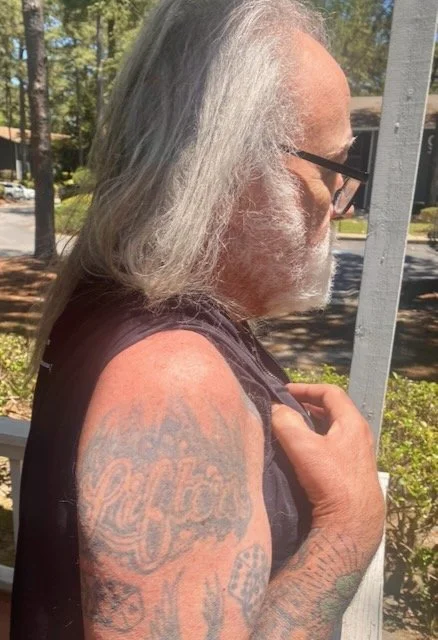
Phil Palma, guitarist, shows off his “Lifters” tattoo. Bandmates with the same tattoo included Bob Spearman, Joe Dan Petty, and Keith Forehand of The Lifters.
Remembering Bob Spearman
The public record of his life is heartbreakingly brief. Band histories tend to tuck the information into parentheses. “Bob Spearman – keyboards, backing vocals (died early 2000s).”
A local obituary for Robert Toombs Spearman Jr. of Roberta, Georgia, fills in a few more lines. He was born in 1948, died in his mid‑fifties, described simply as “an accomplished musician, who played the keyboard, with many bands,” not just Stillwater.
Old photos shared in Macon music history groups caption him with just his name and dates, a plain acknowledgment of a life that left a mark wider than the available words.
Taken together, these bits sketch the outline of a man whose contributions were both central and under‑sung. He was the airman‑turned‑Macon‑area musician who slipped from base clubs into Coldwater Army’s horn‑psych experiments, then into Stillwater’s Capricorn era, then into The Lifters, and on to The Wall’s weekend‑warrior years, always behind a keyboard, always making other people sound bigger.
He co‑wrote and colored in songs that now sit on reissue shelves and streaming services, but the people who played with him seem to remember him as much for his steadiness and versatility as for any specific solo. In a band like Stillwater, which now gets written about as “almost famous,” it’s easy for the narrative to center on guitars and labels and near‑misses.
Offstage, Bob collected arrowheads and had a large collection, sharing an interest held by other Middle Georgia musicians, including Paul Hornsby, who devoted part of his memoir Fix It in the Mix to his fascination with Indigenous history and ancient tools. They’re part of that Southern tradition of outdoorsmen drawn to the traces of earlier civilizations scattered across Georgia fields and creek banks.
For some, those artifacts represented history. For others, they carried a more personal feeling, a connection to place and the people who walked the land before. They speak to a deep attachment to the older human stories embedded in the Southern landscape.
Friends still speak about Bob with unusual tenderness, as though they’re trying to describe not just a player, but a stabilizing presence. Their foundation.
Memories of Bob continue through old bandmates, local musicians, and his widow, Judy Spearman, who still lives in nearby Roberta, Georgia. In many ways, the story of Middle Georgia music survives through people like Judy, the ones who remain connected to the friendships, photographs, stories, and everyday histories left behind.
Remembering Bob Spearman brings the focus back to the working musician who helped make Stillwater possible, and then kept playing for the love of it, right up until illness stopped him far too soon.
Stillwater’s story stretches across decades. Explore these other voices that helped shape the band and the world around it:
About the Author
Cindi Brown is a Georgia-born writer, porch-sitter, and teller of truths, even the ones her mama once pinched her for saying out loud. She runs Porchlight Press from her 1895 house with creaking floorboards and an open door for stories with soul. When she’s not scribbling about Southern music, small towns, stray cats, places she loves, and the wild gospel that hums in red clay soil, you’ll find her out listening for the next thing worth saying.
